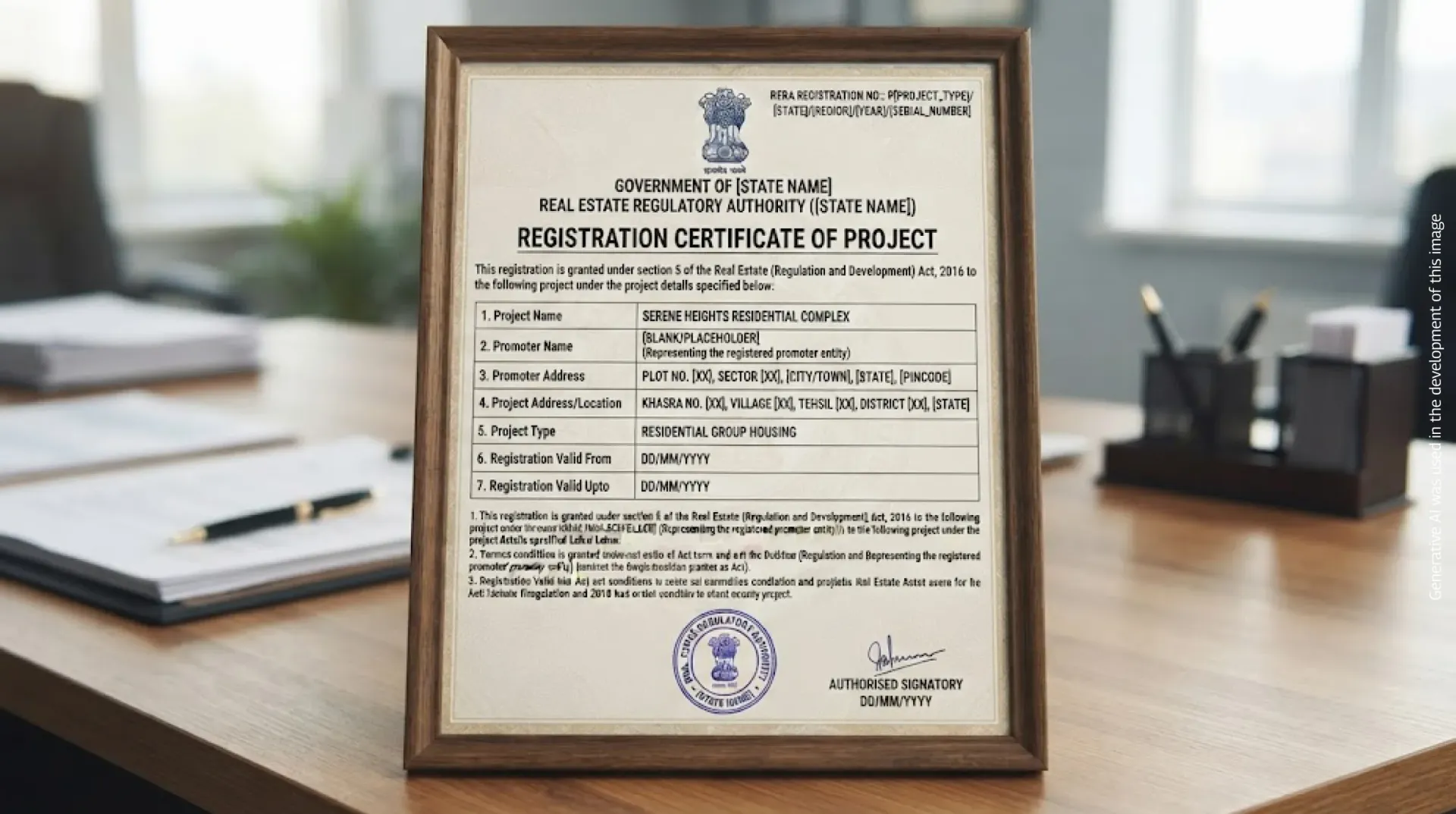
Buying a home is more than selecting the right location or floor plan—it's about making a secure investment backed by legal transparency and regulatory compliance. While attractive pricing, modern amenities, and strategic locations often influence buying decisions, one factor should never be overlooked: whether the project is RERA registered.
The introduction of the Real Estate (Regulation and Development) Act, 2016 (RERA) transformed India's real estate sector by improving accountability, transparency, and consumer protection. Today, checking whether a project is registered under RERA has become one of the most important steps before booking a property.
Whether you're a first-time homebuyer, an investor, or upgrading to a larger home, understanding RERA-approved projects, learning how to perform a RERA project search, and knowing how to complete a RERA builder verification can help you make informed decisions and reduce legal risks.
This guide explains everything you need to know before purchasing a property.
The Real Estate (Regulation and Development) Act, 2016, commonly known as RERA, was introduced by the Government of India to regulate the real estate sector and protect homebuyers' interests.
Before RERA, homebuyers often faced challenges such as:
RERA established state-level regulatory authorities responsible for monitoring registered projects, maintaining public records, and ensuring developers comply with legal obligations.
Today, most residential and commercial projects above the prescribed threshold are required to register with their respective State RERA authority before being marketed or sold.
A RERA-approved project (commonly referred to as a RERA-registered project) is a real estate development that has been registered with the respective State Real Estate Regulatory Authority under the provisions of the RERA Act.
Once registered, the developer receives a unique RERA registration number, which homebuyers can use to verify important project details online.
These details generally include:
Having access to this information allows homebuyers to evaluate a project's legal status before investing.
Important Note: While RERA registration is a significant indicator of regulatory compliance, homebuyers should still review property documents and conduct due diligence before making a purchase.
RERA has significantly improved transparency in India's real estate sector by creating a standard framework that developers must follow.
For homebuyers, this means greater confidence throughout the buying process.
Some of the key advantages include:
Greater Transparency
Builders are required to disclose important project information, including approvals, timelines, construction progress, and legal documentation.
Improved Accountability
Developers are expected to comply with commitments made during project registration, reducing the likelihood of unexpected changes.
Better Access to Information
Homebuyers can independently verify project registration details through official State RERA portals instead of relying solely on marketing material.
Consumer Protection
The RERA framework provides mechanisms for addressing complaints and disputes between homebuyers and developers through the respective State Authority.
Financial Discipline
Under RERA, developers are generally required to deposit a prescribed portion of funds collected from homebuyers into a separate escrow account for project-related expenses, helping reduce fund diversion.
Choosing a RERA-registered project offers several advantages that contribute to a more transparent and informed homebuying experience.
One of the greatest safeguards introduced by the Real Estate (Regulation and Development) Act (RERA) is that homebuyers no longer need to rely blindly on marketing brochures or verbal claims. Every state regulator provides an official public portal where you can independently verify project credentials.
Follow this step-by-step framework before paying any booking token:
Ensure you access the official state portal (for instance, MahaRERA for Maharashtra). Avoid unverified third-party aggregators that may mirror government layouts; always double-check that the domain ends with .gov.in.
Look for the homebuyer corner or search directories on the homepage, which typically feature tools like:
The fastest way to pull up records is by entering the unique RERA registration number (usually an alphanumeric code starting with "P", such as P518000XXXXX), which developers are legally required to display on all advertisements. Alternatively, you can search using the official project name or the legal promoter/builder entity name.
Once the database yields your matching project card, click on View Details or View Original Application to verify critical parameters:
Most state portals also provide a dedicated tab tracking consumer complaints, active disputes, or penalties issued against the promoter. Reviewing this history gives an objective indication of the developer's execution discipline and reliability.
Finally, cross-check every data point pulled from the official portal against the physical or digital documents provided by the sales team. If you notice any discrepancies in timelines, layout specifications, or land titles, seek immediate written clarification or consult independent legal counsel before signing agreements.
Verifying the individual project RERA registration is only half the battle. Checking the builder or promoter's overall track record is equally critical to ensure you are partnering with a financially stable, legally compliant, and reputable developer.
State RERA portals feature dedicated databases that allow you to conduct comprehensive background checks on real estate companies before you commit your capital.
Cross-referencing the builder's overarching performance alongside individual project approvals minimizes unforeseen risks, ensuring you invest with confidence.
| Feature | RERA Registered Project | Non-Registered Project* |
|---|---|---|
| Registration Number | Available | May not be available |
| Public Project Information | Available through State RERA | Limited public information |
| Construction Updates | Periodically disclosed | May vary |
| Approved Plans | Publicly disclosed | Homebuyer should verify separately |
| Regulatory Oversight | Yes | Depends on applicable regulations |
| Homebuyer Transparency | Higher | Requires additional due diligence |
*Disclaimer - Some projects may be exempt from RERA registration based on the provisions of the Act. Homebuyers should verify the applicable rules in their state.
Despite being in force for several years, several myths about RERA continue to create confusion among homebuyers.
Myth: Every Property Must Be Registered Under RERA
Reality: Certain projects may be exempt depending on the criteria defined under the Act and the applicable State Rules.
Myth: RERA Registration Guarantees Investment Returns
Reality: RERA improves transparency and regulatory compliance but does not guarantee future property appreciation or investment performance.
Myth: If a Project Is Registered, No Further Checks Are Required
Reality: Homebuyers should still review legal documents, financing arrangements, ownership records, approvals, and contractual terms before purchasing.
Myth: Only Large Developers Register Projects
Reality: Registration requirements apply to eligible projects irrespective of the size of the developer, subject to the provisions of the Act.
As important as project registration is, homebuyers should remember that RERA verification is only one part of the due diligence process. Reviewing land ownership records, approvals, builder credentials, payment schedules, and legal documentation is equally important before making a purchase.
While RERA registration is an important checkpoint, it should not be the only factor influencing your purchase decision. A legally secure property is backed by complete documentation that confirms ownership, approvals, and compliance.
Before booking a home, ask the developer for copies of the following documents:
Title Deed
The title deed establishes legal ownership of the land. Ensure that the developer has a clear and marketable title with no disputes or competing ownership claims.
Encumbrance Certificate
An Encumbrance Certificate (EC) confirms whether the property is free from legal liabilities such as loans, mortgages, or pending claims. A clean EC provides additional confidence that the property can be transferred without hidden obligations.
Approved Building Plans
Verify that the project has received approvals from the relevant planning and municipal authorities. Compare the approved layout with the plans shared by the developer to ensure consistency.
Commencement Certificate
The Commencement Certificate indicates that the developer has received permission to begin construction in accordance with applicable regulations.
Occupancy Certificate (For Ready-to-Move Projects)
For completed projects, request the Occupancy Certificate (OC), which confirms that the building has been constructed according to approved plans and is fit for occupation.
Sale Agreement
Read the sale agreement carefully before signing. Pay attention to:
If required, consult a legal professional before signing any agreement.
Selecting the right builder is just as important as choosing the right project. A reputable developer typically demonstrates transparency, timely communication, quality construction, and compliance with regulatory requirements.
Before making a decision, consider the following factors.
Check the Builder's Track Record
Review previous projects completed by the developer.
Look for:
Past performance often provides useful insights into future reliability.
Verify RERA Registration
Ensure both the project and the developer are registered on the respective State RERA portal wherever applicable.
Cross-check the registration number provided by the developer with the official RERA website.
Assess Financial Transparency
Understand:
Review Customer Support
A responsive developer should be willing to answer questions regarding:
Open communication often reflects professional project management.
Even when a project appears attractive, homebuyers should remain cautious. Watch for these warning signs:
Missing or Incorrect RERA Registration Details
If the developer is unable or unwilling to provide the project's RERA registration number, verify the information independently before proceeding.
Pressure to Book Immediately
Avoid making decisions solely because of "limited-time offers" or pressure to pay a booking amount without reviewing documents.
Incomplete Documentation
Developers should be able to provide key legal documents for homebuyer verification.
If documentation is unavailable or inconsistent, seek clarification.
Unrealistic Promises
Be cautious of unusually high return projections, guaranteed appreciation claims, or commitments that cannot be substantiated.
Frequent Changes to Project Plans
Repeated revisions to layouts, amenities, or possession schedules without proper communication may warrant additional scrutiny.
RERA has significantly improved transparency in India's real estate sector, but it should not replace independent due diligence.
Legal verification remains important because it helps homebuyers:
Taking the time to review both legal documentation and RERA information helps reduce uncertainty and supports informed decision-making.
| Verification Category | Specific Parameter to Check | What to Look For / Verify | Why It Matters |
|---|---|---|---|
| 1. Project Registration | RERA Registration Number | Ensure the alphanumeric code matches advertisements and is listed as "Active" on the state portal. | Confirms the project is legally authorized and monitored by the state regulatory authority. |
| 2. Completion Timelines | Declared Possession Date | Check the original delivery date and verify if any legal extensions have been officially granted. | Establishes a realistic possession timeframe and sets accountability for delivery delays. |
| 3. Financial Compliance | Designated Escrow Account | Verify that 70% of funds collected from homebuyers are mandated to be kept in a separate, dedicated bank account. | Protects your hard-earned money from being diverted to other projects by the developer. |
| 4. Structural & Area Accuracy | RERA Carpet Area | Cross-check the officially filed carpet area with the configuration offered in your cost sheet. | Ensures you are paying only for usable internal space rather than inflated super-built-up metrics. |
| 5. Approvals & Clearances | Sanctioned Plans & CC | Confirm that Commencement Certificates (CC) and municipal building approvals are duly uploaded. | Guarantees the construction is legal and won't face demolition notices or clearance bottlenecks. |
| 6. Promoter Track Record | Past & Ongoing Projects | Review the builder's history for previous project delays, lapsed registrations, or defaults. | Provides an objective gauge of the developer's execution discipline and reliability. |
| 7. Litigations & Penalties | Consumer Complaints & Disputes | Check the portal's grievance tab for active consumer disputes, financial penalties, or legal cases. | Highlights potential red flags regarding the builder's legal standing and customer satisfaction. |
Choosing a home involves more than comparing floor plans and amenities—it also requires confidence in the developer's processes and documentation.
Mahindra Lifespaces follows a structured approach to project development with a strong focus on transparency, regulatory compliance, and customer communication. Homebuyers can access project-specific information, including RERA registration details (where applicable), through official project pages and the relevant State RERA portals.
In addition, Mahindra Lifespaces emphasises:
For homebuyers evaluating RERA-approved projects, working with an established developer that prioritises legal clarity and transparency can contribute to a smoother homebuying experience.
Buying a property is one of the most significant financial decisions you'll make, and ensuring legal transparency should be at the heart of that decision. While attractive pricing and modern amenities are important, verifying a project's RERA registration, reviewing legal documents, and evaluating the builder's credibility are equally essential steps.
The introduction of RERA has empowered homebuyers by making project information more accessible and improving transparency across the real estate sector. However, responsible homebuying still requires careful due diligence, including checking ownership records, approvals, contractual terms, and project updates.
By combining RERA project verification, builder due diligence, and legal document review, homebuyers can make more informed decisions and reduce the risk of future complications.
For those exploring new homes, choosing a trusted developer such as Mahindra Lifespaces—known for its focus on regulatory compliance, transparency, and thoughtfully planned communities—can provide added confidence throughout the homebuying journey.
Disclaimer: This content is for educational and informational purposes only and does not constitute financial, legal, or professional advice. Please consult with a certified professional or legal counsel before making any decisions based on this information.
A RERA-approved or RERA-registered project is one that has been registered with the relevant State Real Estate Regulatory Authority and complies with applicable registration requirements under the RERA Act.
Visit the official State RERA website, search using the project's name, builder's name, or RERA registration number, and review the published project details.
Not all projects are required to register under RERA. Certain developments may be exempt based on the provisions of the Act and applicable State Rules.
RERA establishes regulatory obligations regarding project disclosures and timelines. However, homebuyers should carefully review the sale agreement and applicable terms before purchasing.
Yes. Many State RERA websites provide information about registered promoters, allowing homebuyers to review their registered projects and registration details.
No. Homebuyers should also verify land ownership, legal approvals, title documents, payment terms, and other important documentation before making a purchase.

Established in 1994, Mahindra Lifespace Developers Ltd. (‘Mahindra Lifespaces’) brings the Mahindra Group’s philosophy of ‘Rise’ to India’s real estate and infrastructure industry through thriving residential communities and enabling business ecosystems.


