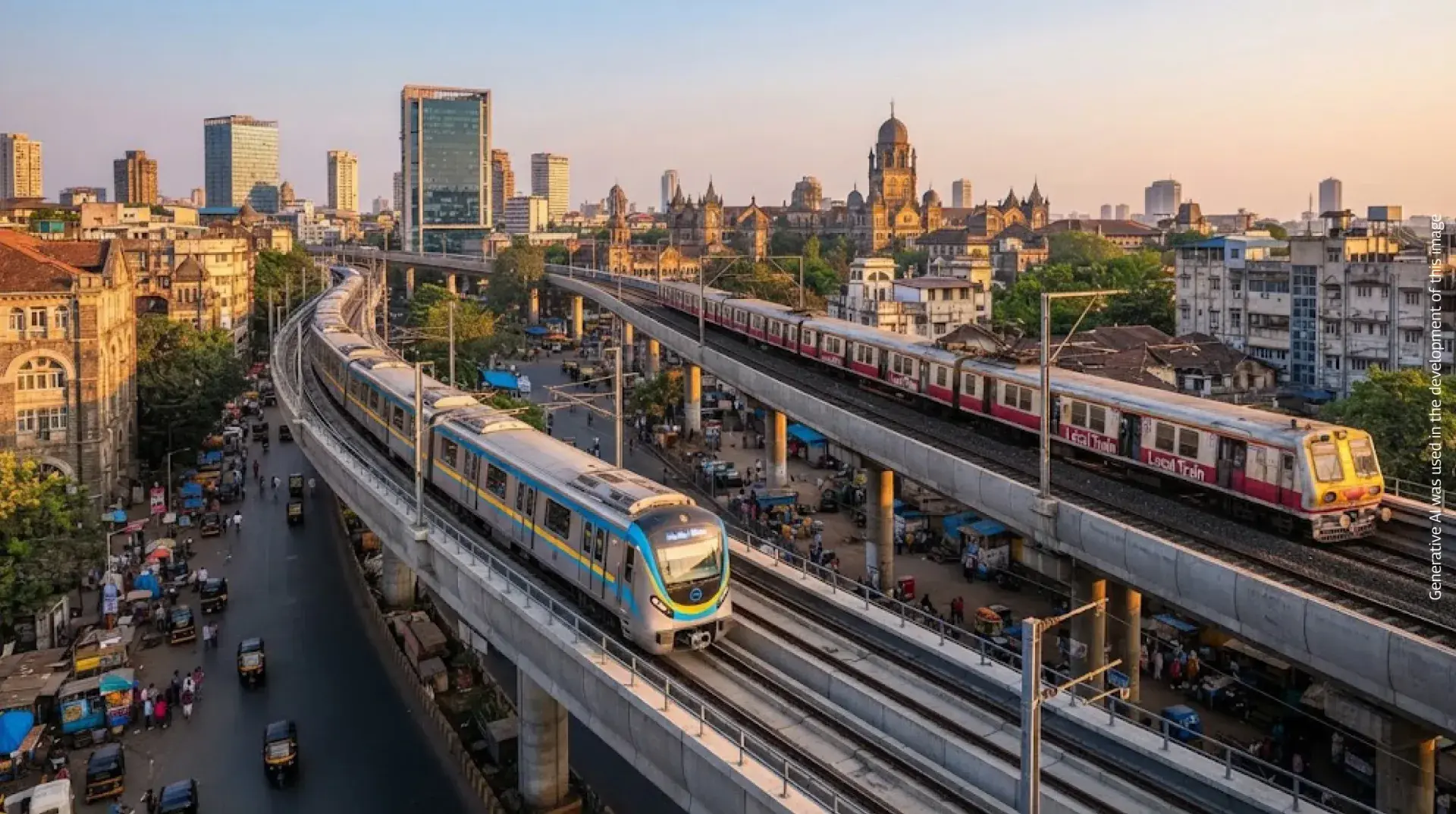
Mumbai moves because its public transport network moves. Every day, millions of residents rely on trains, metros, buses, taxis, and auto-rickshaws to travel between home, work, education hubs, and commercial districts. For decades, Mumbai's suburban railway network has been the city's transportation backbone, carrying one of the highest daily commuter volumes in the world.
The rapid expansion of the metro network is now reshaping commuting patterns across the city. New metro corridors are reducing travel times, improving passenger comfort, and creating alternative routes for residents who previously depended entirely on local trains or road transport.
As connectivity becomes a major factor influencing residential choices, Mahindra Lifespaces and other leading developers are seeing increasing demand for homes located near major transport corridors. Easy access to public transportation is no longer simply a convenience. It has become a key factor affecting quality of life, property demand, and long-term real estate value.
Many daily commuters now face an important question: Mumbai Metro vs Local Train. Which system offers the better commuting experience in 2026? The answer depends on factors such as travel distance, budget, comfort expectations, connectivity, and lifestyle preferences.
While both systems serve commuters, they were designed with different objectives.
1. Mumbai local train network
Mumbai's suburban railway system includes:
The network connects distant suburbs such as Virar, Kalyan, Panvel, Thane, and Navi Mumbai with key business districts across the city.
For generations, Mumbai’s local trains have supported the city’s growth by providing an affordable and accessible mode of long-distance commuting.
2. Mumbai metro network
The metro system was introduced to reduce road congestion and provide faster urban mobility.
Operational and expanding corridors include:
Unlike local trains, metros are designed to provide a more comfortable and predictable travel experience while improving connectivity within densely populated urban areas.
| Factor | Mumbai Metro | Mumbai Local Train |
|---|---|---|
| Comfort | High | Moderate |
| Air Conditioning | Available | Limited |
| Crowd Levels | Controlled | Very High |
| Network Coverage | Expanding | Extensive |
| Cost | Moderate | Affordable |
| Travel Experience | Comfortable | Functional |
| Accessibility | Modern Infrastructure | Extensive Reach |
| Station Facilities | Advanced | Basic to Moderate |
| Safety Features | Modern Systems | Established Systems |
The comparison highlights that both systems excel in different areas.
Travel time often determines which transportation mode commuters prefer.
1. Where Metro has an advantage
Metro services offer several advantages that make daily commuting more efficient and reliable. Operating on dedicated corridors, they experience minimal disruption from road traffic, allowing passengers to benefit from predictable schedules and faster urban connectivity. Routes connecting areas such as Andheri, Ghatkopar, Goregaon, Dahisar, and other western suburbs often enable commuters to save considerable travel time compared to travelling by road, making the Metro a preferred choice for many daily travellers.
2. Where local trains continue to dominate
For longer journeys, local trains remain difficult to beat.
Examples include:
The suburban railway network remains one of the most efficient mass transit systems for long-distance commuting within the Mumbai Metropolitan Region.
Commuters today increasingly value comfort alongside speed.
1. Why many professionals prefer metro travel
Metro passengers benefit from:
These features help reduce daily commuting fatigue, especially for office-goers travelling during peak hours.
2. The reality of local train travel
Local trains continue to handle enormous passenger volumes every day. During peak hours, local train commuters often face challenges such as standing throughout the journey, crowded coaches, platform congestion, and limited seating availability. While these conditions can make daily travel demanding, millions of passengers continue to depend on Mumbai's suburban railway network because it remains one of the most affordable, extensive, and efficient modes of transport for long distance commuting across the city.
Cost remains one of the biggest factors for Mumbai commuters.
1. Local train affordability
Mumbai's suburban railway network offers:
For daily commuters covering substantial distances, local trains remain one of India's most cost-effective transportation options.
2. Metro fare considerations
Metro fares are generally higher than suburban train fares, but many commuters consider the additional cost worthwhile because of the benefits they receive in return. Metro services provide greater comfort, faster and more organized station access, a smoother travel experience, and less physical strain during daily commutes. For professionals and regular travellers who value convenience, reliability, and a more comfortable journey, these advantages often outweigh the difference in fare.
Coverage remains one of the biggest differences between the two systems.
1. Why local trains still lead in reach
The suburban rail network serves:
This extensive network makes local trains indispensable for long-distance commuters.
2. Metro's rapid expansion is changing the equation
Mumbai Metro is expanding rapidly through multiple new corridors.
According to the Mumbai Metro Rail Corporation's official network updates, ongoing and upcoming metro lines are expected to improve connectivity across key residential and commercial hubs, reducing travel times and improving accessibility for daily commuters. For the latest route maps, project updates, and operational information, visit the Mumbai Metro Rail Corporation website.
This growth is creating stronger connectivity between residential neighbourhoods, commercial districts, airports, and employment hubs.
Developments such as Mahindra Rainforest, located on LBS Marg in Kanjurmarg, are positioned within a corridor benefiting from major transportation upgrades, including expanding metro infrastructure that is expected to improve accessibility across eastern and central Mumbai.
A commute doesn't end when you step off the train—how easily you reach your final destination defines the true efficiency of any transit network. Both the Metro and suburban local train systems rely on feeder ecosystems, each offering distinct advantages for daily travellers:
1. Metro's expanding modern feeder ecosystem
Modern Metro stations are planned as integrated transit hubs, featuring structured last-mile infrastructure:
2. Local train networks’ established support grid
Developed over decades, suburban railway stations sit at the heart of mature, high-frequency transport networks:
Choosing between the Metro and local suburban trains comes down to speed, comfort, budget, and accessibility. Here is how both options stack up across different commuter profiles:
Transportation infrastructure and real estate growth are closely connected.
Properties near major transit corridors often benefit from:
This trend is becoming increasingly visible across Mumbai's residential markets.
Areas such as Malad West continue to attract interest because of improving transportation infrastructure. Developments like Mahindra Marina64 benefit from proximity to key urban corridors, making them attractive for residents who prioritise connectivity and convenience.
Historically, infrastructure projects have played a major role in shaping Mumbai's growth. Metro expansion is contributing to the development of new commercial hubs, improved accessibility, higher residential demand, stronger social infrastructure, and increased employment opportunities across Mumbai. As connectivity continues to improve, locations that were once considered peripheral are emerging as attractive residential destinations, drawing the attention of homebuyers and investors seeking better convenience, enhanced liveability, and long-term growth potential.
The future of urban transportation will depend on integration rather than competition. The future of Mumbai's public transportation is being shaped by emerging trends such as multi modal transportation, unified ticketing systems, electric mobility solutions, improved feeder services, and smart transportation infrastructure. As these developments continue to evolve, commuters are expected to seamlessly combine Metro networks, local trains, buses, and shared mobility services to optimise travel times, improve convenience, and enjoy a more efficient and integrated daily commuting experience.
In South Mumbai, connectivity remains a key factor for residents seeking easy access to business districts and lifestyle destinations. Projects such as Mahindra BeaconHill in Mahalaxmi demonstrate how well-connected locations continue to attract homebuyers looking for convenience and long-term value.
The discussion around Mumbai Metro vs Local Train is not about replacing one system with another. Both serve distinct purposes and will continue to complement each other as Mumbai evolves.
Local trains will remain the city's high-capacity transportation backbone, particularly for long-distance suburban travel. Metro networks, meanwhile, are enhancing urban mobility by offering faster, more comfortable, and more predictable journeys across emerging growth corridors.
As infrastructure continues to shape commuting patterns and residential demand, developments such as Mahindra Rainforest, Mahindra Marina64, and Mahindra BeaconHill highlight the growing importance of connectivity in modern homebuying decisions. Compare with wider options like ready-to-move flats in Mumbai or explore overall flats in Mumbai. Through thoughtfully planned communities in strategic locations, Mahindra Lifespaces continues to support the evolving mobility needs of Mumbai residents while creating homes that benefit from the city's infrastructure-led transformation.
Disclaimer: This article is for informational purposes only and should not be considered travel, legal, financial, investment, or professional advice. Information related to Mumbai Metro routes, suburban railway services, fares, travel times, station facilities, infrastructure projects, operational schedules, and connectivity is subject to change. Readers are advised to verify the latest information with the Mumbai Metro Rail Corporation, Indian Railways, and other relevant government authorities before planning their journey or making any travel, property, or investment related decisions.
Is Mumbai Metro vs Local Train a fair comparison?
Yes. Both systems serve commuters but differ in terms of comfort, coverage, travel experience, and cost. The best option depends on the commuter's route and priorities.
Which is cheaper, Mumbai Metro or local train?
Mumbai local trains are generally more affordable, especially for regular commuters using monthly season passes.
Which transport option is faster for long-distance travel?
For longer suburban routes such as Virar to Churchgate or Kalyan to CST, local trains often remain the fastest option.
Is Mumbai Metro less crowded than local trains?
Yes. Metro services typically experience lower crowd density and offer a more comfortable travel environment than suburban trains during peak hours.
Does metro connectivity increase property demand?
Yes. Residential locations near metro stations often witness stronger buyer demand, better rental prospects, and improved long-term appreciation potential.
What is the best transport option for a Mumbai daily commute?
The answer depends on travel distance, route, and personal preference. Metro systems are generally preferred for comfort, while local trains remain highly effective for long-distance commuting.

Established in 1994, Mahindra Lifespace Developers Ltd. (‘Mahindra Lifespaces’) brings the Mahindra Group’s philosophy of ‘Rise’ to India’s real estate and infrastructure industry through thriving residential communities and enabling business ecosystems.


Kharadi Pune Real Estate Guide 2026: Connectivity, IT Hubs & Projects

Pune Metro Disabled & Senior Friendly Features: Accessibility Guide 2026
Pune Metro Phase 2 Update 2026: Approved Corridors, DPR Status & Timeline

