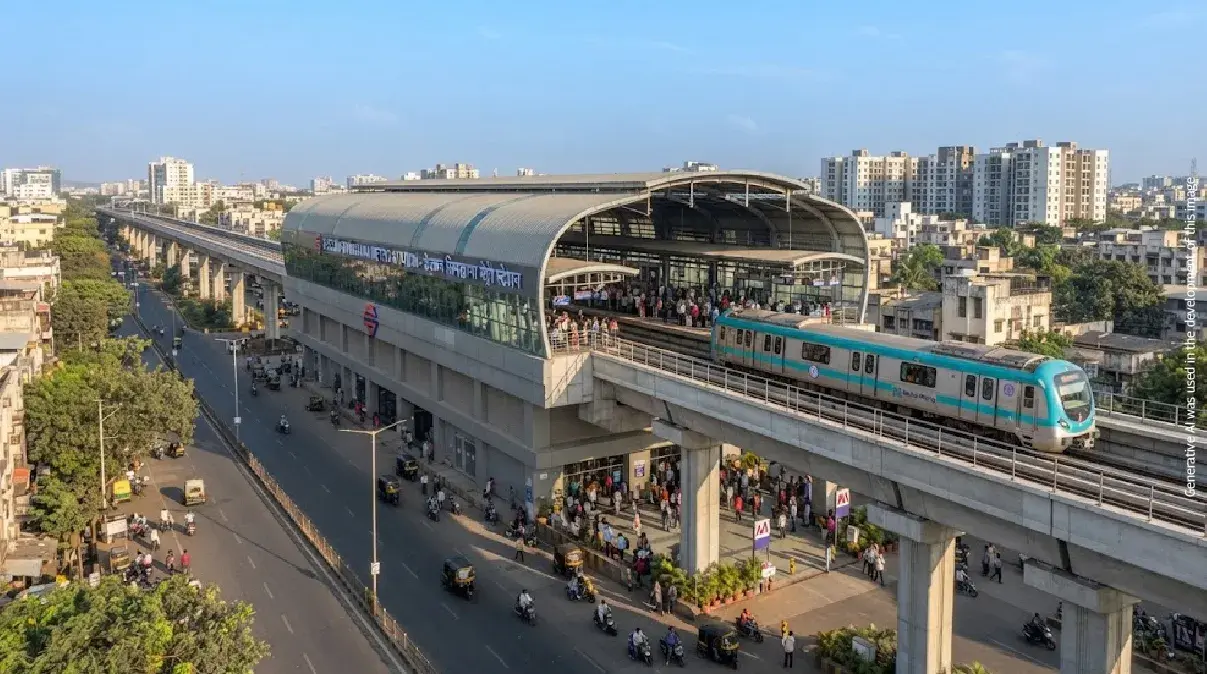
Pune has witnessed major urban expansion over the last few years. Increasing residential development, growing commercial activity, and the rapid rise of IT corridors have significantly increased pressure on the city’s road infrastructure. Long traffic delays and extended travel time have now become a daily challenge for many commuters across Pune.
Because of this, metro connectivity is becoming one of the most important infrastructure developments shaping the city’s future. After the impact created by the first operational metro corridors, Pune Metro Phase 2 is now expected to further improve mobility across multiple residential and commercial zones.
The proposed expansion is designed to improve accessibility between important parts of the city while supporting long term urban growth. For many residents, metro connectivity means faster daily commuting, improved travel convenience, reduced dependence on road traffic, better urban accessibility, stronger future infrastructure growth, and greater lifestyle convenience.
As a result, residential corridors located near upcoming metro routes are increasingly attracting attention from both homebuyers and investors.
Pune Metro Phase 2 is the next proposed expansion of Pune’s metro rail network. The project aims to improve public transportation connectivity across emerging residential corridors, business districts, and suburban growth zones.
The proposed expansion focuses on extending metro accessibility toward areas that continue experiencing growing traffic congestion and increasing commuter movement.
Several important routes have been proposed under the project, including:
The overall objective is to strengthen Pune’s transportation ecosystem while creating better interconnectivity between residential and commercial areas.
Pune’s expanding population and commercial growth have increased transportation pressure across major corridors of the city.
Daily congestion across locations such as:
continues affecting travel efficiency and commuting comfort.
This is one of the biggest reasons why Pune metro phase 2 expansion routes are receiving growing attention from infrastructure planners, developers, and residents alike. The expansion may help improve public transport accessibility, citywide connectivity, travel efficiency, urban mobility, and sustainable transportation infrastructure.
As metro access expands, surrounding neighbourhoods may also witness stronger development activity and infrastructure upgrades.
Several important metro corridors are proposed under the upcoming expansion project.
The Khadakwasla to Kharadi route is expected to become one of the most significant corridors under Pune metro phase 2.
This proposed line may improve east west connectivity while linking residential areas, IT hubs, and commercial districts through a more efficient transportation system.
The corridor is expected to improve accessibility toward:
The route may particularly benefit office commuters travelling daily across the city’s business and employment corridors.
Wagholi has emerged as one of Pune’s rapidly growing residential zones due to expanding infrastructure and improving housing development.
The Ramwadi to Wagholi extension may strengthen connectivity across:
The expansion may also help reduce traffic pressure on Ahmednagar Road, which currently experiences significant congestion during peak hours.
The Vanaz to Chandni Chowk extension is expected to improve metro accessibility across western Pune.
Areas such as:
have witnessed growing residential and commercial development in recent years. Improved metro connectivity may further strengthen accessibility and commuting convenience across these western corridors.
The proposed Hadapsar to Loni Kalbhor corridor may improve transportation access across eastern suburban locations.
The route is expected to support:
As Pune expands toward peripheral areas, suburban metro connectivity is becoming increasingly important for future urban planning.
As infrastructure development steadily reshapes the Pune Metropolitan Region, proposed corridors under Pune Metro Phase 2 are advancing through vital stages of technical evaluation, funding alignment, and tender execution. Ground-level surveys, land acquisition requirements, and structural planning are actively paving the way for a more integrated urban transit grid.
This expansion serves as a primary catalyst for residential and commercial growth. As mass transit extends its reach into new economic corridors, housing demand consistently shifts toward accessible micro-markets. Locations situated near upcoming metro alignments benefit from distinct structural advantages:
By bridging peripheral growth centers with central economic hubs, the ongoing evolution of Pune's metro infrastructure continues to redefine how homebuyers evaluate long-term residential value and liveability.
Kharadi continues to remain one of Pune’s strongest residential and commercial destinations because of its IT ecosystem and employment opportunities.
Improved metro access may further strengthen office connectivity, residential demand, rental market growth, and commercial development.
Because of its proximity to business hubs, Kharadi continues attracting working professionals and long term investors.
Hadapsar has evolved into a major mixed use development corridor with strong residential and commercial activity.
Improved metro connectivity may strengthen accessibility toward:
The metro expansion may further improve the area’s residential attractiveness.
Wagholi is witnessing steady residential development because of expanding infrastructure and comparatively larger housing communities.
Better metro access may improve commute convenience toward commercial and employment corridors across Pune.
Western Pune locations like Bavdhan and Chandni Chowk are witnessing increasing development activity because of road upgrades and improving connectivity infrastructure.
The proposed metro extension may further support long term residential growth across these corridors.
The definition of a desirable residential location is rapidly shifting across urban centers like Pune.
While homebuyers traditionally prioritized central city access, road connectivity, and neighborhood reputation, metro accessibility has firmly established itself as a primary decision-making factor.
Modern homebuyers increasingly seek out locations that offer predictable commute times, lower traffic dependency, stronger infrastructure growth, and improved overall urban convenience. As ongoing Pune metro updates continue to highlight corridor extensions, transit-connected neighborhoods are experiencing a notable surge in homebuyer interest.
Transit infrastructure acts as a powerful catalyst for long-term property value appreciation by fundamentally increasing the desirability of nearby residential micro-markets. Neighborhoods situated close to planned and operational metro corridors frequently benefit from:
This fundamental link between transport infrastructure and housing demand continues to attract strategic focus from investors evaluating future growth potential. Residential developments aligned with evolving connectivity corridors naturally capture the advantages of this momentum.
In western Pune, for example, projects like Mahindra IvyLush are positioned within emerging growth corridors that directly benefit from expanding infrastructure networks and enhanced urban connectivity.
Contemporary urban lifestyles prioritize time, efficiency, and wellness alongside traditional residential specifications. Reliable mass transit directly mitigates the friction of daily city life, helping reduce commute fatigue, travel uncertainty, road traffic dependence, fuel-related expenses, and everyday travel stress. This relief is especially valuable for working professionals commuting regularly toward bustling commercial centers and IT hubs.
Furthermore, metro-linked neighborhoods drastically improve seamless access to essential destinations, including:
As Pune's transportation grid continues to mature, residential demand centered around these transit corridors is poised to strengthen even further.
The ongoing rollout of Pune Metro Phase 2 is designed to influence much more than simple transit efficiency; it serves as a foundational blueprint for future metropolitan development. As the city expands outward into newer residential and commercial zones, high-capacity metro infrastructure actively shapes:
The sustained progress of Phase 2 expansion routes contributes directly toward building a more accessible, sustainable, and interconnected transportation ecosystem. Over time, this expanding network elevates travel efficiency, drives higher public transport adoption, and significantly enhances the day-to-day quality of urban living across Pune.
The development of Pune Metro Phase 2 reflects Pune’s growing focus on infrastructure improvement, mobility enhancement, and long term urban accessibility.
As metro expansion progresses across important corridors, connectivity is expected to become an even stronger factor influencing residential demand and real estate growth across the city.
For commuters, homebuyers, and investors, metro linked development represents more than transportation convenience. It represents improved accessibility, future infrastructure growth, and stronger long term urban potential.
Projects such as Mahindra Citadel align with this growing preference toward better connected residential communities offering improved accessibility and urban convenience.
As Pune’s infrastructure ecosystem continues evolving, residential communities developed by brands like Mahindra Lifespaces may continue attracting homebuyers seeking better connectivity, lifestyle convenience, and future ready urban living.
Disclaimer: This article is for informational and educational purposes only. Project details, routes, timelines, and approvals are subject to change. Readers should verify the latest information with official sources and consult qualified professionals before making any property, investment, or financial decisions.
What is Pune Metro Phase 2?
Pune metro phase 2 is the proposed expansion of Pune’s metro rail network designed to improve connectivity across additional residential and commercial corridors.
Which areas may benefit from Pune Metro Phase 2?
Areas including Kharadi, Hadapsar, Wagholi, Chandni Chowk, Bavdhan, and Khadakwasla may benefit from improved metro connectivity.
Why is metro connectivity important for real estate growth?
Metro connectivity often improves accessibility, commute convenience, rental demand, and overall residential attractiveness.
What are the important Pune Metro Phase 2 expansion routes?
Some proposed routes include Khadakwasla to Kharadi, Ramwadi to Wagholi, Vanaz to Chandni Chowk, and Hadapsar to Loni Kalbhor.
How can Pune Metro Phase 2 improve commuting?
The metro expansion may help reduce traffic congestion, improve travel efficiency, and strengthen connectivity across major residential and commercial corridors in Pune.

Established in 1994, Mahindra Lifespace Developers Ltd. (‘Mahindra Lifespaces’) brings the Mahindra Group’s philosophy of ‘Rise’ to India’s real estate and infrastructure industry through thriving residential communities and enabling business ecosystems.


