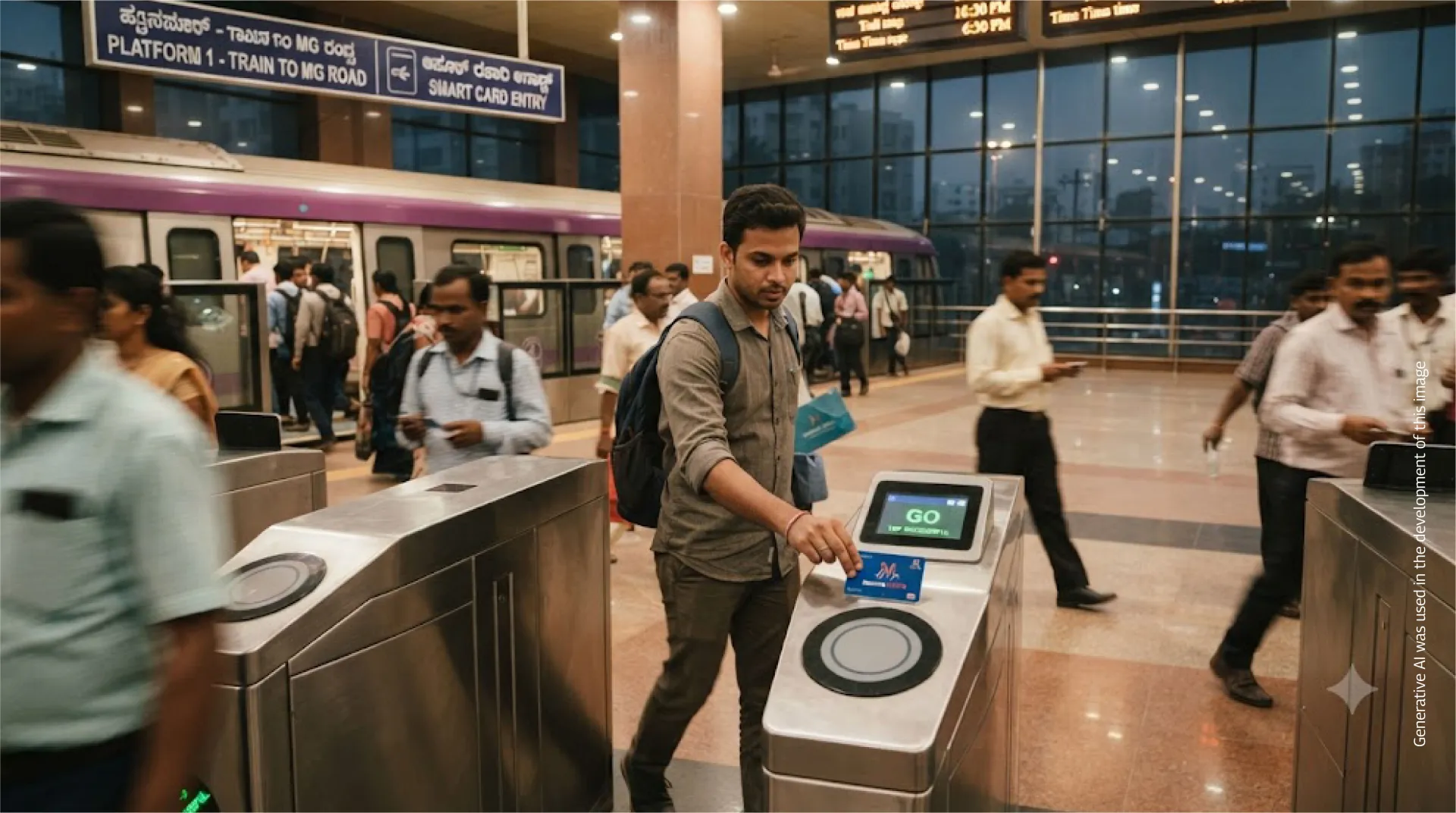
Bengaluru's traffic challenges are no secret. With longer commute times and rising fuel costs, more residents are turning to the city's expanding metro network as a reliable alternative. The growing reach of Namma Metro has transformed the way people travel between residential neighbourhoods, business districts, educational institutions and commercial hubs.
For regular commuters, one question often comes up: Is a Bangalore Metro Pass worth buying, or is it better to continue purchasing daily tickets?
The answer depends on your travel frequency, route, work schedule and monthly commuting expenses. While many commuters focus only on ticket prices, the real value lies in understanding the long-term savings that different travel options can offer.
As Bengaluru continues to expand its metro infrastructure, Mahindra Lifespaces recognises the growing importance of connectivity in home buying decisions. Easy access to metro stations is becoming a key factor for residents seeking convenience, shorter travel times and better quality of life.
In this guide, we break down the available Namma Metro Pass options, compare daily, weekly and monthly travel costs, calculate break-even points and explore how metro connectivity is shaping Bengaluru's most sought-after residential corridors.
The expansion of Namma Metro has significantly improved mobility across Bengaluru. Areas that once required lengthy road journeys can now be reached much faster through metro connectivity.
Benefits include:
For professionals working in Whitefield, MG Road, Indiranagar, Electronic City and other major business districts, metro travel has become a practical solution for everyday commuting.
Before deciding which option is best, it is important to understand the available travel methods offered by Namma Metro.
Single journey tickets are ideal for occasional travellers.
Best suited for:
Advantages:
Limitations:
Smart cards remain one of the most popular options among regular metro users.
Benefits include:
For many commuters, smart cards act as a practical alternative to purchasing individual tickets every day.
Although many commuters plan their travel on a monthly basis, weekly travel budgeting can be a practical option for hybrid workers, consultants, freelancers, and employees who travel to the workplace only a few days a week. Planning travel expenses on a weekly basis allows commuters to match their spending with their actual travel frequency and avoid paying for unused travel days.
A Bangalore Metro Monthly Pass or equivalent monthly travel strategy can provide substantial savings for people travelling regularly.
This is particularly beneficial for:
The more frequently you travel, the greater the financial advantage.
One of the easiest ways to evaluate a BMRCL Pass is through a simple break-even calculation.
Formula
Monthly Travel Cost = Daily Round Trip Fare × Travel Days
This approach helps commuters make financially informed decisions rather than relying on assumptions.
Scenario 1: Full time IT professional
Daily Fare: ₹70
Travel Days: 22
In this case, daily travel remains the better option.
Students often benefit the most from monthly commuting plans because of their high travel frequency.
| Daily Fare | Travel Days | Annual Ticket Cost | Estimated Pass Cost | Annual Savings |
|---|---|---|---|---|
| ₹60 | 22 | ₹15,840 | ₹12,000 | ₹3,840 |
| ₹70 | 22 | ₹18,480 | ₹14,400 | ₹4,080 |
| ₹80 | 22 | ₹21,120 | ₹15,600 | ₹5,520 |
Most discussions around a Namma Metro Pass focus only on fare savings.
However, there are additional benefits:
These indirect savings often exceed ticket savings.
Infrastructure and real estate have always shared a close relationship. In Bengaluru, metro expansion is increasingly influencing where people choose to live.
Homebuyers today evaluate:
Areas with strong metro access often experience increased residential demand due to improved convenience and reduced commute times.
Among Bengaluru's most closely watched micro markets, Whitefield and Hosur Road continue to benefit from ongoing infrastructure development and connectivity improvements.
For professionals seeking shorter commutes, metro accessibility has become a major consideration.
Projects such as Mahindra Blossom in Whitefield offer access to one of Bengaluru's most established technology corridors while benefiting from improving transportation infrastructure.
Similarly, Mahindra NewHaven off Hosur Road is located in a rapidly developing region where connectivity continues to strengthen as infrastructure projects progress across South Bengaluru.
Rather than spending years managing long daily commutes, many homebuyers now prefer locations that place them closer to major transit networks from the beginning.
The continued expansion of Bengaluru's metro network is expected to improve access across several key growth corridors.
As new stations become operational, commuters can expect improved first mile and last mile connectivity, reduced dependence on road travel, better access to business districts, and greater convenience for students. Improved Metro access could also increase residential demand near stations as more people prioritise convenient public transport connections. As a result, Metro accessibility is becoming an increasingly important factor for both residents and property investors when evaluating locations.
For official updates on fares, routes and metro services, commuters can refer to the official website of Bangalore Metro Rail Corporation Limited (BMRCL).
Choosing the right Bangalore Metro Pass is not simply about reducing ticket costs. It is about understanding your travel habits, identifying long-term savings opportunities and making smarter mobility decisions.
For regular office goers, students and daily commuters, a monthly travel option often delivers the strongest value. Hybrid workers and occasional travellers may find daily or weekly travel plans more economical.
At the same time, Bengaluru's expanding metro network is reshaping the city's residential landscape. Connectivity is no longer just a transportation advantage. It has become an important lifestyle consideration. As homebuyers increasingly prioritise locations with strong transit access, developments by Mahindra Lifespaces in growth corridors such as Whitefield and Hosur Road reflect the evolving preferences of modern urban residents who value convenience, accessibility and long-term liveability.
Disclaimer: This article is intended for informational purposes only and should not be considered financial, investment, real estate, travel, or professional advice. Information related to Bangalore Metro passes, fares, travel options, savings calculations, routes, services, and Metro connectivity may change over time. Pass availability, pricing, discounts, and eligibility can vary based on BMRCL policies and operational updates. Readers are advised to verify the latest information through BMRCL and other official sources before making travel, financial, property purchase, or investment decisions.
1. Is a Bangalore Metro Pass cheaper than buying daily tickets?
For commuters travelling more than 20 to 22 days per month, a Bangalore Metro Pass is generally more cost effective than purchasing daily tickets. The higher the travel frequency, the greater the potential savings.
2. How do I calculate whether a Namma Metro Pass is worth buying?
Multiply your daily round trip fare by the number of travel days in a month. If that amount exceeds the monthly pass cost, a Namma Metro Pass is likely the better financial choice.
3. Who benefits most from a Bangalore Metro Monthly Pass?
Full-time office employees, students and regular commuters who travel almost every day typically benefit the most from a Bangalore Metro Monthly Pass.
4. Are weekly metro travel options better for hybrid workers?
Yes. Employees travelling only two or three days a week may find weekly or daily ticket options more economical than committing to a monthly pass.
5. Does living near a metro station increase convenience in Bengaluru?
Yes. Homes located near metro corridors often provide shorter commute times, easier access to employment centres and improved connectivity across the city.
6. How is metro expansion affecting Bengaluru real estate?
Metro expansion is increasing demand in well-connected locations such as Whitefield and Hosur Road, where improved accessibility is attracting both homebuyers and investors.

Established in 1994, Mahindra Lifespace Developers Ltd. (‘Mahindra Lifespaces’) brings the Mahindra Group’s philosophy of ‘Rise’ to India’s real estate and infrastructure industry through thriving residential communities and enabling business ecosystems.


