Energy Efficiency
Energy Strategy
Residential
Our 3-pillar energy strategy for residential developments spans the entire lifecycle from design and construction to occupancy. By integrating passive design, energy-efficient technologies, and renewable energy solutions, we aim to reduce energy demand and enable low-carbon living.
Design Stage | Construction Stage | Occupancy Stage |
|---|
| Strategic Interventions |
Project office, sales gallery, and residential homes
Demand reduction through climate-responsive design (CRD)- CRD includes passive design measures such as avoid, orient, shade, reflect
- Passive design strategies are incorporated to achieve comfortable internal temperatures through appropriate use of walling and roofing materials and efficient, shaded, and right-sized windows to reduce solar heat gain
- For optimal lighting, an effective wall-window ratio is used
Energy-efficient equipments- Design for energy-efficient lighting requirements
- Design for usage of solar lights, water heating systems
- Design for use of energy-efficient water pumps, motors, lifts
Integration of renewable energy- Design for use of on-site (rooftop) solar, wind, etc.
- Tie-up with a 3rd party renewable energy distributor to meet remaining energy requirements for residential homes and common areas.
Plotted developments (common areas within them developed by us)Energy-efficient equipments - Use of LED lights and solar streetlights in common areas
- Design for use of energy-efficient water pumps, motors, lifts
| Project office, sales gallery
- Energy sensitisation — posters, training, etc. (behavioural interventions)
- Metering for office and contractor electricity usage — Ohm assistant meters by Sustlabs installed across offices
- Use of energy-efficient equipment — star-rated ACs, refrigerators, fans, lights, etc
- Process improvements — through the sustainability maturity assessment framework
| Residential homes
- Energy sensitisation (behavioural interventions) - through resident assistance, sustainability flipbook, and capacity-building workshops (Make the Switch).
- Use of energy-efficient equipment — star-rated ACs, refrigerators, fans, lights, etc.
- Use of on-site renewable energy for 100% common area lighting
- Use of grid-based renewable energy from a 3rd party for powering remaining energy requirements for residential homes and common area
|
| Reference Materials |
- Sustainable design guidelines
- Sustainable office guidelines
- IGBC green homes/net zero/GRIHA criteria
- Energy conservation building code for residential buildings (ECBC-R) and ECSBC (energy conservation and sustainable building code)
- Net zero energy action plan
| - Sustainable office guidelines
- Planet-positive action plan
| - Resident assist sustainability flipbook
- Capacity-building workshops (make the switch)
- Marketing collaterals and brochures
|
IC & IC
Our 3-pillar energy strategy for IC & IC focuses on demand reduction through climate-responsive design, energy-efficient operations, and integration of renewable energy sources. These measures are embedded across the development and O&M stages, enabling resource efficiency and decarbonisation at scale.
| Development Stage | Operation and Maintenance Stage |
|---|
| Strategic Interventions |
Project/Admin/O&M Office:
Demand reduction through climate-responsive design (CRD)- CRD includes passive design measures such as avoid, orient, shade, reflect
- Passive design strategies are incorporated to achieve comfortable internal temperatures through appropriate use of walling and roofing materials and efficient, shaded, and right-sized windows to reduce solar heat gain
- For optimal lighting, an effective wall-window ratio is used
Energy-efficient equipments- Design for energy-efficient lighting requirements
- Design for usage of solar lights, water heating systems
- Design for use of energy-efficient water pumps, motors, lifts
Integration of renewable energy- Design for use of on-site (rooftop) solar, wind, etc.
| Offices, sales gallery, and common areas
Demand reduction - Use of dual-fuel diesel generator sets
- Metering for office - Ohm assistant meters by Sustlabs installed across offices
Energy efficiency - Energy sensitisation – posters, training, etc. (behavioural interventions)
- Use of energy-efficient equipment – Star-rated ACs, refrigerators, fans, lights, etc.
- Process improvements – through sustainability maturity reviews
Integration of renewable energy- Use of on-site and off-site renewable energy
|
| Reference Materials |
- Sustainable design guidelines
- Sustainable office guidelines
- IGBC green city/township criteria
- Energy conservation building code
- Planet-positive action plan
| - Sustainable office guidelines
- SOPs
- Capacity-building workshops - Make the Switch, etc.
- Planet-positive action plan
|
| Impact |
- Energy-efficient, green building portfolio
- Reduction in construction cost
| - Reduction in lifecycle cost
|
Renewable Energy
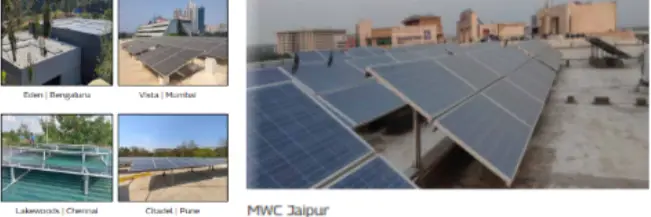
After minimising energy demand through climate-responsive design and use of energy-efficient systems, we turn to cleaner sources of energy. Our focus on renewables has shown results. We are increasingly integrating renewable energy solutions during the construction phase within our residential projects to reduce our carbon footprint. Apart from on-site RE, we also initiated procuring renewable energy from the grid at our residential project, resulting in operational cost savings, underscoring both environmental and economic benefits.
| List of on-site renewable energy projects - construction phase | Capacity in kWp |
|---|
| Eden, Bangalore | 60 |
| Vista, Mumbai | 30 |
| Lakewoods, Chennai | 6 |
| Citadel, Pune | 30 |
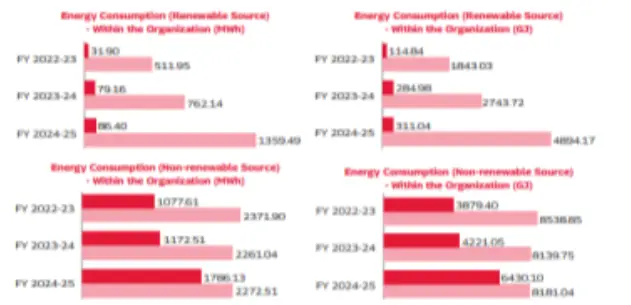
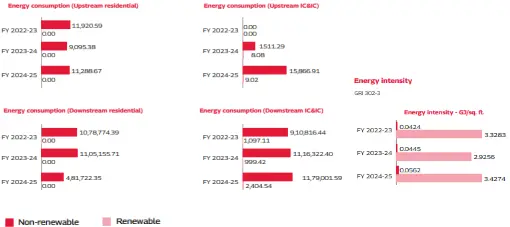
Energy Trends
Energy efficiency measures
Impacted SDGs:
| Initiative category | Initiative type | Annual savings (MWh) | Annual emission savings (tCO₂e) | Annual monetary savings (₹ Lakh) |
|---|
| Low-carbon energy generation | Solar PV | 1718 | 1250 | 233 |
| Lighting | 10 | 8 | 1.22 |
| Company policy or behavioural change | Resource efficiency | 10 | 7 | 3 |
| Energy efficiency in production processes | Resource efficiency | 6 | 4 | 2 |
| Smart control system | 0.6 | 0.5 | 0.2 |
| Low-carbon energy consumption | Solar and wind energy from grid | 866 | 629 | 73 |
| Biogas | 50 | 0.14 | 0.05 |
| Total | | 2611 | 1898 | 313 |
Varied energy efficiency initiatives with associated impact can be found here.