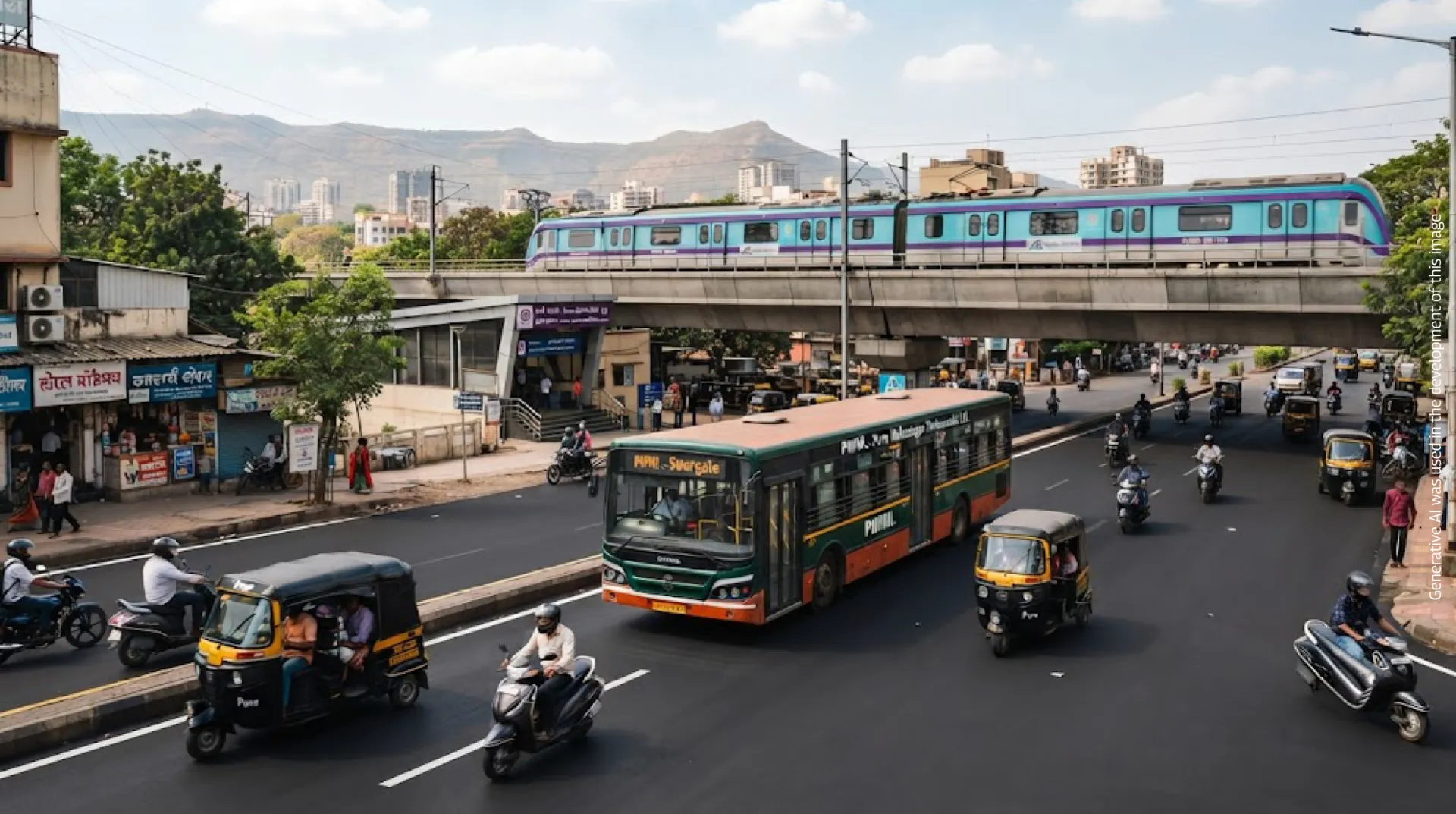
Pune's metro network is rapidly changing how people travel across the city. What once involved long hours in traffic can now be completed in significantly less time using the expanding metro system.
As new stations become operational and connectivity improves, Pune metro is emerging as a preferred transportation choice for students, professionals, and families alike.
However, a metro journey does not begin and end at the station. For most commuters, the final stretch between a station and their home, workplace, college, or commercial destination plays an equally important role in determining whether public transport is convenient enough for daily use.
As Pune continues to invest in integrated urban infrastructure, Mahindra Lifespaces and other developers are increasingly recognising the importance of well-connected neighbourhoods that reduce travel time and improve everyday convenience. This growing focus on accessibility is making metro connectivity a major factor in both residential choices and real estate demand.
Last-mile connectivity refers to the transportation options available after a commuter exits a metro station and needs to reach their final destination. While metro networks efficiently cover long distances, commuters often rely on feeder services such as auto-rickshaws, buses, bicycles, or walking routes for the remaining part of the journey.
For example, a professional travelling from Pimpri to Shivajinagar may use the metro for most of the trip but still require an auto-rickshaw or feeder bus to reach the office from the station.
Strong last-mile connectivity plays a vital role in making public transportation more practical and efficient for daily commuters. It helps reduce overall travel time, improves commuter convenience, increases metro ridership, reduces dependence on private vehicles, and supports more sustainable urban mobility. Cities with well-integrated last-mile transportation networks typically witness higher public transport adoption, smoother commuting experiences, and lower levels of traffic congestion, making urban travel more efficient for residents.
The Pune Metro network has become an important part of the city's transportation ecosystem. It connects residential neighbourhoods, commercial districts, educational institutions, and employment hubs across key corridors.
Some of the biggest advantages include:
As additional phases are introduced, metro connectivity is expected to become an even stronger influence on where people choose to live and invest.
Pune Metro's effectiveness depends heavily on the transport options available around its stations. Several solutions are helping commuters bridge the gap between stations and destinations.
Pune Metro auto-rickshaw services
Auto-rickshaws remain one of the most widely used last-mile transportation options in Pune.
At major metro stations such as:
commuters can easily access auto-rickshaw services for short-distance travel.
Recent initiatives have introduced shared auto-rickshaw services at selected Pune Metro stations, making last-mile travel more affordable and accessible for commuters. These services offer immediate availability, flexible routes, convenient transportation for short distances, and a practical alternative during non-peak bus hours. While they provide an efficient way to complete the final leg of a journey, availability and fare consistency may vary depending on the station, time of day, and local demand.
Pune Metro station feeder bus services
Feeder buses play an important role in expanding metro accessibility.
PMPML and metro authorities have been working towards improving feeder connectivity between metro stations and nearby residential and commercial areas.
Key advantages include:
For commuters travelling longer distances after exiting the metro, feeder buses often provide a practical and economical solution.
Pune Metro bike rental services
Shared mobility is becoming increasingly popular among urban commuters. To support sustainable transportation, bike rental and e-bike initiatives are being introduced near selected Pune Metro stations, offering commuters a convenient option for completing short journeys.
These services enable quick travel over short distances, promote environment-friendly mobility, reduce dependence on private vehicles, and provide greater flexibility during peak hours. As shared mobility continues to expand, bike rentals are becoming an increasingly practical solution for improving first-mile and last-mile connectivity across the city.
Bike-sharing solutions are particularly useful in commercial districts and educational hubs where parking and traffic congestion remain challenges.
Walking and pedestrian connectivity
An often-overlooked aspect of last-mile transportation is walkability.
Safe pedestrian infrastructure significantly improves the metro commuting experience.
Important factors include:
As Pune continues to develop transit-oriented neighbourhoods, pedestrian-friendly infrastructure will become increasingly important.
The quality of last-mile connectivity varies across Pune's transit network, with select hubs currently providing an optimal blend of rapid metro access, auto-rickshaws, feeder buses, and shared mobility options. This seamless transition between transport modes has made public transit accessibility one of the single most influential factors in modern residential decision-making.
Today's homebuyers increasingly prioritize locations offering:
The convenience of living near an operational metro corridor not only elevates daily quality of life but also significantly cuts down private vehicular expenses. Master-planned residential communities—such as Mahindra Citadel in Pimpri, strategically positioned right next to the Sant Tukaram Metro Station—benefit immensely from this transit-oriented advantage, giving residents effortless mobility across the PCMC growth corridor.
Infrastructure and urban real estate are inextricably linked. Areas receiving major mass transit investments consistently experience accelerated residential demand, robust rental activity, commercial expansion, and enhanced civic infrastructure. These improvements elevate both the liveability and long-term appeal of a micro-market, drawing intense interest from end-users and investors alike.
Across major Indian metropolitan regions, transit corridors have a proven track record of catalyzing real estate value due to several core drivers:
Pune's urban transportation ecosystem is scaling rapidly to address commuter needs. Over the coming years, the network will be further defined by:
The ultimate vision is a frictionless commuter experience where residents can effortlessly transition across multiple modes of transport—from metro lines to last-mile shared mobility—without unnecessary delays or transit friction.
For official updates on routes, stations, and network expansion, readers can refer to the Pune Metro Official Website.
As Pune's metro network continues to expand, the importance of efficient last-mile connectivity will only increase. Commuters today expect more than just a metro station nearby. They look for integrated mobility solutions that make daily travel faster, safer, and more convenient.
Neighbourhoods that combine strong metro access with reliable feeder services, walkability, and supporting infrastructure are likely to remain highly desirable.
Developments such as Mahindra Citadel and Mahindra IvyLush reflect the growing preference for connected living, while Mahindra Lifespaces continues to focus on creating thoughtfully planned communities that align with the evolving mobility needs of modern urban residents.
Disclaimer: This article is for informational purposes only and should not be considered travel, legal, financial, investment, or professional advice. Information related to Pune Metro stations, auto rickshaw services, feeder buses, bike rental availability, transport routes, infrastructure projects, and last mile connectivity is subject to change. Readers are advised to verify the latest information with Maha Metro, PMPML, and other relevant government authorities before planning their journey or making any travel, property, or investment related decisions.
It refers to the transportation options available after exiting a metro station, including auto-rickshaws, feeder buses, bike rentals, and pedestrian infrastructure that help commuters reach their final destination.
Most major stations provide access to auto-rickshaw services, although availability can vary depending on the station, time of day, and demand.
A feeder service connects nearby residential, commercial, and educational areas to metro stations through buses, autos, or other transport modes.
Bike rental and e-bike initiatives are gradually being introduced near selected metro stations to improve first-mile and last-mile connectivity.
PCMC, Shivajinagar, Civil Court, Ramwadi, and Vanaz are among the stations offering multiple transportation options and strong commuter accessibility.
Properties located near metro corridors often experience stronger demand due to improved accessibility, shorter commute times, and better connectivity to employment hubs.
Established in 1994, Mahindra Lifespace Developers Ltd. (‘Mahindra Lifespaces’) brings the Mahindra Group’s philosophy of ‘Rise’ to India’s real estate and infrastructure industry through thriving residential communities and enabling business ecosystems.


