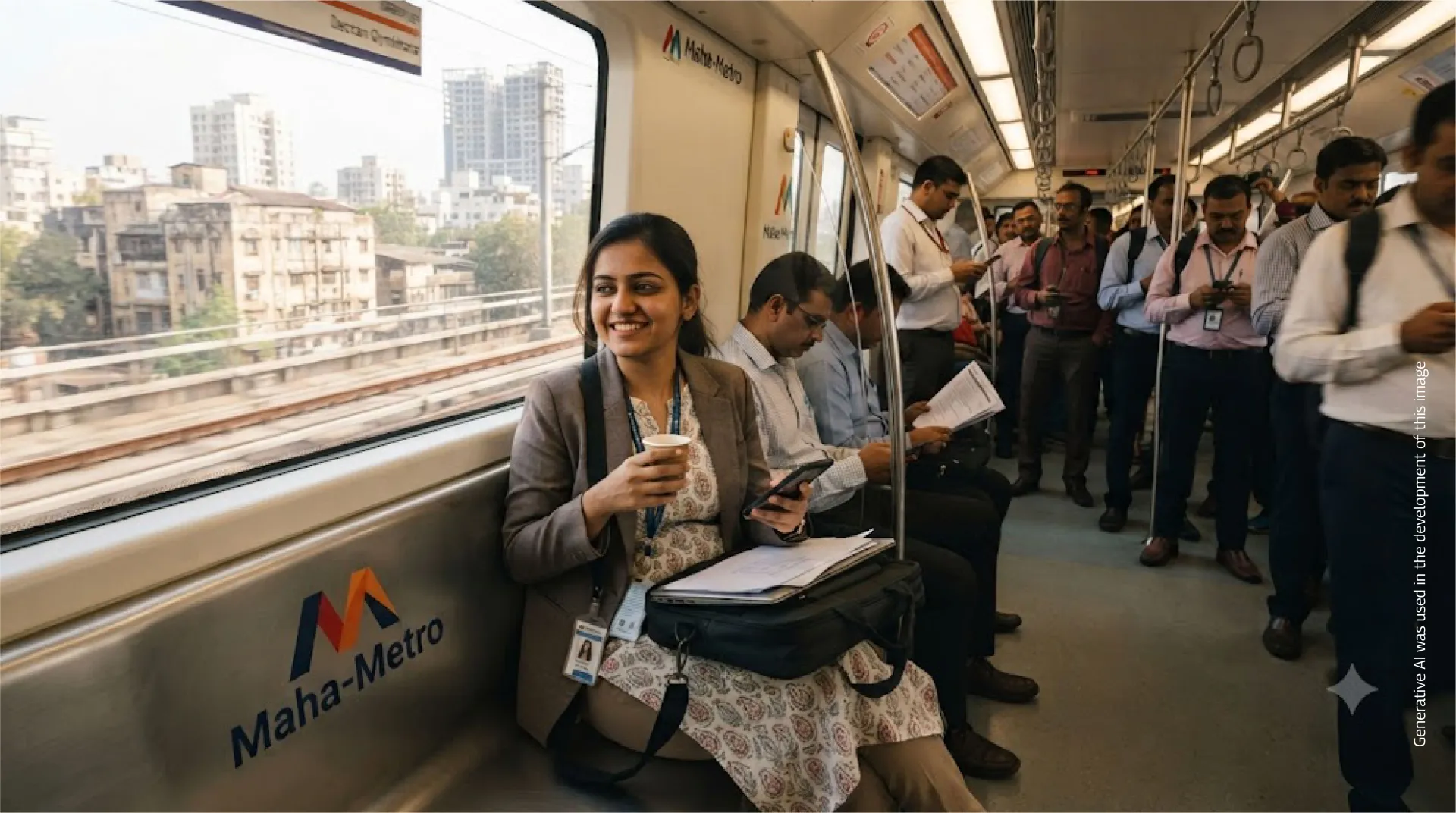
Pune's transformation over the past decade has been driven by a combination of economic growth, IT expansion, industrial development, and infrastructure investment. Among all urban infrastructure projects shaping the city's future, the metro network stands out as one of the most influential.
The operational metro corridors have already changed how people move between key employment hubs, educational institutions, commercial districts, and residential neighbourhoods. Yet the bigger story lies ahead. The next phase of Pune Metro Future Extensions has the potential to reshape how the city grows over the next several years.
With planned corridors, network extensions, and stronger regional connectivity, the Pune Metro 2030 vision aims to create a more connected city where daily commutes become faster and previously peripheral locations become more accessible. Proposed links toward areas such as Nigdi and future expansion corridors are expected to support both urban mobility and long term development.
For homebuyers, investors, and city planners alike, understanding where the network is heading provides valuable insight into Pune's next growth cycle.
Pune Metro currently connects major destinations across Pune and Pimpri Chinchwad through operational and under development corridors. Existing lines have already improved connectivity between residential areas and business districts. Proposed extensions aim to expand this reach even further.
The next chapter involves strengthening connectivity toward growing residential and industrial belts, including the Pune Metro Nigdi Extension and future network proposals that support the broader Pune Metro 2030 roadmap.
Most people view metro projects as transportation upgrades. In reality, metro systems influence much more than travel. Cities across India have witnessed a clear pattern:
This is why metro connectivity has become one of the first factors homebuyers evaluate while selecting a home.
As Pune continues to expand beyond traditional city limits, metro connectivity can help reduce travel dependence on private vehicles while supporting more balanced urban development.
The vision for the Pune Metro extends far beyond individual stations and routes. By 2030, the framework is designed to transform the metropolitan landscape into an interconnected urban center where:
Future proposals under discussion aim to extend the wider network toward key growth corridors such as Chandni Chowk, Wagholi, Kharadi, Loni Kalbhor, and Khadakwasla. These planned extensions have the potential to reshape development patterns across the entire Pune Metropolitan Region, acting as an early indicator of the city's next real estate cycle.
For homebuyers and investors, locations positioned along these upcoming metro corridors consistently deliver distinct structural advantages:
As infrastructure expansion redefines the city's boundaries, transit-connected communities continue to emerge as the most desirable addresses for long-term residential value and urban living in Pune.
One of the most discussed projects within Pune Metro Future Extensions is the extension from PCMC toward Nigdi.
Nigdi sits within the Pimpri Chinchwad region, one of Maharashtra's most important industrial and residential zones.
The extension is expected to improve access for residents travelling toward:
The proposed corridor includes stations around Chinchwad, Akurdi, Nigdi and Bhakti Shakti.
The extension could benefit:
Historically, areas receiving improved metro access often experience greater residential interest because commuting becomes more predictable and convenient.
The term Pune Metro Mohol has increasingly appeared in discussions around future urban mobility and regional connectivity.
While public discussions often focus on currently approved projects, long term planning looks beyond immediate construction and considers how future corridors can support population growth, economic activity, and emerging residential zones.
Future corridors such as Pune Metro Mohol could help improve regional integration, support new residential catchments, reduce congestion on existing roads, encourage transit oriented development, and enable more balanced city expansion. This broader approach forms an important part of the Pune Metro 2030 vision.
A common misstep among homebuyers is focusing exclusively on a property's current connectivity while ignoring upcoming infrastructure shifts. Evaluating a location's long-term potential requires a forward-looking strategy:
As metro expansion continues to reshape mobility patterns, homebuyers increasingly seek communities that offer both connectivity and quality of life. This trend is visible in several emerging residential destinations across Pune.
Mahindra Lifespaces has established thoughtfully designed residential developments in strategic Pune locations that benefit from the city's ongoing infrastructure evolution.
For example:
Located within one of Pune's most prominent growth corridors, Mahindra IvyLush offers access to a location that continues to benefit from infrastructure improvements, employment growth, and expanding connectivity.
Situated in Pimpri, Mahindra Citadel places residents within one of Pune's most established urban centres, close to the region that is expected to benefit from the Pune Metro Nigdi Extension and broader mobility upgrades.
Rather than chasing short term trends, many homebuyers today prefer communities positioned within long term growth corridors supported by infrastructure investment.
The future of Pune is being shaped not only by where people live and work today, but also by how they will move across the city in the years ahead.
The planned Pune Metro Future Extensions, including discussions around Pune Metro Mohol, the Pune Metro Nigdi Extension, and the wider Pune Metro 2030 vision, represent more than transportation projects. They reflect a long term strategy to improve connectivity, strengthen liveability, and support sustainable urban growth.
As infrastructure expands, the relationship between mobility and housing will become even stronger. For homebuyers evaluating future ready locations, connectivity will remain a defining factor. Developments by Mahindra Lifespaces in Pune's growth corridors offer an opportunity to be part of a city that continues to evolve alongside its infrastructure ambitions.
Maha Metro's official project updates can be referenced through the official Pune Metro project website for readers seeking the latest network and expansion information.
Disclaimer: This article is intended for informational purposes only and should not be considered legal, financial, investment, real estate, travel, or professional advice. Information related to Pune Metro future extensions, proposed corridors, approvals, DPR status, station locations, project timelines, connectivity plans, and potential impact on residential demand may change as projects progress. Readers are advised to verify the latest information through Maha Metro, government authorities, and other official sources before making any property purchase, investment, or travel related decision.
1. What are the major Pune Metro future extensions planned for 2030?
The major proposals include the Pune Metro Nigdi Extension, Swargate to Katraj extension, Ramwadi to Wagholi corridor, Chandni Chowk extension, and additional future corridors being discussed under the broader Pune Metro 2030 vision.
2. How will the Pune Metro Nigdi Extension benefit residents?
The extension is expected to improve connectivity between Nigdi, Akurdi, Chinchwad, PCMC, and central Pune, helping reduce travel time for daily commuters.
3. Is Pune Metro 2030 expected to increase residential demand near stations?
Metro connectivity often improves accessibility and convenience, making nearby residential locations more attractive to homebuyers and tenants.
4. Why are homebuyers interested in properties near metro corridors?
Metro connected locations generally offer easier commuting, better access to employment hubs, and stronger long term liveability.
5. What is the significance of Pune Metro Mohol in future planning?
Pune Metro Mohol represents the broader discussion around future network expansion and regional connectivity as Pune prepares for long term urban growth.
6. How should homebuyers evaluate homes near future metro routes?
Homebuyers should assess station proximity, infrastructure development, employment connectivity, legal documentation, and overall neighbourhood growth potential before making a decision.

Established in 1994, Mahindra Lifespace Developers Ltd. (‘Mahindra Lifespaces’) brings the Mahindra Group’s philosophy of ‘Rise’ to India’s real estate and infrastructure industry through thriving residential communities and enabling business ecosystems.


