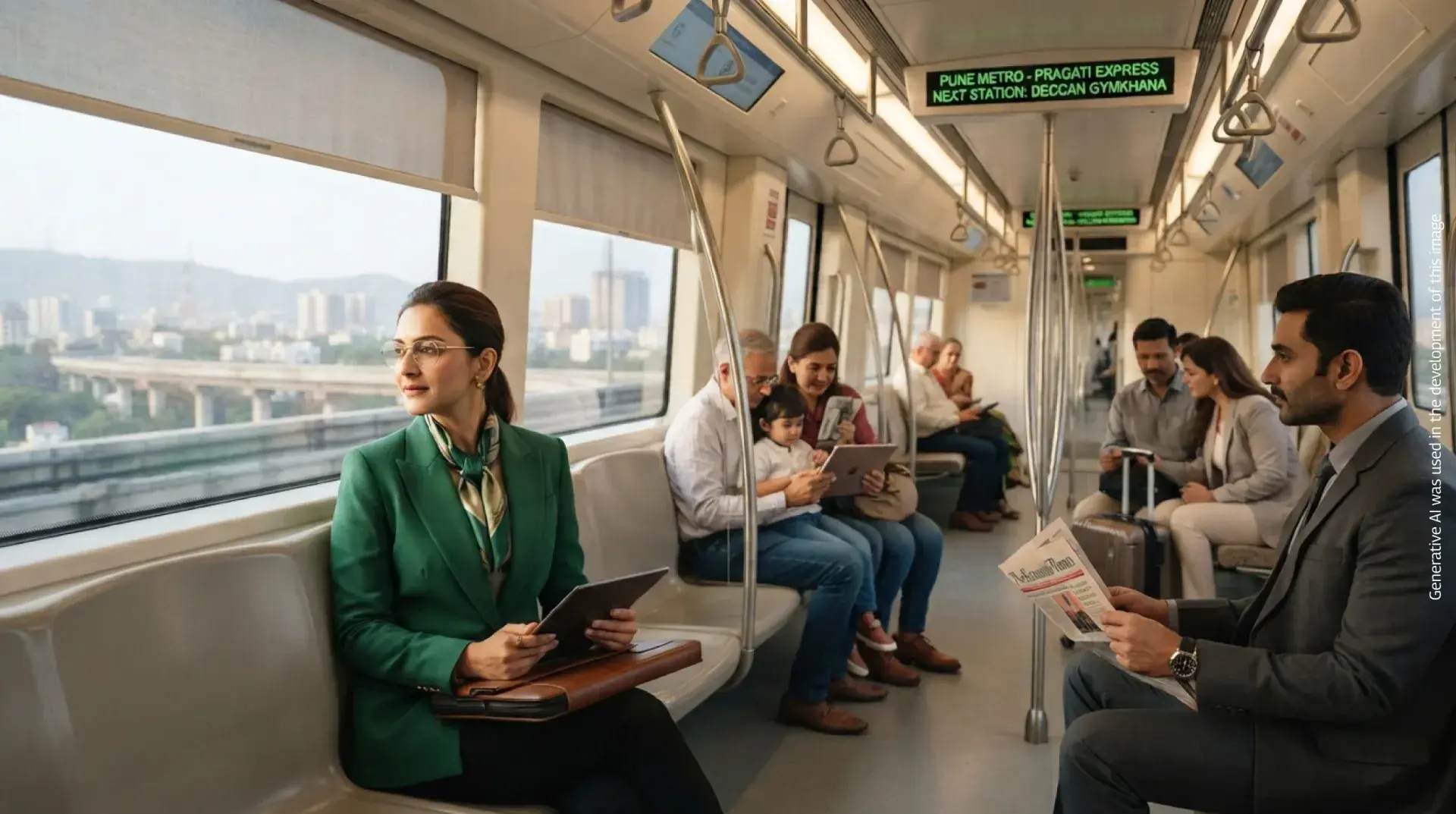
Pune's transformation into one of India's fastest-growing urban centres is closely tied to its expanding infrastructure network. Among the most impactful developments is the Pune Metro, which has enabled thousands of residents to cut down travel time, avoid road congestion, and benefit from a more predictable daily commute.
As the metro network continues to expand across major residential, commercial, and educational areas, knowing a few practical Pune Metro commuting tips can help you get the most out of every journey. Whether you're a first-time rider or a regular commuter, knowing the best travel times, station access points, and time-saving strategies can significantly improve your experience.
In this guide, we'll explore Pune metro peak hours, how to navigate Pune metro entry gates, and simple ways to optimise your Pune metro daily journey.
Pune's growing population and increasing vehicle ownership have placed significant pressure on road infrastructure. To address these challenges, the Pune Metro has emerged as a reliable public transport solution, connecting major destinations while reducing dependency on private vehicles.
The network currently connects important locations across Pune, including areas such as:
With future extensions planned, the metro is expected to play an even greater role in shaping Pune's mobility ecosystem. For route maps, station details, operational updates, and future expansion plans, commuters can refer to the official Pune Metro website managed by Maha Metro.
Many Pune residents previously relied on private vehicles for daily travel. However, growing traffic congestion has increased commute times across several routes.
Metro travel offers advantages such as:
For many professionals, the metro provides a practical alternative to spending hours in traffic each week.
One of the most valuable Pune metro commuter tips is understanding when passenger volumes are at their highest. Just like road traffic, metro systems experience predictable rush periods when trains and stations become significantly busier.
The highest passenger movement generally occurs between 8:00 AM and 10:30 AM.
This period typically sees a surge in daily commuters, with office professionals travelling to business districts, college and university students heading to their campuses, and employees connecting to major employment hubs across the city. As a result, stations such as Civil Court, Shivajinagar, and PCMC experience significantly higher passenger footfall during peak hours, reflecting their importance within Pune's public transportation network.
The evening rush typically occurs between 5:30 PM and 8:00 PM.
During this period, commuters return home from offices, educational institutions, and commercial centres, resulting in longer queues and crowded platforms.
If your schedule allows flexibility, consider travelling:
Even adjusting your journey by 15 to 20 minutes can help avoid the busiest crowds.
Many new riders unknowingly add time to their journeys through avoidable mistakes.
Waiting to buy tickets at the station
During rush hours, ticket counters at Metro stations can experience long queues, which may increase waiting time before boarding. To make the journey smoother, commuters are encouraged to purchase tickets digitally wherever available, recharge their Metro cards in advance, and check fare information before arriving at the station.
These simple steps can help save time and ensure a more convenient commuting experience, especially during peak travel periods.
Choosing the wrong station exit
Large metro stations often have multiple entry and exit points. Selecting the wrong exit can result in additional walking time and unnecessary confusion.
Arriving just before train departure
To ensure a smooth journey, it is advisable to allow a few extra minutes before departure for security checks, navigating through the station, and reaching the correct platform. Arriving a little earlier can help you avoid unnecessary stress, especially during peak hours, and make your overall commuting experience more comfortable and hassle-free.
Many commuters focus only on the station location but overlook one important factor: selecting the right entry and exit gate. Understanding Pune metro entry gates can save several minutes every day.
Check station layouts in advance
Major stations often feature multiple access points connecting to:
Reviewing station maps before travelling can help you identify the most convenient access point.
Choose the exit closest to your destination
Planning your route in advance can make your daily commute much more efficient. Office professionals can identify exits closest to business parks, students can choose gates that provide the easiest access to their educational institutions, and shoppers can select exits leading directly to retail destinations. These small route-planning decisions can save valuable time each day and add up to a more convenient and hassle-free commuting experience over months and years.
Follow station signage
Pune Metro stations are designed with directional signage to help passengers navigate platforms, exits, and interchange points efficiently.
Paying attention to signs rather than following crowds often leads to faster movement through the station.
Navigating Pune's rapid transit network efficiently can significantly reduce daily travel stress and shave valuable minutes off your weekly commute. Adopting a few smart habits helps bypass crowds and streamlines your journey from end to end:
Infrastructure has always been one of the strongest drivers of real estate growth, and across Pune, metro connectivity is increasingly dictating where people choose to live. Today's homebuyers heavily prioritise locations that offer easy access to public transport, shorter travel times, seamless connectivity to employment centres, greater everyday convenience, and strong long-term investment potential.
As Metro corridors continue to expand across the city, many locations that were once considered peripheral are becoming better connected, more accessible, and increasingly attractive to both end-users and investors.
This powerful combination of convenience and connectivity continues to shape modern residential choices across Pune's evolving landscape.
As Pune's transportation infrastructure continues to evolve, well-connected residential communities are attracting greater attention from homebuyers seeking reduced travel times and long-term value.
Mahindra IvyLush (Kharadi Annex): Located within one of Pune's dynamic eastern residential growth corridors, Mahindra IvyLush benefits from expanding city infrastructure.
The nearest operational metro station to Mahindra IvyLush in Kharadi Annex is the Ramwadi Metro Station (located on the Aqua Line), which serves as the primary terminal connecting the eastern corridor toward central Pune. Additionally, upcoming network extensions such as the planned stations near Chandan Nagar and the Kharadi Bypass are positioned to bring future metro access even closer.
As Pune Metro expands further, communities positioned within these well-connected neighbourhoods are set to remain highly attractive to both end-users and investors.
Pune's expanding metro network continues to create stronger connections between residential areas, business districts, educational institutions, and commercial centres. As new corridors become operational, residents can expect greater citywide connectivity, shorter commute times, and improved urban mobility that shapes residential preferences and encourages sustainable urban growth. Following practical commuter tips—such as understanding peak hours, choosing the right entry gates, and planning your daily journey strategically—can save valuable time every week.
At the same time, this infrastructure growth is transforming how people evaluate long-term lifestyle benefits and property values, placing metro-connected communities at the centre of the city's modern evolution.
This growing emphasis on connectivity is actively influencing demand in thriving residential corridors. Developments by Mahindra Lifespaces, including Mahindra IvyLush in Kharadi Annex, Mahindra Citadel in Pimpri, and Mahindra Rivenza in Baner Annex, are positioned in neighbourhoods that directly benefit from Pune's evolving transportation network, robust social infrastructure, and seamless employment accessibility.
Disclaimer: This article is for informational purposes only and should not be considered travel, legal, financial, investment, or professional advice. Information related to Pune Metro routes, station entry gates, train schedules, peak hours, operational updates, infrastructure developments, and public transport services is subject to change. Readers are advised to verify the latest information with Maha Metro and other official authorities before planning their journey or making any travel, property, or investment related decisions.
Pune Metro is generally busiest between 8:00 AM and 10:30 AM in the morning and between 5:30 PM and 8:00 PM in the evening when office-goers and students travel.
Major interchange and central stations such as Civil Court, Shivajinagar, PCMC, and Ruby Hall Clinic often experience higher passenger traffic.
Travelling outside peak hours, choosing the correct station exit, using digital ticketing options, and monitoring service updates can help reduce travel time.
Station maps and signage provide guidance regarding entry and exit points. Reviewing station layouts in advance can help commuters identify the most convenient gate.
For many routes, the metro offers more predictable travel times because it avoids road traffic congestion and signal delays.
Established in 1994, Mahindra Lifespace Developers Ltd. (‘Mahindra Lifespaces’) brings the Mahindra Group’s philosophy of ‘Rise’ to India’s real estate and infrastructure industry through thriving residential communities and enabling business ecosystems.


Schools in Hosur Road Bangalore: Top CBSE, ICSE & International Schools

Mumbai Coastal Road 2026: Route, Travel Times & Property Impact on West Mumbai
Nagaon Beach Alibaug Guide: Resorts, Water Sports & Things to Do

