Pune's public transport landscape is undergoing a significant transformation. As the metro network expands across the city, it is not only reducing travel times but also redefining how residents experience urban mobility. While much of the discussion around metro infrastructure focuses on connectivity and convenience, another equally important aspect deserves attention: accessibility.
For senior citizens, wheelchair users, visually impaired individuals, and people with temporary mobility challenges, accessible transportation is essential for maintaining independence and improving quality of life. A truly modern transit system must ensure that every commuter can travel safely, comfortably, and with dignity.
As this transformation unfolds, Mahindra Lifespaces continues to contribute to the development of well-connected urban communities across Pune through thoughtfully planned residential projects that prioritise sustainability, accessibility, and long-term liveability. As public transportation infrastructure improves, homebuyers are increasingly seeking locations that offer seamless connectivity alongside a better quality of life.
For homebuyers, accessibility is also becoming an important factor when evaluating residential locations. Neighbourhoods connected to metro corridors often provide easier access to healthcare, shopping, education, and employment hubs, making them particularly attractive for families with elderly members.
Accessibility is often viewed as a technical requirement, but its real impact extends much further.
An accessible transport network empowers senior citizens to travel independently, enables wheelchair users to commute with greater confidence, helps people recovering from injuries move comfortably, allows parents with strollers to navigate stations more easily, and improves safety for visually impaired passengers. As cities continue to grow, inclusive mobility is becoming an essential part of urban development. Without accessible transportation, many residents may face barriers in reaching workplaces, healthcare facilities, educational institutions, and social spaces.
This is why Pune Metro accessibility is increasingly being recognised as an important benchmark for evaluating the success of Pune's public transportation system and its commitment to creating a more inclusive and commuter friendly city.
The growing number of elderly residents in urban India is influencing how transportation systems are planned and designed.
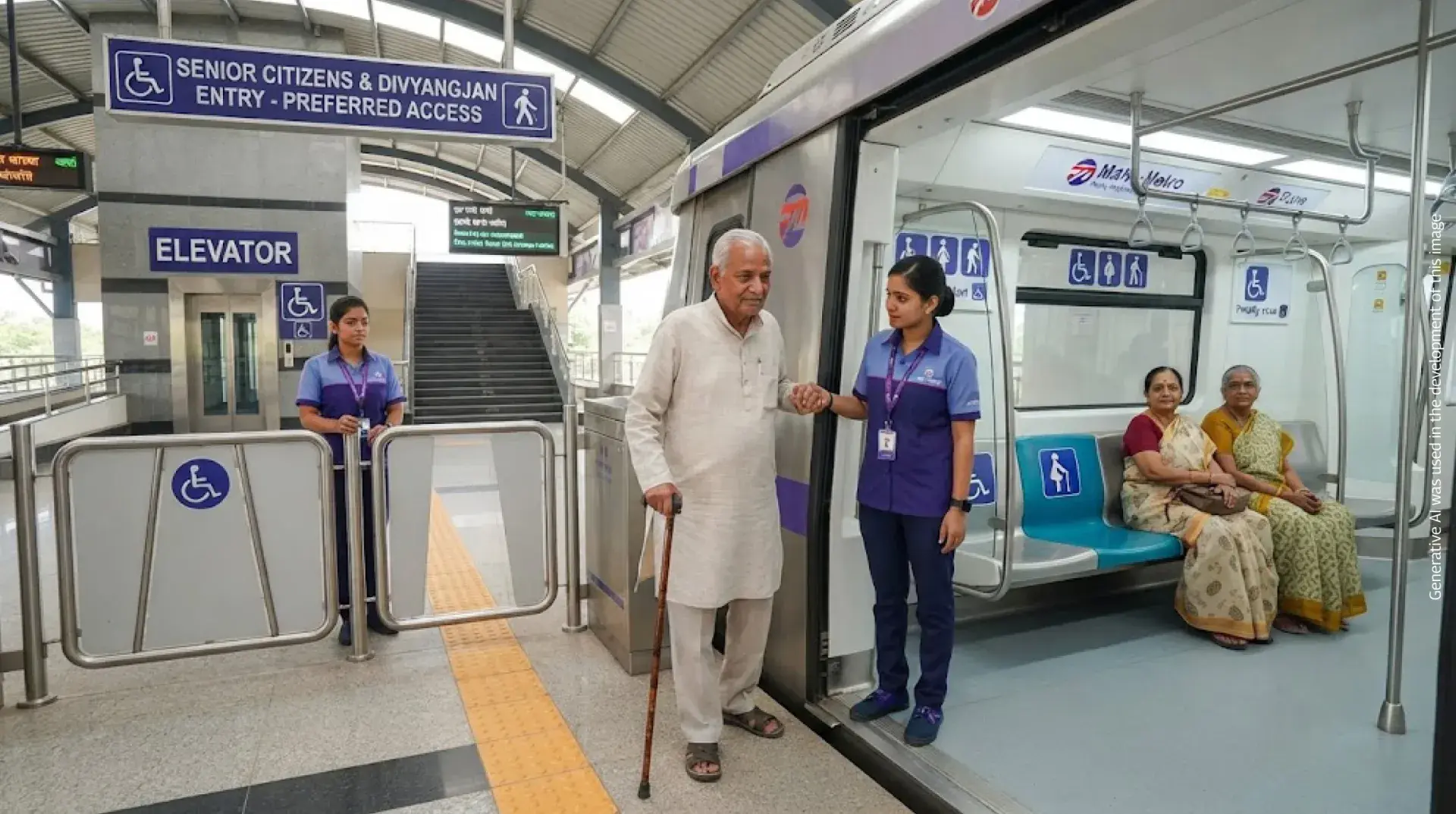
For many older adults, public transportation provides greater independence by reducing dependence on private vehicles, offering predictable travel times, lowering the stress associated with daily commuting, improving access to healthcare facilities, and supporting greater social mobility. The growing emphasis on Maha Metro elderly facilities reflects the increasing recognition of these needs. Features such as elevators, clear signage, reserved seating, and step free access help senior citizens travel with greater confidence, comfort, and dignity.
As Pune's Metro network continues to expand, Maha Metro elderly initiatives are expected to play an even more important role in creating a safer, more inclusive, and accessible public transportation system.
The metro system incorporates several design features aimed at improving accessibility and passenger comfort.
For the latest station facilities, accessibility updates, and passenger services, commuters can visit the official website of Pune Metro Official Website.
Elevators and lift access
One of the most important accessibility features within the metro network is the availability of elevators. Metro stations often require passengers to move between multiple levels, making lift access essential for:
Elevators significantly improve pune metro disabled access by eliminating the need to navigate long flights of stairs.
Wheelchair-friendly ramps
A key component of pune metro wheelchair accessibility is the provision of ramps at station entrances and exits.
These ramps help create a barrier-free travel experience by enabling easier movement between street level and station facilities. Wheelchair friendly ramps play a vital role in creating a more inclusive and barrier free commuting experience. They improve independence for wheelchair users, enhance passenger safety, make station navigation easier, and provide better accessibility for mobility devices such as wheelchairs, walkers, and strollers.
As Pune Metro accessibility continues to improve, the development of wheelchair friendly infrastructure remains a key priority in ensuring that public transportation is safe, convenient, and accessible for all commuters.
Tactile pathways for visually impaired commuters
Tactile pathways are specially designed textured surfaces that help visually impaired passengers navigate stations independently.
Tactile pathways help visually impaired passengers navigate Metro stations more safely and independently by guiding movement through the station, indicating platform edges, identifying key access points, and improving overall passenger safety. Although they are often overlooked, these specially designed pathways play a vital role in strengthening Pune Metro disabled access, making the Metro system more inclusive and easier to navigate for visually impaired travellers.
Accessible toilets
Accessibility extends beyond transportation itself. Many metro stations incorporate accessible washrooms that accommodate wheelchair users and individuals requiring additional support.
These facilities contribute to a more comfortable commuting experience, particularly for elderly passengers and those travelling longer distances.
Reserved seating for priority passengers
Reserved seating areas improve convenience for:
These designated spaces support the broader goal of creating a more inclusive and comfortable travel experience across the metro network.
True mass transit accessibility requires an uninterrupted chain of mobility. Rather than relying on isolated features, Pune Metro provides an end-to-end accessible experience designed to give wheelchair users independence, safety, and comfort at every stage of their commute.
While metro infrastructure plays a critical role, the commuter journey does not begin or end at the station.
Several external factors influence the effectiveness of pune metro accessibility, including:
Even the most accessible station can become difficult to use if surrounding infrastructure is poorly designed. Improving first-mile and last-mile connectivity remains one of the most important opportunities for enhancing pune metro disabled access across the city.
Accessibility is increasingly shaping real estate decisions. Families are considering factors such as:
These considerations are becoming increasingly important for multi-generational households. As pune metro accessibility continues to improve, many homebuyers are prioritising neighbourhoods that allow seniors and people with mobility challenges to move around more independently.
Developments such as Mahindra Citadel in Pimpri benefit from their proximity to major connectivity corridors, helping residents access workplaces, healthcare facilities, retail destinations, and public transportation with greater convenience. Compare with wider options like flats in Pune below 4 crores.
Transit-oriented neighbourhoods are becoming increasingly attractive because they support mobility, reduce commuting stress, and enhance overall quality of life.
One trend that receives little attention in discussions around transportation is ageing-in-place living.
This concept refers to enabling senior citizens to continue living independently within their communities as they grow older.
Metro-connected neighbourhoods can support ageing-in-place by providing:
As Pune continues to grow, accessible transportation infrastructure will play a crucial role in supporting the city's ageing population.
This is another reason why Maha Metro elderly initiatives have long-term importance beyond transportation alone.
The future of urban transportation will be defined not only by speed and efficiency but also by inclusivity.
The continued enhancement of pune metro accessibility through lifts, ramps, tactile pathways, accessible washrooms, and reserved seating demonstrates Pune's commitment to creating a transportation system that serves everyone.
Similarly, ongoing improvements in pune metro disabled access and pune metro wheelchair infrastructure are helping remove barriers that have historically limited mobility for many residents.
As Pune's metro network expands, accessible transportation will increasingly influence where people choose to live, work, and invest.
For homebuyers, this means that metro-connected locations offering strong infrastructure, healthcare access, and inclusive mobility are likely to remain among the city's most desirable residential destinations. The growing focus on Maha Metro elderly initiatives and accessible urban planning reflects a broader vision of creating a city that is easier, safer, and more comfortable for people of all ages.
Through developments such as Mahindra Citadel and other thoughtfully planned communities, Mahindra Lifespaces continues to support this vision by creating homes in well-connected locations that complement Pune's evolving transportation network and future growth.
Disclaimer: This article is for informational purposes only and should not be considered legal, medical, financial, investment, or professional advice. Information related to Pune Metro accessibility features, wheelchair access, elderly facilities, lifts, tactile pathways, station infrastructure, and passenger services is subject to change. Readers are advised to verify the latest information with Maha Metro and the relevant government authorities before planning their journey or making any travel, property, or investment related decisions.
Is Pune Metro wheelchair accessible?
Yes. Pune Metro stations include ramps, elevators, and other facilities designed to support pune metro wheelchair users and passengers with mobility challenges.
What accessibility features are available in Pune Metro stations?
Key features include lifts, wheelchair ramps, tactile pathways, accessible toilets, clear signage, and reserved seating for priority passengers.
How does Pune Metro support senior citizens?
Through reserved seating, step-free station access, elevators, improved wayfinding systems, and other Maha Metro elderly focused initiatives.
Are all Pune Metro stations accessible for persons with disabilities?
Most stations are designed with accessibility features, though passengers should verify specific facilities at individual stations before travelling.
Why is Pune Metro accessibility important for homebuyers?
Pune metro accessibility improves daily convenience, supports independent mobility, and enhances access to workplaces, healthcare facilities, and essential services.
How can metro connectivity improve quality of life for senior citizens?
Metro connectivity reduces travel stress, improves access to healthcare and social activities, and supports independent living, making it particularly beneficial for elderly residents.

Established in 1994, Mahindra Lifespace Developers Ltd. (‘Mahindra Lifespaces’) brings the Mahindra Group’s philosophy of ‘Rise’ to India’s real estate and infrastructure industry through thriving residential communities and enabling business ecosystems.


Pune Metro Phase 2 Update 2026: Approved Corridors, DPR Status & Timeline

Pune Metro Smart Card Guide: Types, Recharge, NCMC & Travel Passes

Hosur Road Healthcare Guide: Hospitals, Clinics & Medical Facilities

