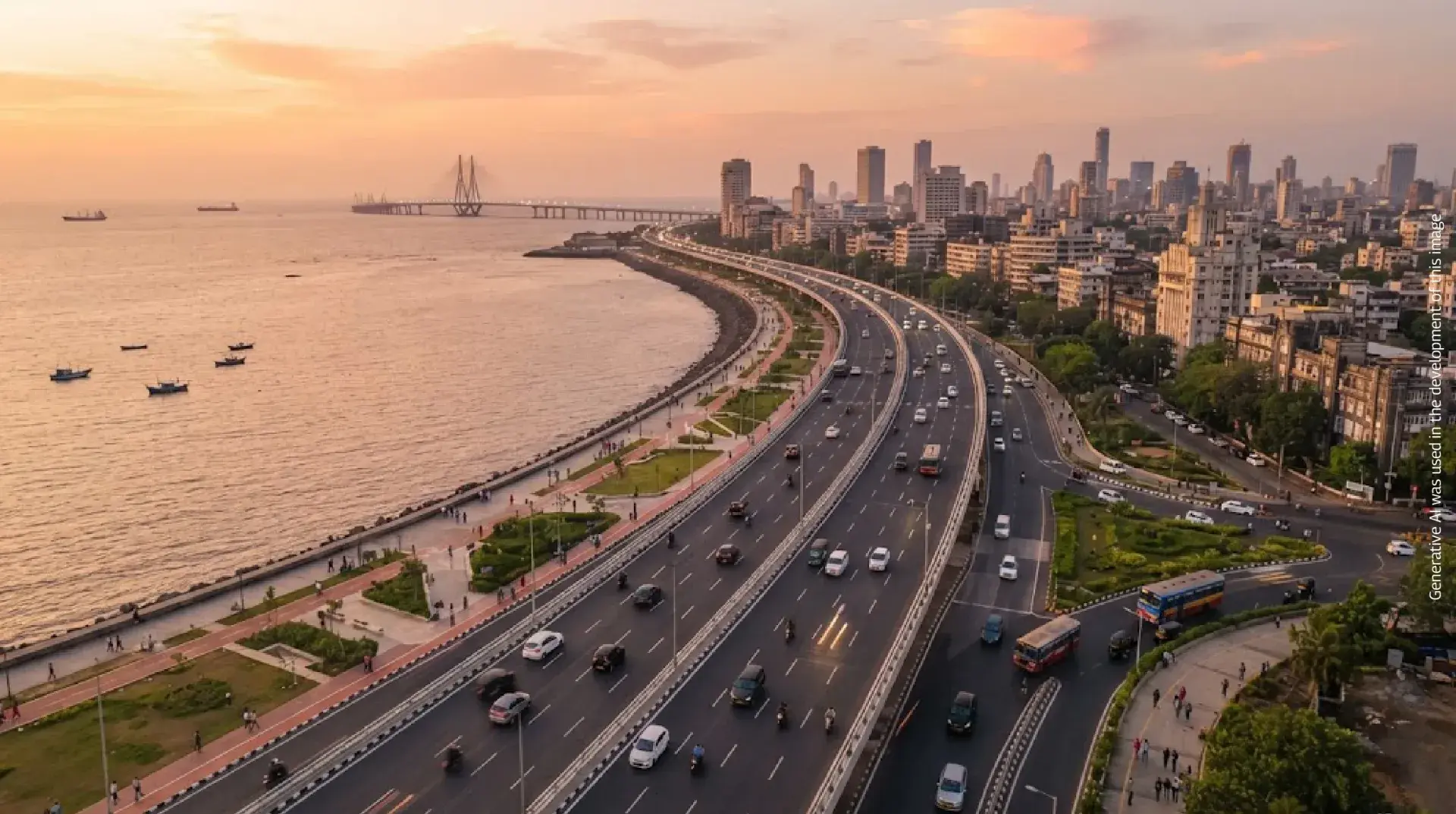
The Mumbai Coastal Road is a major infrastructure development designed to transform connectivity along Mumbai's western coastline. It aims to reduce congestion between South Mumbai and western suburbs while improving overall travel efficiency across key arterial routes.
The coastal road Mumbai project is not limited to traffic improvement. It is also reshaping residential demand patterns, especially in high-growth micro-markets such as Worli, Bandra, and Mahalaxmi.
In markets like Mumbai, developers such as Mahindra Lifespaces have aligned their residential planning with infrastructure-led growth corridors, ensuring better connectivity, long-term value creation, and sustainable urban living standards. Infrastructure-led growth can bring meaningful improvements to how people travel, live and access different parts of the city.
Better citywide connectivity can reduce dependence on congested roads, making daily commutes more convenient and predictable. At the same time, improved access across connected corridors can support stronger long-term property appreciation potential and enhance overall liveability for residents.
The Mumbai Coastal Road Project (MCRP) runs along the city's western coastline, seamlessly connecting core residential neighbourhoods with major commercial and financial hubs.
Key interchanges and infrastructure highlights along the corridor include:
The Worli Coastal Road section serves as one of the most vital segments, directly linking South Mumbai to the Bandra Sea Link network and dramatically easing cross-city traffic congestion.
The Coastal Road operates as an integrated, multi-layered transport network alongside:
This interconnected network reduces dependency on traditional north-south commuting routes and optimises overall urban traffic distribution.
One of the most transformative outcomes of the project is the drastic reduction in daily travel times across core transit routes.
The Mumbai Coastal Road corridor is actively redefining how professionals and families navigate daily life across the city.
As these different components progress, the Mumbai Coastal Road is gradually becoming more integrated with the city's wider transport network, improving connectivity across key parts of Mumbai.
The project has advanced in structured phases, with the Marine Drive to Worli stretch fully operational alongside the active bow-string connector to the Bandra-Worli Sea Link. Meanwhile, civil and planning progress continues on the northern extension towards Versova, Malad, and Dahisar. Intelligent Traffic Management Systems (ITMS) and advanced signal-free interchange loops are further optimising vehicular flow across the entire western shoreline.
The Mumbai Coastal Road property impact is already visible across multiple residential micro-markets.
The Worli Coastal Road has significantly strengthened demand in:
These established addresses are seeing heightened demand from premium homebuyers, driven by rapid connectivity to both South Mumbai commercial nodes and BKC. This connectivity shift is accelerating project absorption and attracting end-users seeking centrally located, well-connected residences.
Mahindra Lifespaces BeaconHill, Mahalaxmi is ideally positioned within this high-value South Mumbai corridor, offering residents direct access to Coastal Road interchanges and South-Central business districts.
The ripple effect of Mumbai Coastal Road property impact is extending to:
Mahindra Lifespaces Vista, Kandivali East directly benefits from this connectivity evolution, complementing upcoming Metro lines and Western Express Highway upgrades to offer seamless mobility across the MMR.
Infrastructure-driven property appreciation follows a consistent pattern across global gateway cities. According to research by the World Bank, enhanced urban transport connectivity directly stimulates real estate demand, elevates rental yields, and drives sustained economic activity along connected transit corridors.
This aligns with the trends observed along the Mumbai Coastal Road, where infrastructure improvements are directly driving long-term residential demand.
Multi-Layered Transit Synergy
The Coastal Road works in tandem with the suburban rail network, arterial highways, and expanding metro lines, providing commuters with flexible, multi-modal travel choices.
Micro-Market Commercial Transformation
Neighbourhoods surrounding Coastal Road entry and exit ramps are experiencing commercial revitalisation. Superior accessibility is attracting boutique retail hubs, modern co-working spaces, and premium social infrastructure, driving robust rental yields.
Suburban Lifestyle Evolution
Enhanced connectivity allows homebuyers to choose spacious suburban residences without sacrificing fast access to business districts in South Mumbai or BKC. This shift is strengthening demand for larger 2, 3, and 4 BHK luxury residences along the western belt.
The Mumbai Coastal Road, particularly the operational Worli Coastal Road stretch, is permanently redefining urban mobility across the city's western belt. By slashing transit times and connecting key micro-markets, it is reshaping residential growth patterns.
Within this dynamic infrastructure landscape, Mahindra Lifespaces continues to deliver master-planned residential communities engineered around sustainable design, sustainable construction, and long-term connectivity value.
Disclaimer: This article is intended for general informational purposes only. Infrastructure timelines, route details, travel times, connectivity improvements, construction progress and government plans may change over time. Readers should verify the latest information through official authorities before planning travel or making decisions based on infrastructure developments. Property demand, prices, rental potential and future appreciation are influenced by several market factors and should not be considered guaranteed outcomes or investment advice.
It is a major coastal expressway project designed to connect Marine Drive in South Mumbai to the western suburbs, dramatically reducing travel times and easing citywide traffic congestion.
The corridor connects Marine Drive, Malabar Hill (via twin undersea tunnels), Haji Ali, Worli, and the Bandra-Worli Sea Link, with Phase 2 extensions heading toward Versova, Malad, and Kandivali.
It reduces commute times between South Mumbai and the western suburbs by up to 60–70%, cutting the drive from Marine Drive to Worli down to just 10–15 minutes.
The project is accelerating homebuyer demand, boosting rental yields, and driving long-term property appreciation across Worli, Mahalaxmi, Bandra, and northern suburban corridors like Malad and Kandivali.
It serves as the central interchange connecting South Mumbai directly to the Bandra-Worli Sea Link, ensuring frictionless movement between the city's key financial hubs.
Yes. Properties located near major infrastructure interchanges historically demonstrate higher demand, superior liquidity, and sustained long-term capital growth.

Established in 1994, Mahindra Lifespace Developers Ltd. (‘Mahindra Lifespaces’) brings the Mahindra Group’s philosophy of ‘Rise’ to India’s real estate and infrastructure industry through thriving residential communities and enabling business ecosystems.


Schools in Hosur Road Bangalore: Top CBSE, ICSE & International Schools

Pune Metro Commuting Tips: Peak Hours, Entry Gates & Time-Saving Hacks
Nagaon Beach Alibaug Guide: Resorts, Water Sports & Things to Do

