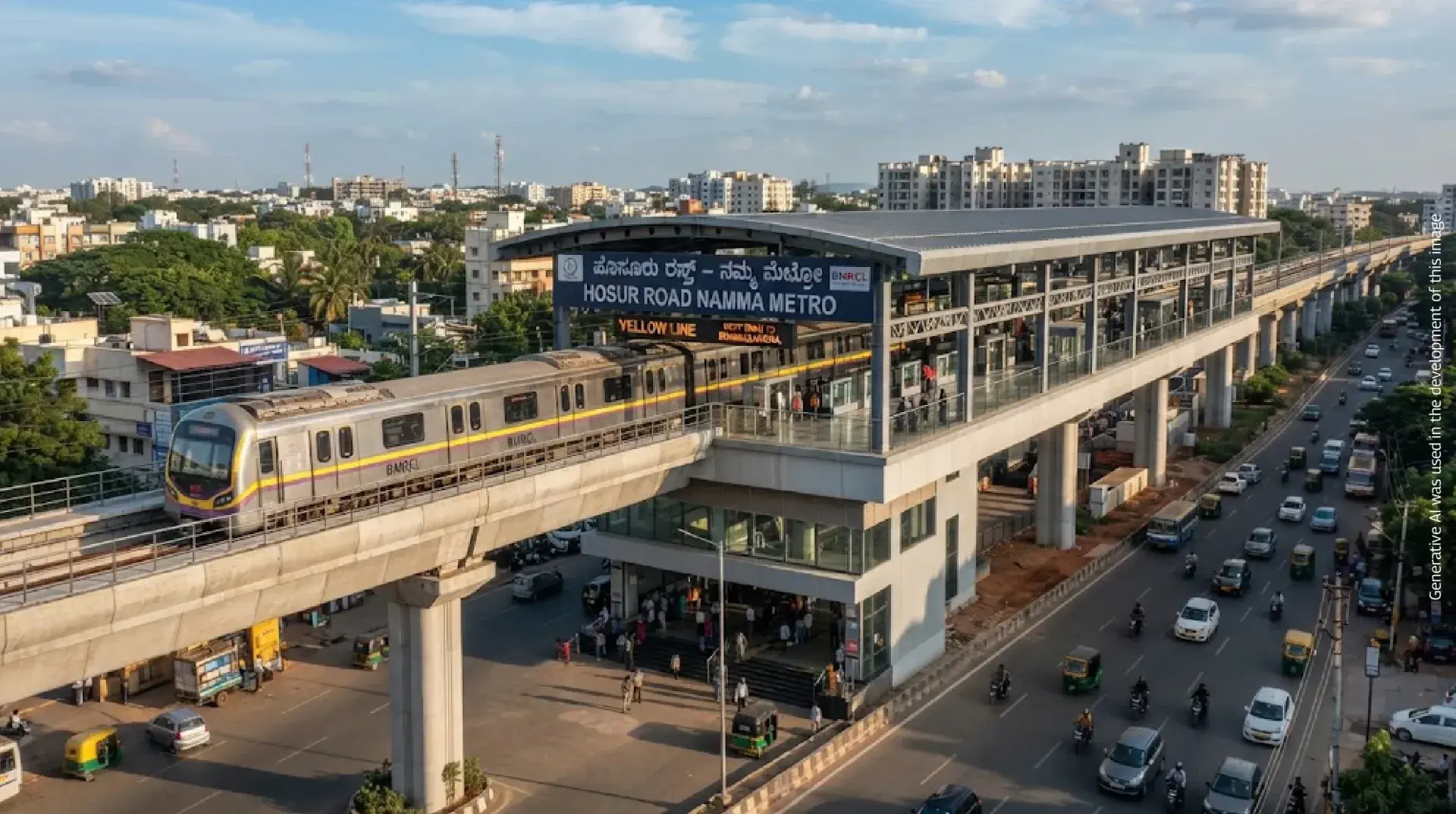
For decades, Hosur Road has played a vital role in Bengaluru's growth story, connecting key employment hubs, industrial zones, educational institutions, and residential communities across South Bengaluru. Today, as infrastructure upgrades continue to reshape the city, this corridor is emerging as one of the most sought-after destinations for both homebuyers and investors.
The launch of the Yellow Line Metro marks a major turning point for the region. Stretching from RV Road to Bommasandra, the corridor is expected to improve accessibility across some of Bengaluru's busiest commercial and residential districts, making daily travel faster and more convenient.
As this transformation unfolds, Mahindra Lifespaces continues to contribute to South Bengaluru's residential landscape through thoughtfully designed communities that focus on sustainability, open spaces, wellness, and long-term liveability.
One such development is Mahindra NewHaven, located off Hosur Road near Electronic City. Designed as an IGBC-certified Net Zero Energy and Waste project with over 70% open spaces, the community reflects the growing demand for homes that balance sustainability, wellness, and seamless metro connectivity.
The rise of the Yellow Line Metro Hosur Road corridor is not solely about transportation. Employment growth, expanding social infrastructure, rising rental demand, quality healthcare facilities, and educational institutions are collectively driving interest in the region. For homebuyers evaluating opportunities in 2026, understanding these growth drivers can help identify locations with lasting potential.
The Yellow Line is among Bengaluru's most significant infrastructure projects. Connecting RV Road to Bommasandra, the corridor passes through several important residential and employment hubs, including BTM Layout, Silk Board, Electronic City, Hebbagodi, and Bommasandra.
For years, traffic congestion has been one of the biggest challenges for commuters travelling along Hosur Road. The metro introduces a faster and more predictable alternative, helping reduce dependence on road transport while improving overall mobility.
The impact extends beyond transportation. Across major cities, metro connectivity has influenced housing demand, commercial growth, rental activity, and long-term property appreciation. The growing Hosur Road Yellow Line Property market is already benefiting from this trend.
Three key growth drivers are shaping the corridor:
Together, these factors are creating one of South Bengaluru's most dynamic real estate destinations.
Today's homebuyers are increasingly prioritising convenience and quality of life alongside affordability. While price remains a critical factor, modern homebuyers now evaluate homes based on:
As the Yellow Line Metro becomes fully operational, residential projects with convenient metro access are attracting stronger demand from both end-users and investors. For families, this connectivity also improves access to schools, hospitals, shopping destinations, and recreational facilities, making everyday life significantly more seamless.
Several micro-markets within the Hosur Road Yellow Line property corridor are witnessing increased homebuyer interest and development activity.
Electronic City remains one of Bengaluru's largest and most established employment hubs. Home to leading technology companies and business parks, the area generates consistent housing demand from working professionals. With its mature social infrastructure and direct metro accessibility, Electronic City stands out as a prime choice for homebuyers seeking immediate occupancy and long-term value.
Electronic City Phase 2 is rapidly emerging as a preferred residential destination for homebuyers seeking modern homes at competitive price points. The area attracts a diverse mix of first-time homebuyers, young professionals, and rental investors due to its expanding infrastructure, improving connectivity, and proximity to major industrial zones.
Positioned strategically between established and emerging neighbourhoods, Huskur Road is gaining traction as an affordable residential micro-market. The location offers competitive property pricing, improving access to employment hubs, and strong potential for future commercial growth, making it an attractive entry point for investors.
Hebbagodi's close proximity to heavy industrial clusters and corporate campuses ensures steady, reliable housing demand. The operational metro station further strengthens the area's appeal among professionals working across the southern manufacturing and tech corridors.
As the southern terminal station of the Yellow Line, Bommasandra is a major beneficiary of the corridor. The area successfully combines industrial growth, multi-specialty healthcare, educational institutions, and high-density residential development, making it a well-rounded micro-market for end-users and investors alike.
Connectivity remains a major consideration, but it is no longer the only factor influencing purchasing decisions. Modern homebuyers are increasingly looking beyond location and price when choosing a property.
They now prioritise homes that offer abundant natural light, good cross ventilation, open green spaces, wellness focused amenities, sustainability features, and thoughtfully planned community living. These preferences reflect a growing emphasis on healthier lifestyles, environmental responsibility, and residential communities that support both comfort and long term wellbeing.
This shift is reflected in developments such as Mahindra NewHaven, where residences are designed to maximise natural sunlight, cross ventilation, open green spaces, and everyday comfort. Located near Electronic City and close to upcoming metro connectivity, the project offers a lifestyle that aligns with the priorities of modern homebuyers who value wellness, sustainability, and accessibility in equal measure.
As Bengaluru evolves, homebuyers are increasingly seeking homes that combine infrastructure advantages with long-term lifestyle benefits.
Rental yield is a key metric for investors evaluating properties along the Yellow Line. A diverse tenant pool drives consistent occupancy rates across the corridor, including:
Properties offering convenient metro access command stronger occupancy rates because tenants actively value shorter, predictable commutes. This trend strongly supports long-term rental appreciation across Electronic City, Hebbagodi, and Bommasandra.
Beyond the metro, several infrastructure projects continue to strengthen the corridor's growth potential.
These include:
The increasing number of Hosur Road Property Launches reflects growing confidence in the region's future.
Homebuyers can review the latest metro construction updates, route information, and station details through the official website of Bengaluru Metro Rail Corporation Limited (BMRCL).
Together, these developments continue to strengthen the long-term outlook for the Hosur Road Yellow Line Property market.
Unlike many emerging locations that rely on a single growth driver, Hosur Road benefits from multiple demand generators.
Hosur Road benefits from several long term growth drivers, including established employment hubs, expanding metro connectivity, ongoing industrial development, reputed educational institutions, quality healthcare facilities, strong rental demand, and continuous infrastructure investments.
Together, these factors create a diversified and resilient real estate market that supports sustained demand from both end users and investors while strengthening the corridor's long term investment potential.
The evolution of the Hosur Road Yellow Line Property corridor reflects how infrastructure, employment growth, and lifestyle preferences are reshaping South Bengaluru's residential market.
As demand continues to rise across Electronic City, Hebbagodi, and Bommasandra, homebuyers are increasingly seeking communities that offer long-term value beyond location alone. Through developments such as Mahindra NewHaven and other thoughtfully planned projects, Mahindra Lifespaces continues to contribute to this growth story by creating homes that combine sustainability, connectivity, wellness, and quality living for future generations.
Disclaimer: This article is for informational purposes only and should not be considered legal, financial, investment, or professional advice. Information related to the Yellow Line Metro, station locations, infrastructure projects, property developments, connectivity, and real estate market trends is subject to change. Readers are advised to verify the latest information with the Bengaluru Metro Rail Corporation Limited (BMRCL), relevant government authorities, and official project sources before making any travel, property, or investment related decisions.
1. Is property near the Yellow Line Metro a good investment in 2026?
Yes. Metro-connected locations often benefit from improved accessibility, stronger housing demand, and better rental prospects, making them attractive for both homebuyers and investors.
2. Which areas along the Yellow Line have the highest growth potential?
Electronic City, Hebbagodi, Huskur Road, and Bommasandra are among the strongest growth markets due to their combination of metro connectivity, employment opportunities, and social infrastructure.
3. How does the Yellow Line Metro impact property prices on Hosur Road?
Metro connectivity typically increases homebuyer demand by improving accessibility and reducing commute times. Over time, this can support both property value appreciation and rental growth.
4. Are there new Hosur Road Property Launches near the Yellow Line Metro?
Yes. Several developers are introducing new Hosur Road Property Launches across Electronic City, Huskur Road, Hebbagodi, and Bommasandra to meet growing residential demand.
5. Why is Electronic City Metro Property attracting investors?
Electronic City Metro Property continues to attract investors because of its strong employment ecosystem, established infrastructure, rental demand, and improved metro connectivity.
6. What should homebuyers evaluate besides metro connectivity?
Homebuyers should assess project quality, developer reputation, legal approvals, water availability, social infrastructure, future growth plans, and overall liveability before making a purchase decision.

Established in 1994, Mahindra Lifespace Developers Ltd. (‘Mahindra Lifespaces’) brings the Mahindra Group’s philosophy of ‘Rise’ to India’s real estate and infrastructure industry through thriving residential communities and enabling business ecosystems.


