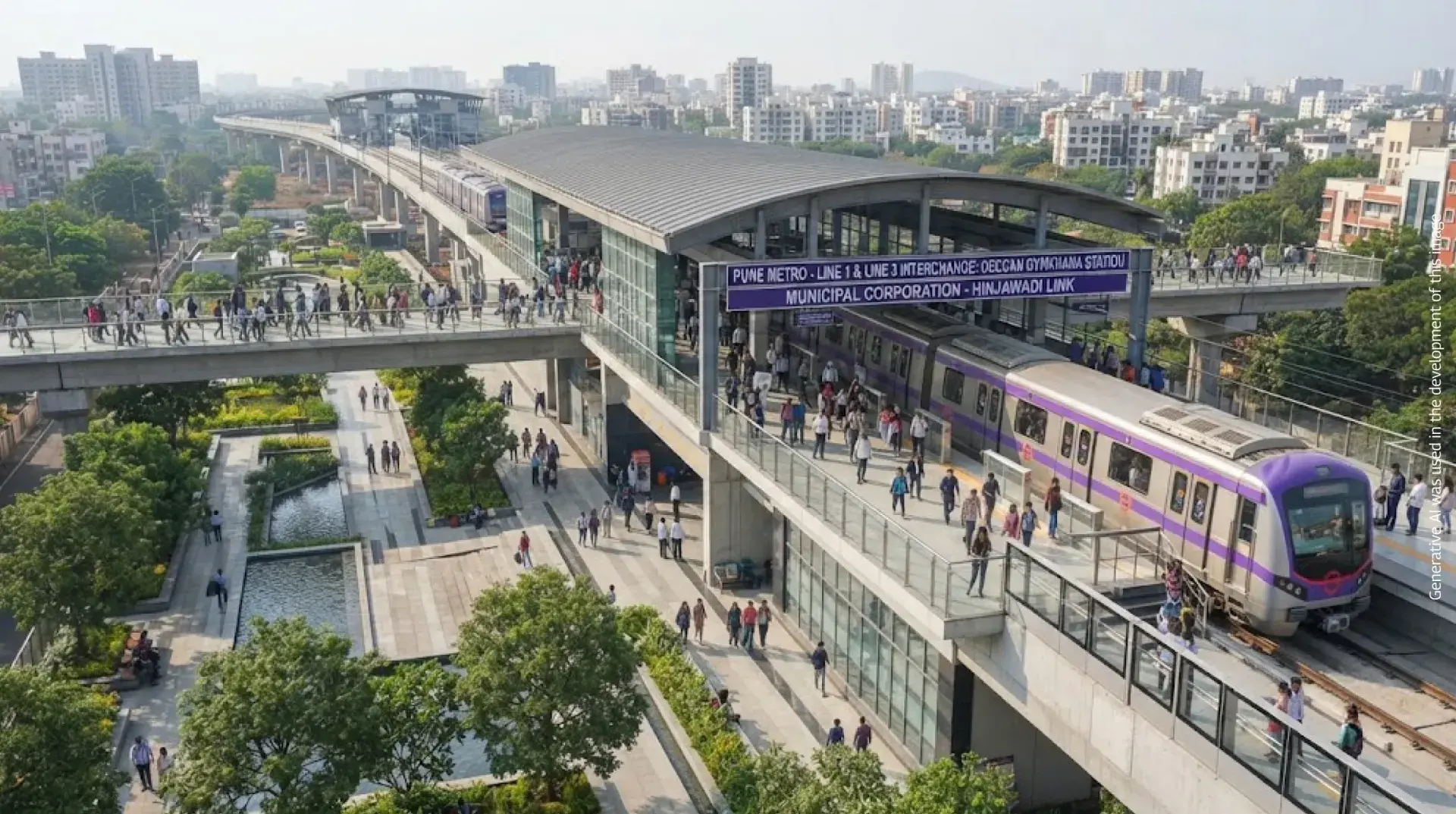
Pune’s rise into one of India's most dynamic urban hubs is propelled by an unprecedented infrastructure revolution, with the expanding Pune Metro network serving as its primary engine of growth.
The Pune Metro Phase 2 update marks a pivotal milestone for commuters, homebuyers, and real estate investors. Featuring newly approved corridors, pending Detailed Project Reports (DPRs), and strategically planned extensions into high-growth suburban belts, the metro is evolving into a seamless, citywide transit backbone.
By bridging key employment clusters—including Hinjewadi, Pimpri-Chinchwad, Kharadi, Hadapsar, Wagholi, and Chandni Chowk—Phase 2 will significantly slash daily commute times, ease road congestion, and elevate urban living standards across the metropolis.
As transit-oriented development gathers momentum, forward-thinking developers like Mahindra Lifespaces are seeing heightened homebuyer demand for residences positioned directly along these high-connectivity corridors.
The first phase of Pune Metro demonstrated how efficient mass transit can significantly reduce travel time across major corridors.
Phase 2 aims to extend this success by connecting rapidly developing residential zones, employment centres, educational institutions and transport hubs that currently depend heavily on road networks. The expansion is expected to enhance east west and north south connectivity, reduce dependence on private vehicles, ease congestion on major arterial roads, and improve last mile connectivity across Pune.
It is also likely to support sustainable urban development while making emerging residential destinations more accessible to commuters and homebuyers. More importantly, these improvements align with Pune's long term urban mobility vision as the city continues to expand beyond its traditional residential pockets.
As of 2026, the Pune Metro Phase 2 expansion has transitioned from initial planning into active execution and advanced statutory approvals, cementing the metro network as Pune's primary mobility backbone.
Following the operational success of Phase 1 routes, Maharashtra Metro Rail Corporation Limited (MahaMetro) and state authorities have prioritized key Phase 2 extensions to seamlessly connect the city’s eastern, western, northern, and southern IT and industrial corridors.
To establish a comprehensive, citywide mass rapid transit system, state and civic authorities have sanctioned major multi-corridor expansions under Pune Metro Phase 2. Spanning over 80+ kilometers of new transit lines, these approved extensions are designed to link major IT parks, industrial zones, educational hubs, and high-growth suburban residential belts.
Many homebuyers and investors see corridor announcements and assume ground construction is immediate. However, the Detailed Project Report (DPR) stage is the most critical blueprint phase of metro development.
A Pune Metro DPR thoroughly evaluates essential project parameters, including:
Once a DPR receives statutory state and central approvals, the project transitions smoothly to tendering, contractor bidding, and civil construction. Tracking a corridor's DPR status provides a reliable timeline for when a proposed line will move to actual ground implementation.
Key Takeaway: Approval of the DPR is the primary signal that a metro extension is moving from concept to active procurement and construction.
As Pune’s flagship IT cluster, Hinjewadi relies heavily on mass rapid transit to alleviate severe road congestion. The upcoming extensions and intersecting feeder corridors—linking Wakad, Hinjewadi, Nashik Phata, and Chakan—will create a continuous transit loop between PCMC's industrial manufacturing zones and Western Pune's tech hubs.
Key Benefits for Homebuyers & Investors:
While exact completion dates will depend on approvals, funding and construction progress, the broader timeline generally includes:
| Stage | Status |
|---|---|
| Corridor Planning | Completed for major routes |
| DPR Preparation | Ongoing for select corridors |
| State Approvals | Progressing |
| Central Government Approvals | Under review for certain routes |
| Tendering & Procurement | Initiated for some corridors |
| Construction | Phased execution |
| Operational Launches | Corridor specific timelines |
Homebuyers and investors should monitor official announcements as implementation schedules can evolve based on project progress.
Across top Indian metros, rapid transit expansion consistently shifts real estate demand, and Pune is following the same trajectory. Residential corridors linked to active and upcoming metro lines experience a measurable surge in:
This impact is most pronounced where metro corridors intersect directly with major employment hubs like Rajiv Gandhi Infotech Park in Hinjewadi, EON IT Park in Kharadi, and PCMC's industrial belt.
Today’s homebuyers prioritize commute convenience just as much as floor plans and lifestyle amenities. This shift has elevated micro-markets like Kharadi Annex and Pimpri, where multi-modal infrastructure upgrades continue to enhance daily liveability.
For homebuyers seeking well-linked addresses, Mahindra Lifespaces offers strategically positioned communities across Pune:
While most real estate coverage focuses strictly on station counts and route lengths, the true long-term value driver is Transit-Oriented Development (TOD).
TOD is an urban planning model centered around creating compact, mixed-use neighborhoods within a 5- to 10-minute walk of rapid transit. It prioritizes:
As Pune Metro Phase 2 expands, TOD hubs around key interchange stations will redefine how future residential enclaves are planned, built, and experienced.
When assessing residential real estate in Pune, infrastructure integration should be a central pillar of your decision-making framework. Key factors to evaluate include:
Projects situated near strategic transport investments consistently deliver higher end-user satisfaction and stronger resale liquidity over time. This makes developments like Mahindra IvyLush and Mahindra Citadel top choices for forward-thinking homebuyers. Browse overall flats in Pune below 4 crores to explore available residences.
The Pune Metro Phase 2 signals more than a transit upgrade—it marks a fundamental shift in how Pune will grow, commute, and thrive over the coming decades.
With approved corridors, advancing DPRs, and expanding routes linking key residential and employment hubs, the metro network has become a primary engine of urban growth. For daily commuters, it delivers predictable travel; for homebuyers and investors, it unlocks high-value, transit-connected growth corridors built for the future.
Disclaimer: This article is intended for informational purposes only and should not be considered legal, financial, investment, real estate, or professional advice. Information related to Pune Metro Phase 2, proposed corridors, approvals, DPR status, station locations, project timelines, connectivity plans, and potential real estate impact may change as the project progresses. Readers are advised to verify the latest information through Maha Metro, PMC, government authorities, and other official sources before making any travel, property purchase, or investment related decision.
What is the latest Pune Metro Phase 2 Update in 2026?
Several Phase 2 corridors have received approvals, DPRs are progressing for additional routes, and planning activities including surveys and tendering are underway for key metro expansions.
What is the current Pune Metro Phase 2 Status?
The project is in different stages depending on the corridor. Some routes have received approvals, while others are undergoing DPR review, funding evaluation and implementation planning.
What does a Pune Metro DPR include?
A DPR includes route alignment, cost estimates, ridership forecasts, environmental studies, technical feasibility assessments and funding models required before project approval.
Is the Pune Metro Hinjewadi Extension approved?
Certain connectivity plans involving Wakad, Hinjewadi and nearby employment hubs are under planning and evaluation. Official implementation timelines may vary by corridor.
Will Pune Metro Phase 2 increase property values?
Historically, metro connectivity improves accessibility and boosts residential demand. Areas located near future stations often experience stronger homebuyer interest over the long term.
Which Pune locations are expected to benefit most from Metro Phase 2?
Kharadi, Hadapsar, Wagholi, Pimpri, Chandni Chowk, Khadakwasla, Loni Kalbhor and other connected growth corridors are expected to benefit from improved accessibility and infrastructure.
Established in 1994, Mahindra Lifespace Developers Ltd. (‘Mahindra Lifespaces’) brings the Mahindra Group’s philosophy of ‘Rise’ to India’s real estate and infrastructure industry through thriving residential communities and enabling business ecosystems.


Mumbai Metro vs Local Train 2026: Daily Commute, Fares & Real Estate Impact

Pune Metro Disabled & Senior Friendly Features: Accessibility Guide 2026

Pune Metro Smart Card Guide: Types, Recharge, NCMC & Travel Passes

