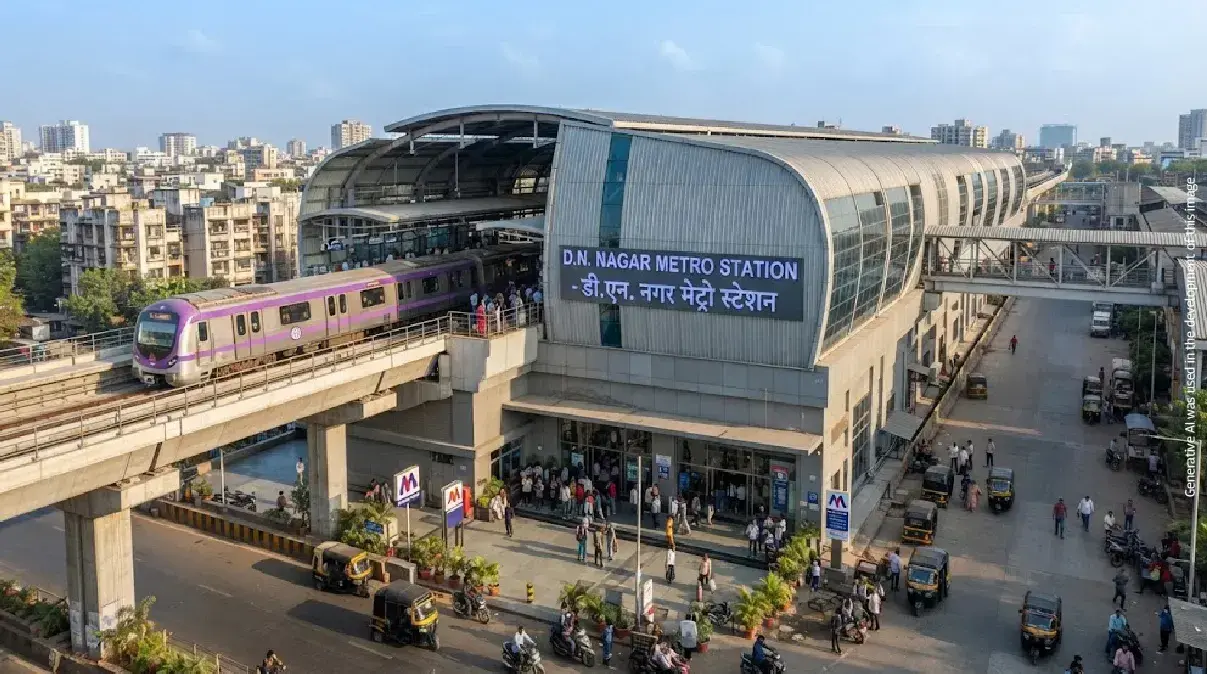
Mumbai’s western suburbs have undergone a significant transformation in recent years, driven by major infrastructure upgrades and improved public transport. Among these developments, Mumbai Metro Line 2A has emerged as an important addition to the city’s transit network, offering a faster and more predictable way to travel across some of the busiest residential and commercial corridors.
For residents of Malad, the impact is particularly noticeable. Areas that once relied heavily on road transport and the Western Railway network now benefit from direct metro connectivity along New Link Road. Whether you're a daily commuter, a student, a working professional, or someone exploring residential neighbourhoods in the western suburbs, understanding the Metro Line 2A stations in Malad can help you make more informed travel and location decisions.
This guide covers the stations serving Malad, route details, timings, connectivity advantages, nearby landmarks, and how metro accessibility is shaping everyday life in the locality.
Metro Line 2A is an elevated metro corridor connecting Dahisar East and Andheri West through Mumbai’s western suburbs. Developed to improve connectivity along the Link Road corridor, the line helps reduce travel time between major residential and commercial destinations.
| Parameter | Details |
|---|---|
| Route | Dahisar East to Andheri West |
| Length | Approximately 18.6 km |
| Total Stations | 17 |
| Corridor Type | Elevated |
| Line Colour | Yellow |
| Key Areas Connected | Dahisar, Borivali, Kandivali, Malad, Goregaon, Andheri |
| Major Road Served | New Link Road |
The corridor provides an alternative to road-based travel, helping commuters avoid congestion that frequently affects western suburban routes during peak hours.
Metro Line 2A consists of 17 stations spread across Mumbai’s western suburbs.
| Station Number | Station Name |
|---|---|
| 1 | Dahisar East |
| 2 | Anand Nagar |
| 3 | Kandarpada |
| 4 | Mandapeshwar |
| 5 | Eksar |
| 6 | Borivali West |
| 7 | Shimpoli |
| 8 | Kandivali West |
| 9 | Dahanukarwadi |
| 10 | Valnai-Meeth Chowky |
| 11 | Malad West |
| 12 | Lower Malad |
| 13 | Bangur Nagar |
| 14 | Goregaon West |
| 15 | Oshiwara |
| 16 | Lower Oshiwara |
| 17 | Andheri West |
While the entire corridor serves western Mumbai, several stations are particularly important for residents and visitors travelling to and from Malad.
Malad is served by multiple stations that provide access to residential neighbourhoods, business districts, retail destinations, and social infrastructure.
Located near the Malad-Kandivali border, Valnai-Meeth Chowky station improves accessibility for residents living in northern parts of Malad West and surrounding areas.
The station offers convenient access to:
For many commuters, this station serves as a practical entry point into the Metro Line 2A network.
Malad West station is one of the most important stations on the corridor for local residents.
It provides access to:
The station significantly improves east-west movement and offers a convenient transit option for residents travelling towards Goregaon, Andheri, Kandivali, and Borivali.
Lower Malad station serves one of the most active commercial and residential pockets in the locality.
Key destinations accessible from this station include:
Professionals working in Mindspace and nearby office districts often find Lower Malad station particularly convenient for daily travel.
Although technically located closer to Goregaon, Bangur Nagar station also benefits parts of southern Malad. Residents near the Malad-Goregaon boundary can use this station to access the broader Metro Line 2A network efficiently.
One of the biggest advantages of Metro Line 2A is the seamless connectivity it provides between major western suburban destinations.
From Malad, commuters can conveniently travel to:
The metro provides direct access to Kandivali West and Dahanukarwadi, reducing dependence on road transport along Link Road.
Residents can reach Borivali through multiple stations along the corridor, improving connectivity to residential, educational, and commercial destinations.
Metro connectivity has simplified travel between Malad and Goregaon, two of Mumbai's most active employment and residential hubs.
Andheri remains one of Mumbai’s most important commercial centres. Metro Line 2A allows commuters from Malad to access Andheri West without navigating traffic-heavy road routes.
Interchange stations improve the overall utility of a metro corridor by allowing passengers to switch lines and access different parts of the city.
| Station | Interchange Connectivity |
|---|---|
| Dahisar East | Metro Line 7 |
| Lower Oshiwara | Metro Line 6 (upon operational integration) |
| Andheri West | Metro Line 1 through D.N. Nagar connectivity |
These interchanges create a larger integrated transport network, making cross-city travel more convenient.
Metro services are designed to support daily commuters throughout the day. For official updates on schedules, operational changes, and announcements, commuters can refer to the MMRDA official website.
| Service Detail | Approximate Timing |
|---|---|
| First Train | Around 6:00 AM |
| Last Train | Around 11:00 PM |
| Peak Hour Frequency | Every few minutes |
| Non-Peak Frequency | Slightly longer intervals |
Travellers are advised to check the latest operational schedules before planning their journey, as timings may occasionally change due to maintenance or operational updates.
Not every station serves the same neighbourhood. Choosing the right station can significantly reduce travel time.
This simple approach helps commuters identify the most convenient station based on their location.
Before Metro Line 2A, many commuters travelling along New Link Road relied heavily on buses, private vehicles, taxis, or auto-rickshaws. Travel times often varied considerably depending on traffic conditions.
The metro has introduced a more predictable travel alternative by reducing dependence on road based transport, improving access to employment hubs, making travel across the western suburbs easier, ensuring more consistent journey times, and enhancing multi modal connectivity.
For daily commuters, predictability is often just as valuable as speed. Knowing how long a journey will take allows better planning for work, education, and personal commitments.
Connectivity has become one of the most important considerations for modern homebuyers. While factors such as layout, amenities, schools, and healthcare remain important, access to efficient public transport increasingly influences residential preferences.
Well-connected neighbourhoods typically offer:
In a city where travel time can significantly affect quality of life, transport infrastructure plays a meaningful role in shaping residential choices.
Malad West continues to attract homebuyers due to its balance of residential communities, commercial activity, educational institutions, healthcare facilities, and transport infrastructure. The addition of Metro Line 2A has strengthened this connectivity ecosystem by improving access to neighbouring suburbs and employment centres.
For homebuyers seeking a well-connected lifestyle, developments located within established residential neighbourhoods often provide the advantage of combining metro accessibility with everyday conveniences.
Projects such as Mahindra Marina64 on Navy Nagar Road, Malad West, reflect this evolving preference for thoughtfully planned homes in connected urban locations. The development benefits from its position within a mature residential catchment while remaining accessible to key parts of western Mumbai through existing transport networks.
As connectivity continues to shape how people choose where to live, neighbourhoods that offer access to public transport, social infrastructure, and employment hubs are likely to remain attractive for end-users looking for long-term convenience.
Disclaimer: This article is for informational purposes only and should not be considered financial, legal, investment, or professional advice. Metro routes, station details, fares, and timings may change. Please verify the latest information with official sources before making any travel or property related decisions.
Mumbai Metro Line 2A serves Malad through stations such as Valnai-Meeth Chowky, Malad West, and Lower Malad.
The primary stations serving Malad include Valnai-Meeth Chowky, Malad West, and Lower Malad, with Bangur Nagar also benefiting nearby areas.
Services generally operate from around 6:00 AM until approximately 11:00 PM, subject to operational updates.
Lower Malad Metro Station is generally the most convenient option for accessing Mindspace and surrounding office districts.
The corridor improves connectivity across western suburbs, reduces dependence on road transport, and provides a faster and more predictable commuting option for residents and visitors.

Established in 1994, Mahindra Lifespace Developers Ltd. (‘Mahindra Lifespaces’) brings the Mahindra Group’s philosophy of ‘Rise’ to India’s real estate and infrastructure industry through thriving residential communities and enabling business ecosystems.


