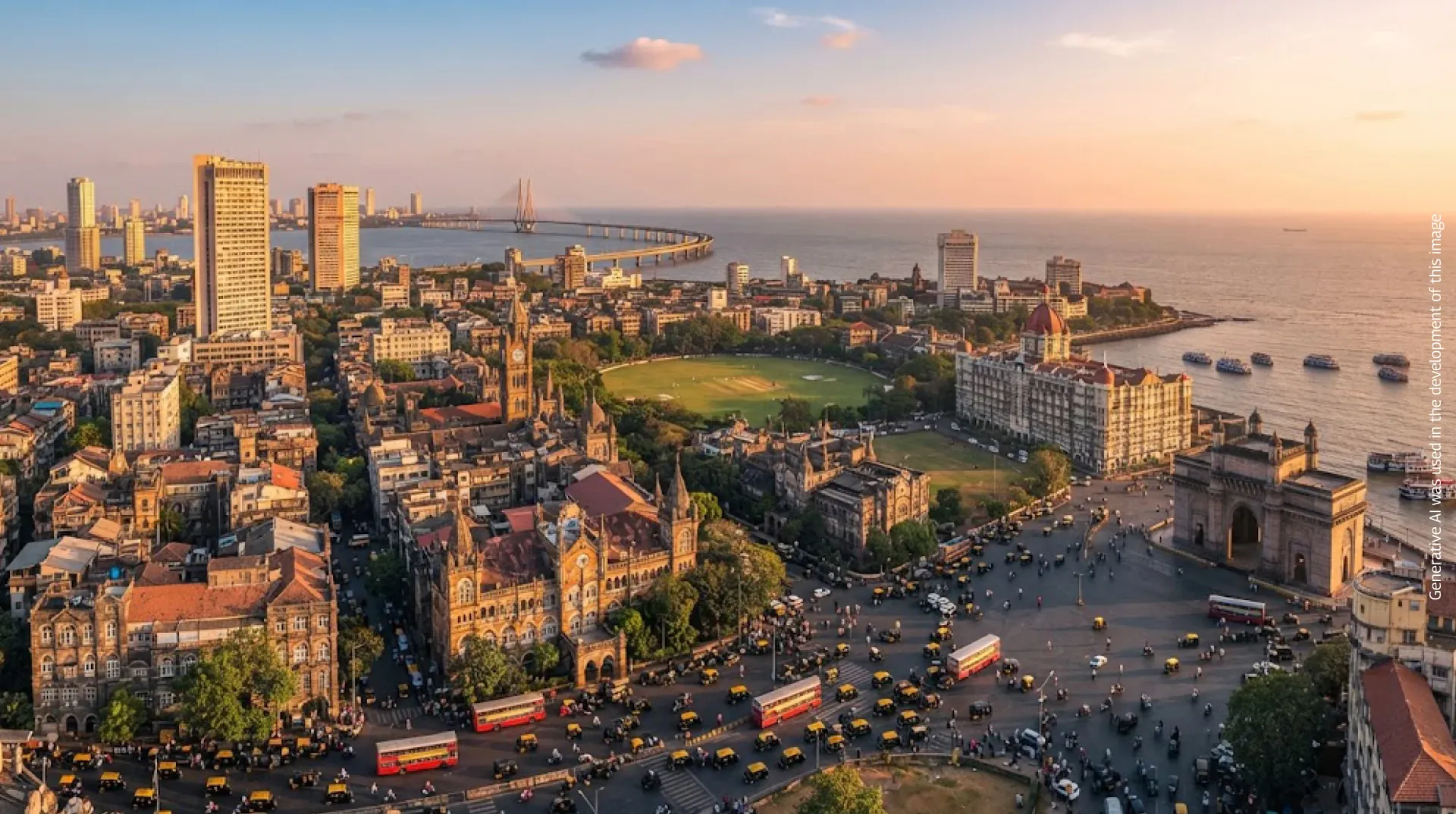
Mumbai is more than just India's commercial capital—it's a city of contrasts, where historic neighbourhoods, modern business districts, coastal promenades, and rapidly developing suburbs coexist within a complex urban landscape.
One of the most common questions among homebuyers, investors, students, and visitors is: "What is Mumbai's actual area in square kilometres?" The answer isn't straightforward because "Mumbai" can refer to different administrative regions depending on the context.
For example, the area governed by the Brihanmumbai Municipal Corporation (BMC) differs from the Mumbai Metropolitan Region (MMR), which includes neighbouring cities such as Thane, Navi Mumbai, Kalyan-Dombivli, Mira-Bhayandar, Vasai-Virar, and Panvel.
Understanding these geographical distinctions is particularly valuable if you're planning to buy property, relocate for work, or explore Mumbai's growing residential markets.
In this guide, we'll explain Mumbai's area, BMC limits, South Mumbai, Central Suburbs, Western and Eastern Suburbs, and how the city's expansion is shaping future growth.
The answer depends on which administrative boundary you're referring to.
| Region | Approximate Area |
|---|---|
| Mumbai City District | 157 sq km |
| Mumbai Suburban District | 446 sq km |
| Area under Brihanmumbai Municipal Corporation (BMC) | 603 sq km |
| Mumbai Metropolitan Region (MMR) | Over 6,300 sq km |
These figures are often confused because different government departments use different administrative boundaries for planning, governance, transport, and development.
For most residents, "Mumbai" usually refers to the area governed by the Brihanmumbai Municipal Corporation (BMC), covering approximately 603 square kilometres.
Whether you're purchasing your first home or investing in real estate, understanding Mumbai's administrative structure can help you make more informed decisions.
Knowing the difference between Mumbai City, Mumbai Suburban District, BMC limits, and the larger MMR helps homebuyers evaluate:
As Mumbai continues to expand, many homebuyers are increasingly exploring well-connected suburbs that offer a balance of urban convenience, lifestyle amenities, and long-term growth potential.
To understand Mumbai better, it's important to distinguish between its three major geographical divisions.
Mumbai City District
Mumbai City District represents the original island city and includes many of Mumbai's oldest and most iconic neighbourhoods.
Some prominent areas include:
This region serves as Mumbai's historic, financial, and administrative core.
Mumbai Suburban District
As Mumbai expanded northwards over the decades, residential and commercial development spread into what is now known as the Mumbai Suburban District.
It includes both Western and Eastern suburbs and accommodates a significant share of Mumbai's population.
Major suburbs include:
Western Suburbs
Eastern Suburbs
Today, these suburbs are among Mumbai's most active residential and commercial markets.
Mumbai Metropolitan Region (MMR)
The Mumbai Metropolitan Region extends far beyond the municipal boundaries of Mumbai.
It includes neighbouring municipal corporations and urban centres such as:
The MMR functions as an integrated economic region supported by shared transport infrastructure, employment hubs, and residential developments.
The Brihanmumbai Municipal Corporation (BMC) is India's richest municipal corporation and is responsible for administering Greater Mumbai.
Its responsibilities include:
When developers mention that a project lies "within BMC limits," it generally means the property falls under Greater Mumbai's municipal jurisdiction rather than neighbouring municipal corporations.
For homebuyers, understanding whether a property is located within BMC limits or in the broader MMR can influence factors such as civic administration, taxation, infrastructure, and future development.
South Mumbai, often called SoBo, is the city's oldest and most prestigious region. Known for its colonial architecture, heritage landmarks, premium residences, luxury hotels, and corporate headquarters, it remains one of India's most sought-after addresses.
Some well-known localities include:
These neighbourhoods offer a mix of heritage buildings, luxury apartments, commercial districts, and waterfront views.
The Central Suburbs have evolved into some of Mumbai's fastest-growing residential and commercial destinations.
Improved metro connectivity, business parks, educational institutions, healthcare facilities, and mixed-use developments have significantly enhanced their appeal.
Popular localities include:
Many of these neighbourhoods enjoy excellent connectivity through the Central Railway, Eastern Express Highway, Metro corridors, and upcoming infrastructure projects.
The growing presence of corporate offices, IT parks, and retail centres has also increased residential demand in these locations.
Both the Western and Eastern suburbs have emerged as preferred residential destinations, but each offers distinct advantages.
| Feature | Western Suburbs | Eastern Suburbs |
|---|---|---|
| Major Areas | Bandra, Andheri, Goregaon, Malad, Borivali | Kurla, Ghatkopar, Vikhroli, Bhandup, Mulund |
| Railway Line | Western Railway | Central Railway |
| Employment Hubs | BKC, Andheri, Goregaon, Malad | Powai, Vikhroli, Navi Mumbai Access |
| Lifestyle | Shopping, entertainment, beaches | Residential communities and business districts |
| Residential Demand | Very High | High and steadily growing |
Choosing between these regions often depends on workplace location, commuting preferences, lifestyle priorities, and budget.
While Greater Mumbai covers approximately 603 sq km under the Brihanmumbai Municipal Corporation (BMC), the city's economic influence extends far beyond these municipal limits through the Mumbai Metropolitan Region (MMR).
The MMR is one of India's largest metropolitan regions, spanning over 6,300 sq km. It is planned and coordinated by the Mumbai Metropolitan Region Development Authority (MMRDA) to promote balanced urban growth, improve regional connectivity, and support economic development.
The MMR includes several important cities and municipal corporations, such as:
Today, the MMR functions as an integrated urban region where people often live in one city and work in another. Improved transportation networks have made daily commuting across these areas increasingly convenient.
For homebuyers and real estate investors, administrative boundaries are far more than bureaucratic labels—they directly dictate property valuations, appreciation curves, and liquidity.
In a linear city like Mumbai, commute time dictates real estate demand. The rollout of high-capacity mass transit and highway projects has redefined travel efficiency, instantly elevating the investment outlook of specific residential corridors:
| Region Parameter | South Mumbai (SoBo) | Greater Mumbai Suburbs (Western & Eastern) | Outer MMR (Mumbai Metropolitan Region) |
|---|---|---|---|
| Administrative Territory | Mumbai City District (Within BMC Limits) | Mumbai Suburban District (Within BMC Limits) | Extended Municipal Corporations (Thane, Navi Mumbai, Kalyan, Panvel) |
| Typical Property Profile | Ultra-luxury high-rises, heritage sea-facing apartments, and boutique redevelopments | Modern gated communities, multi-storey residential towers, and transit-oriented developments | Large township projects, plotted developments, and affordable-to-mid-segment high rises |
| Primary Target Buyer | High-Net-Worth Individuals (HNIs), legacy wealth holders, and corporate leaders | Upper-middle-class working professionals, growing families, and IT/finance executives | First-time homebuyers, budget-conscious end-users, and long-term capital investors |
| Indicative Price Positioning | Highest tier (₹45,000 to ₹1,10,000+ per sq. ft.) | Mid-to-high tier (₹20,000 to ₹55,000 per sq. ft.) | Affordable-to-moderate tier (₹6,500 to ₹25,000 per sq. ft.) |
| Growth & Investment Driver | Absolute scarcity, elite prestige, and steady luxury demand | Immediate access to metro lines, link roads, and mature social infrastructure | High capital appreciation potential tied to mega greenfield infrastructure (MTHL, Airport corridors) |
Over the past decade, residential demand has gradually shifted towards well-connected suburbs that offer larger homes, improved infrastructure, and better lifestyle amenities.
Better Connectivity
Metro expansion, upgraded highways, suburban rail improvements, and new road projects have reduced travel times between residential neighbourhoods and employment hubs.
Modern Lifestyle Infrastructure
Many suburban locations now offer:
Residents no longer need to travel to South Mumbai for everyday conveniences.
Growing Employment Opportunities
Business districts across Andheri, Goregaon, Powai, BKC, Vikhroli, and Navi Mumbai have created employment closer to suburban residential areas.
This has encouraged more professionals to choose homes that minimise commuting time.
Long-Term Growth Potential
Infrastructure investments continue to improve the attractiveness of suburban markets, supporting sustained residential demand and long-term appreciation potential.
One of Mumbai's biggest strengths is its comprehensive social infrastructure.
Education
The city is home to several reputed schools and higher education institutions, including:
Healthcare
Mumbai offers access to some of India's leading hospitals, including:
Lifestyle and Entertainment
Residents enjoy a wide range of recreational destinations such as:
This strong ecosystem of education, healthcare, retail, and entertainment continues to make Mumbai one of India's most desirable cities to live in.
As Mumbai continues to expand, many homebuyers are looking for residences that combine excellent connectivity with thoughtfully planned living spaces.
Mahindra Lifespaces has developed premium residential communities across strategic locations in Mumbai, focusing on quality construction, sustainable design, and modern amenities.
Projects such as Mahindra Marina 64 in Malad West offer residents convenient access to major business districts, educational institutions, healthcare facilities, shopping centres, and recreational destinations. Located in one of Mumbai's established western suburbs, the project benefits from excellent connectivity through road and metro networks.
Similarly, Mahindra Vista in Kandivali East is designed for homebuyers seeking a balanced lifestyle with seamless access to commercial hubs and everyday conveniences. Its location allows residents to stay well connected while enjoying thoughtfully designed homes and community-focused amenities.
By choosing established residential corridors supported by ongoing infrastructure development, homebuyers can enjoy both a comfortable lifestyle and long-term growth potential.
Mumbai's geography extends far beyond its iconic skyline. Understanding the distinction between Mumbai City, Mumbai Suburban District, BMC limits, and the Mumbai Metropolitan Region (MMR) provides valuable context for anyone planning to live, invest, or buy property in the city.
As infrastructure projects continue to improve connectivity across Greater Mumbai and the MMR, suburban locations are emerging as attractive destinations for homebuyers seeking a balance of accessibility, lifestyle, and long-term growth. Areas across the Western and Eastern suburbs are increasingly benefiting from better transport networks, robust social infrastructure, and expanding employment opportunities.
For those considering a home in Mumbai, developments by Mahindra Lifespaces, including Mahindra Marina 64 and Mahindra Vista, reflect this evolution by offering thoughtfully designed residences in well-connected locations that support modern urban living.
Whether you're exploring Mumbai for investment, relocation, or simply understanding its geography, knowing how the city's regions fit together can help you make more informed decisions.
Disclaimer: This content is for educational and informational purposes only and does not constitute financial, legal, or professional advice. Please consult with a certified professional or legal counsel before making any decisions based on this information.
Greater Mumbai, administered by the Brihanmumbai Municipal Corporation (BMC), covers approximately 603 square kilometres.
Mumbai City comprises the historic island city, while Mumbai Suburban District includes the Western and Eastern suburbs that developed as the city expanded northwards.
The Central Suburbs include localities such as Kurla, Ghatkopar, Vidyavihar, Vikhroli, Kanjurmarg, Bhandup, Nahur, and Mulund.
South Mumbai includes Colaba, Churchgate, Marine Drive, Nariman Point, Fort, Malabar Hill, Cuffe Parade, Byculla, Lower Parel, Worli, and nearby neighbourhoods.
The Mumbai Metropolitan Region is a larger planning region comprising Mumbai and surrounding cities such as Thane, Navi Mumbai, Panvel, Mira-Bhayandar, Kalyan-Dombivli, Vasai-Virar, and others. It spans over 6,300 square kilometres.
Improved metro connectivity, infrastructure projects, expanding business districts, better lifestyle amenities, and comparatively larger residential developments have contributed to the growing popularity of Mumbai's suburbs.

Established in 1994, Mahindra Lifespace Developers Ltd. (‘Mahindra Lifespaces’) brings the Mahindra Group’s philosophy of ‘Rise’ to India’s real estate and infrastructure industry through thriving residential communities and enabling business ecosystems.


