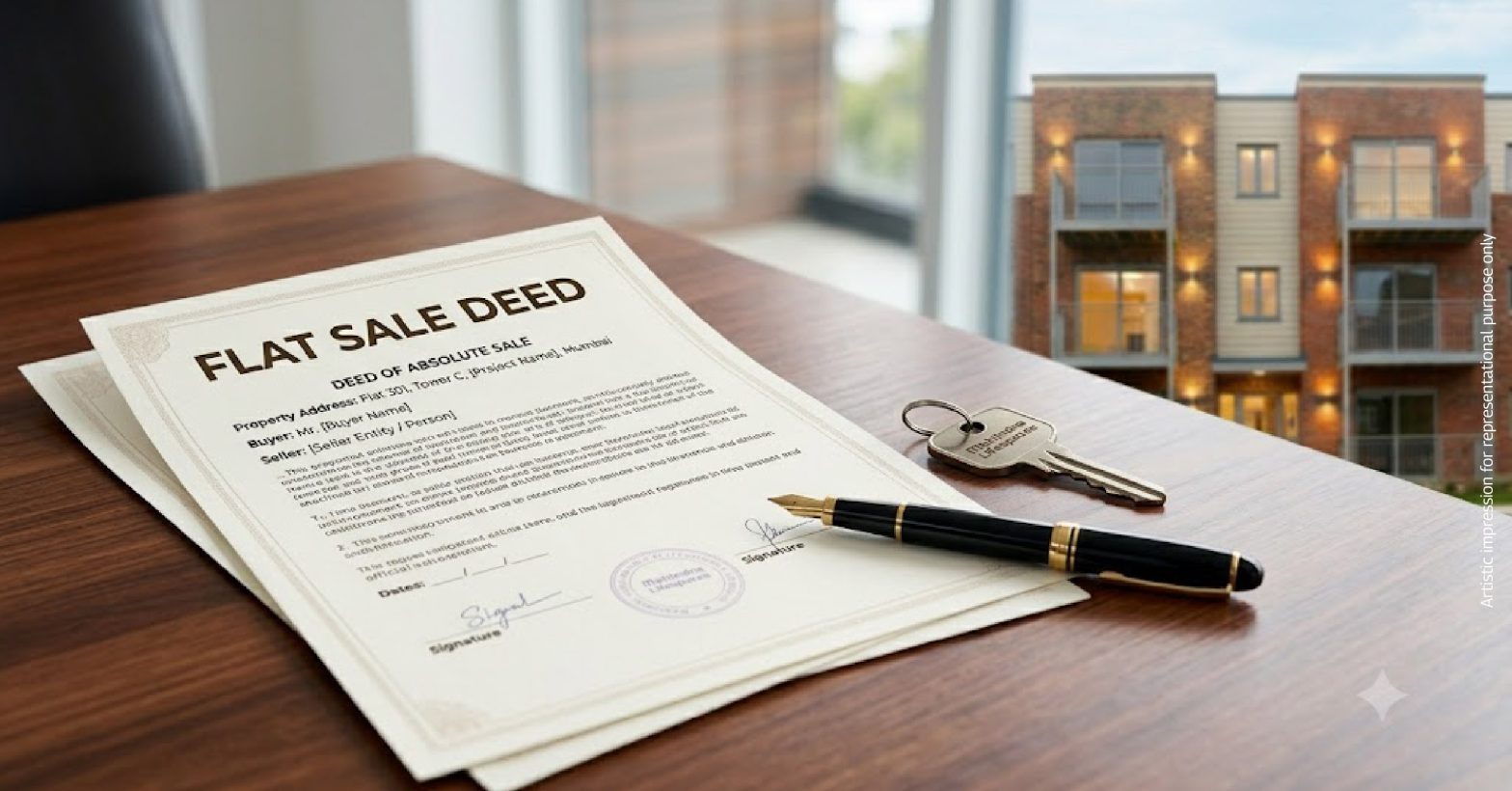
The search is over. You have finalized the budget, selected the perfect layout, and secured your financial processing. Now comes the defining moment of the home-buying journey: executing the paperwork.
Among the mountain of legal paperwork, one document stands as the absolute king pin of your transaction—the Sale Deed. Think of it as the ultimate "birth certificate" of your property ownership. Without it, you are merely an occupant, not a legal owner.
Whether you are reviewing a flat sale deed format in English word document for preliminary understanding or working with a legal counsel to vet a draft sale deed for flat, knowing what goes into this document is critical. Let's decode the non-negotiable anatomy of a flat sale deed.
A very common point of confusion for first-time homebuyers is the distinction between a flat purchase agreement vs sale deed.
Did you know: A registered sale agreement is often sufficient for a bank loan. Banks accept a registered agreement to sell/agreement for sale to sanction and disburse the initial home loan construction tranches. However, once the construction is finished, the bank will legally mandate the final execution of the registered Sale Deed to secure their mortgage collateral.
When checking a standard sale deed clauses checklist, ensure these seven core elements are drafted with absolute precision:
Full disclosure of the names, permanent addresses, age, and PAN details of both the Vendor (Seller) and the Vendee (Homebuyer).
A detailed tracing of how the current seller acquired the property. For a resale flat, this details the chronological history of previous owners to establish a clear, unencumbered title track.
The exact monetary amount paid for the flat. This must match the amount reported for stamp duty calculations. It should explicitly detail how the payment was cleared (Cheque numbers, RTGS IDs, and dates).
A clear, explicit statement declaring that the seller is transferring all legal rights, titles, and interests of the property to the homebuyer.
Did you know: A sale deed can be executed without possession. While physical possession and legal title transfer usually happen together, a sale deed can be executed even if the physical possession is scheduled for a future date (duly noted in a specific clause).
The schedule of property in sale deed is its most critical physical footprint. It must meticulously detail the exact flat number, floor, wing, carpet area, super built-up area, undivided share of land (UDS), parking spot allocations, and boundaries of the building structure.
The importance of an indemnity clause in flat sale deed documents cannot be overstated. This clause legally protects the homebuyer against any future financial claims, hidden mortgages, heritage tax disputes, or title defects originating from the seller's past ownership period. If a third party claims ownership later, the seller is contractually bound to compensate the homebuyer for all legal and financial losses.
The execution is incomplete without the physical signatures and thumb impressions of both parties, verified by at least two independent, adult witnesses along with their ID proofs.
A single standard template does not fit all property types. Depending on the purchase type, the flat sale deed format shifts structurally:
Executing a sale deed involves a systematic interaction with local land administration systems:
Vetting and executing your flat sale deed might feel like dealing with dense legal prose, but it is the single most vital shield protecting your hard-earned wealth. Ensuring that every clause—from the schedule of property to the indemnity protection—is perfectly aligned guarantees that your dream home remains a secure asset for generations to come.
At Mahindra Lifespaces, we prioritize absolute transparency. Our documentation process is entirely streamlined, thoroughly vetted, and RERA-compliant to ensure your absolute peace of mind.
Download our comprehensive homebuyer's guide today to access a complete sample Sale Deed checklist.
1. Can a sale deed be legally executed without taking physical possession of the flat?
Yes, it can. While physical possession and legal title transfer usually happen simultaneously, a Sale Deed can be legally executed even if physical possession is scheduled for a future date. In such cases, a specific clause must be incorporated into the deed specifying the possession timeline and detailing the penalties if the seller fails to deliver the keys on time.
2. Is a registered sale agreement enough to secure a bank home loan, or is a sale deed mandatory?
A registered Agreement to Sell (or a RERA-compliant Agreement for Sale) is sufficient for a bank to approve your loan and disburse initial construction milestones or partial tranches. However, once the construction is finished or the resale property is being registered, the bank will legally mandate the final execution and registration of the Sale Deed. The bank's executive will collect the original registered deed directly from the Sub-Registrar's office and retain it as mortgage collateral.
3. What is the role of an indemnity clause in a flat sale deed format?
The indemnity clause in flat sale deed documents is a critical legal safeguard for the homebuyer. It states that the seller guarantees the property is free from all hidden liens, disputes, legal litigations, or outstanding municipal dues. If any third party makes a financial or legal claim against the flat in the future due to past ownership issues, this clause legally obligates the seller to compensate the homebuyer for all financial losses and legal expenses.
4. Who is responsible for paying the stamp duty and registration fees during a flat purchase?
By standard real estate convention across India, the homebuyer is responsible for bearing the entire cost of stamp duty and registration fees. However, this is a commercial term that can be negotiated. If the seller agrees to share or bear these costs, that specific financial arrangement must be explicitly stated in the sale deed for flat before visiting the registrar.
5. What is the "Schedule of Property" in a Sale Deed, and why is it so important?
The schedule of property in sale deed documents is the definitive physical and geographical footprint of what you are buying. It does not just state the flat number; it meticulously lists the wing, floor, exact carpet area, undivided share of land (UDS), assigned parking slot numbers, and even the physical boundaries of the building plot. Any typo or omission in this section can invalidate your clear ownership claim and create massive hurdles during a future resale or property mutation.

Established in 1994, Mahindra Lifespace Developers Ltd. (‘Mahindra Lifespaces’) brings the Mahindra Group’s philosophy of ‘Rise’ to India’s real estate and infrastructure industry through thriving residential communities and enabling business ecosystems.


