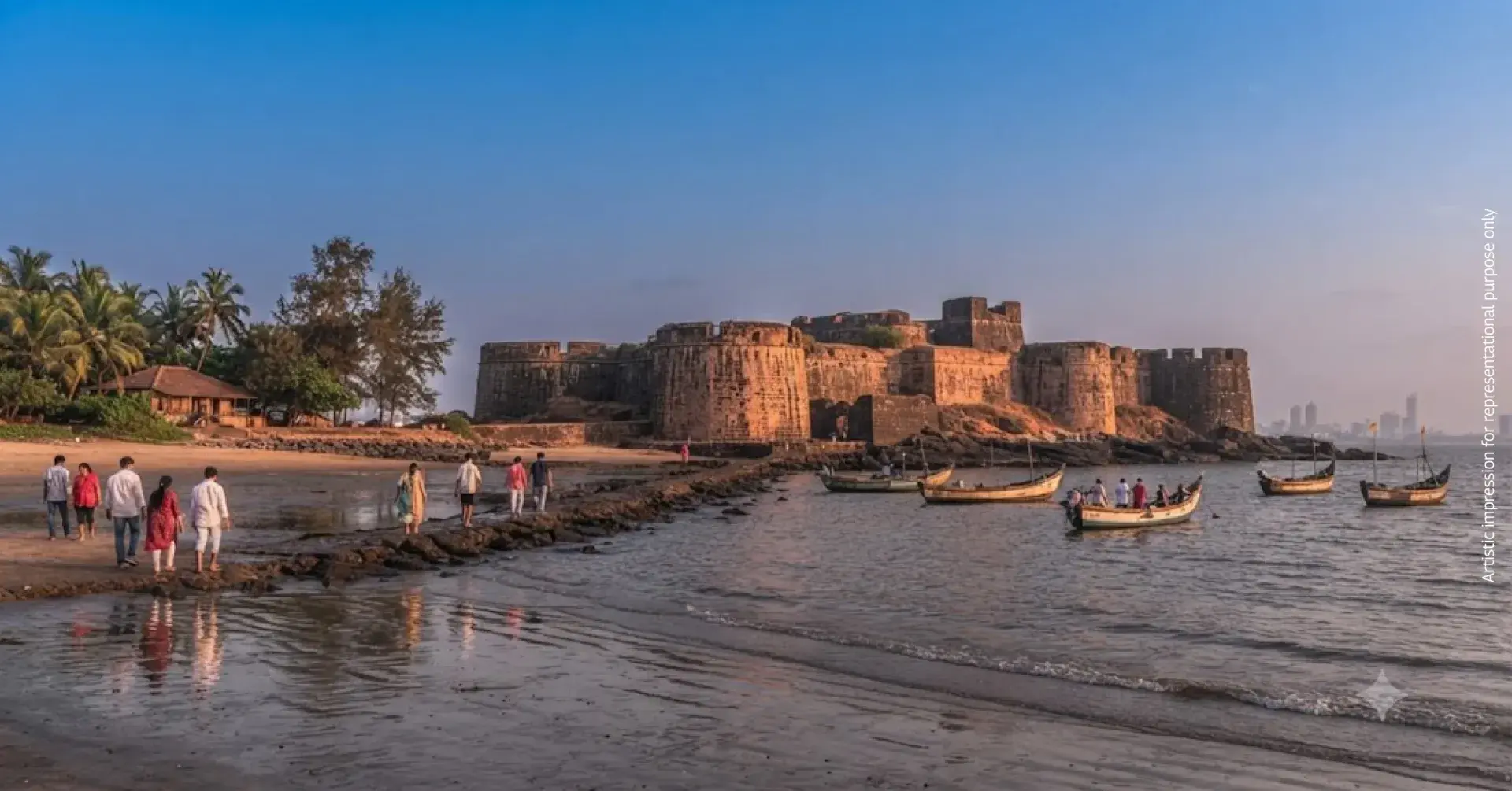
Most destinations are defined by what visitors see today. Alibaug is different. To truly understand why this coastal town continues to attract travellers, families and investors alike, it helps to look beyond its beaches and discover the stories that shaped it over centuries.
Before Alibaug became known for weekend getaways and coastal escapes, it was a thriving settlement where trade, maritime activity and regional defence played an important role in everyday life. The forts scattered across its coastline were not built merely as monuments. They were strategic structures that helped protect vital sea routes and support communities that depended on the Arabian Sea.
Today, these historic landmarks continue to offer a glimpse into the region's past while helping visitors understand how Alibaug evolved into the destination it is today. Exploring Alibaug forts, including Kolaba Fort Alibaug and Khanderi Fort, is not simply a historical experience—it is a journey into the coastal legacy that continues to influence the region's character, growth and appeal.
The sea has always played a defining role in Alibaug's development. For centuries, the Konkan coast served as an important corridor for trade and transportation. Coastal settlements grew around fishing, commerce and maritime movement, creating communities that were closely connected to the sea.
This strategic location brought opportunities, but it also created challenges. Protecting valuable trade routes and coastal settlements became increasingly important. As maritime activity expanded, defensive structures were established to strengthen security along the shoreline.
The result was a network of coastal forts that helped shape the region's identity and laid the foundation for much of the history visitors can explore today.
When people think of forts in Maharashtra, hill forts often come to mind. However, the western coastline required an entirely different approach to defence.
Unlike forts built on elevated terrain, sea forts had to withstand changing tides, salt-laden winds and constant exposure to coastal conditions. Their locations were carefully selected to maximise visibility across important maritime routes while maintaining proximity to key settlements.
The forts around Alibaug demonstrate how military planning adapted to the unique geography of the coastline.
Their purpose extended beyond defence alone. They also supported communication, monitored sea traffic and contributed to regional administration.
This combination of strategic positioning and coastal engineering is one reason why Alibaug heritage sites remain among the most fascinating historical attractions on Maharashtra's coastline today.
Among all the historical structures in the region, Kolaba Fort Alibaug remains the most recognisable.
Standing just off the coastline, Kolaba Fort Alibaug has become one of the defining symbols of the destination and one of the most visited forts along the Konkan coast. Its presence creates an immediate connection between the town's present-day identity and its maritime past.
What makes Kolaba Fort particularly fascinating is its relationship with the sea itself. Depending on the tide, the fort appears alternately connected to and separated from the mainland, creating an experience that feels distinctly coastal.
Visitors exploring the fort can observe remnants of its historical design, including fortified walls, gateways, reservoirs and places of worship that continue to reflect the craftsmanship of an earlier era.
More importantly, the fort serves as a reminder that Alibaug's history was shaped not only by the land but also by the waters surrounding it.
Many visitors arrive at Kolaba Fort expecting to see a historical structure. What they often discover is a deeper understanding of Alibaug itself.
The fort represents resilience, adaptation and the region's long-standing relationship with maritime activity. It also highlights how communities along the coast developed systems that balanced trade, security and daily life.
Standing within the fort, it becomes easier to imagine the movement of vessels across the horizon, the importance of coastal observation and the role these structures once played in protecting local settlements.
For travellers interested in understanding the destination beyond its beaches, Kolaba Fort Alibaug provides an ideal starting point for exploring the region's maritime history and heritage.
While Kolaba Fort is closely connected to the mainland, Khanderi Fort offers a different perspective on coastal history and remains one of the most important offshore forts near Alibaug.
Located on an island off the coast, the fort occupies a position that immediately reveals its strategic importance. Surrounded by open waters, it provided extensive visibility across the surrounding sea routes.
Its isolated setting demonstrates how maritime defence often depended on controlling key locations far beyond the shoreline.
Today, Khanderi Fort continues to attract visitors interested in history, architecture and coastal exploration. Yet what truly distinguishes the site is the sense of scale it offers. From the island, visitors gain a clearer appreciation of the vast maritime landscape that once required constant monitoring and protection.
The fort's location helps explain why coastal defence was such a critical component of life along the Konkan coast.
One of the most interesting aspects of Alibaug's history is that its forts were never intended to function independently.
The relationship between Khanderi Fort and Underi Fort highlights the sophisticated coastal defence systems that once protected important maritime routes along the Arabian Sea.
Rather than acting as isolated outposts, these forts formed part of a coordinated network designed to monitor movement across important sections of the Arabian Sea.
This interconnected approach reflects a sophisticated understanding of maritime defence and demonstrates why the region became strategically significant for centuries.
Visitors who explore both locations gain a broader perspective on how coastal infrastructure supported the development of surrounding communities.
Although Alibaug's historic sea forts remain the most visible reminders of its past, the region's heritage extends far beyond military architecture. Everyday life across the coastal belt reflects living traditions, arts, and customs preserved across generations.
Coastal Communities and Koli Culture
The indigenous Koli fishing communities form the beating heart of Alibaug's identity. For centuries, their deep-rooted relationship with the Arabian Sea has shaped the local economy, cuisine, and coastal lifestyle, preserving traditional boat-making and fishing techniques to this day.
Vibrant Cultural Traditions and Festivals
Alibaug's calendar is marked by vibrant community celebrations, from traditional Ganesh Chaturthi festivities to the coastal Narali Pournima (Sea Worship Festival), where fisherfolk offer coconuts to the sea. These customs highlight a lifestyle deeply synchronised with nature and community bonds.
Historic Temples and Architectural Landmarks
Centuries-old temples—such as the famous Rameshwar Temple and Kanakeshwar Devasthan—dot the landscape, offering a window into the spiritual history, indigenous craftsmanship, and architectural styles of coastal Maharashtra.
Together, these cultural layers create an enriching heritage experience that beautifully complements the dramatic historical backdrop of Alibaug's forts.
For travellers and history enthusiasts eager to look beyond the beaches, Alibaug offers a compelling itinerary that traces its rich maritime and cultural narrative:
One of the most remarkable aspects of Alibaug is the way it has evolved while retaining a strong sense of identity.
The same coastline that once supported maritime activity and coastal defence now attracts visitors seeking open spaces, natural surroundings and a slower pace of life.
Improved connectivity has strengthened access to the region, while ongoing infrastructure development has enhanced convenience for residents and visitors alike. Today, Alibaug offers a unique blend of lifestyle, infrastructure and strong growth potential. Schools, healthcare facilities and civic amenities continue to support the region's evolution, making it increasingly attractive for families, professionals and second-home buyers.
Growing interest from IT professionals, young families and NRIs reflects a broader shift in how people view coastal destinations. Alibaug is no longer seen only as a weekend retreat—it is increasingly being considered a place where people can spend meaningful time while remaining connected to urban centres.
At the same time, infrastructure-led development continues to support property appreciation across key localities, further strengthening the region's long-term appeal.
As Alibaug continues to evolve, neighbourhoods such as Nagaon are attracting attention for their combination of beach access, connectivity and community development.
Located close to some of the region's most popular coastal attractions, Nagaon offers residents and visitors the opportunity to experience Alibaug's natural beauty while remaining connected to everyday conveniences.
The area's growing appeal reflects a larger trend across Alibaug, where thoughtfully planned developments are helping meet the needs of people looking for more than short-term visits. Communities such as Mahindra Meridian, located near Nagaon Beach, combine villas and plotted developments with open spaces, amenities and sustainability-focused planning.
Through such developments, Mahindra Lifespaces is contributing to the next chapter of Alibaug's story while remaining connected to the heritage and coastal character that make the destination unique.
Disclaimer: This article is for informational purposes only and should not be considered travel, historical, legal, investment, or professional advice. Information related to forts, heritage sites, accessibility, tide timings, travel routes, visitor facilities, and local attractions may change over time. Readers are advised to verify the latest details with official tourism authorities or relevant local authorities before planning their visit or making any travel or property related decisions.
Kolaba Fort Alibaug is the most recognised and frequently visited fort in the region and is often considered the landmark among all Alibaug forts.
Khanderi Fort played a significant role in monitoring maritime routes and strengthening coastal defence along Maharashtra's western coastline.
Kolaba Fort Alibaug, Khanderi Fort, Underi Fort, traditional coastal settlements and historic temples are among the most popular Alibaug heritage sites.
Yes, visitors can explore the major forts and heritage landmarks within a day or over a weekend, depending on their itinerary.
They offer valuable insights into the region's maritime history, cultural evolution and the coastal legacy that continues to shape modern Alibaug.

Established in 1994, Mahindra Lifespace Developers Ltd. (‘Mahindra Lifespaces’) brings the Mahindra Group’s philosophy of ‘Rise’ to India’s real estate and infrastructure industry through thriving residential communities and enabling business ecosystems.


Pune Metro Smart Card Guide: Types, Recharge, NCMC & Travel Passes

Hosur Road Healthcare Guide: Hospitals, Clinics & Medical Facilities


