



Popular searches





Municipal Valuation of House Property Tax Guide & Calculations
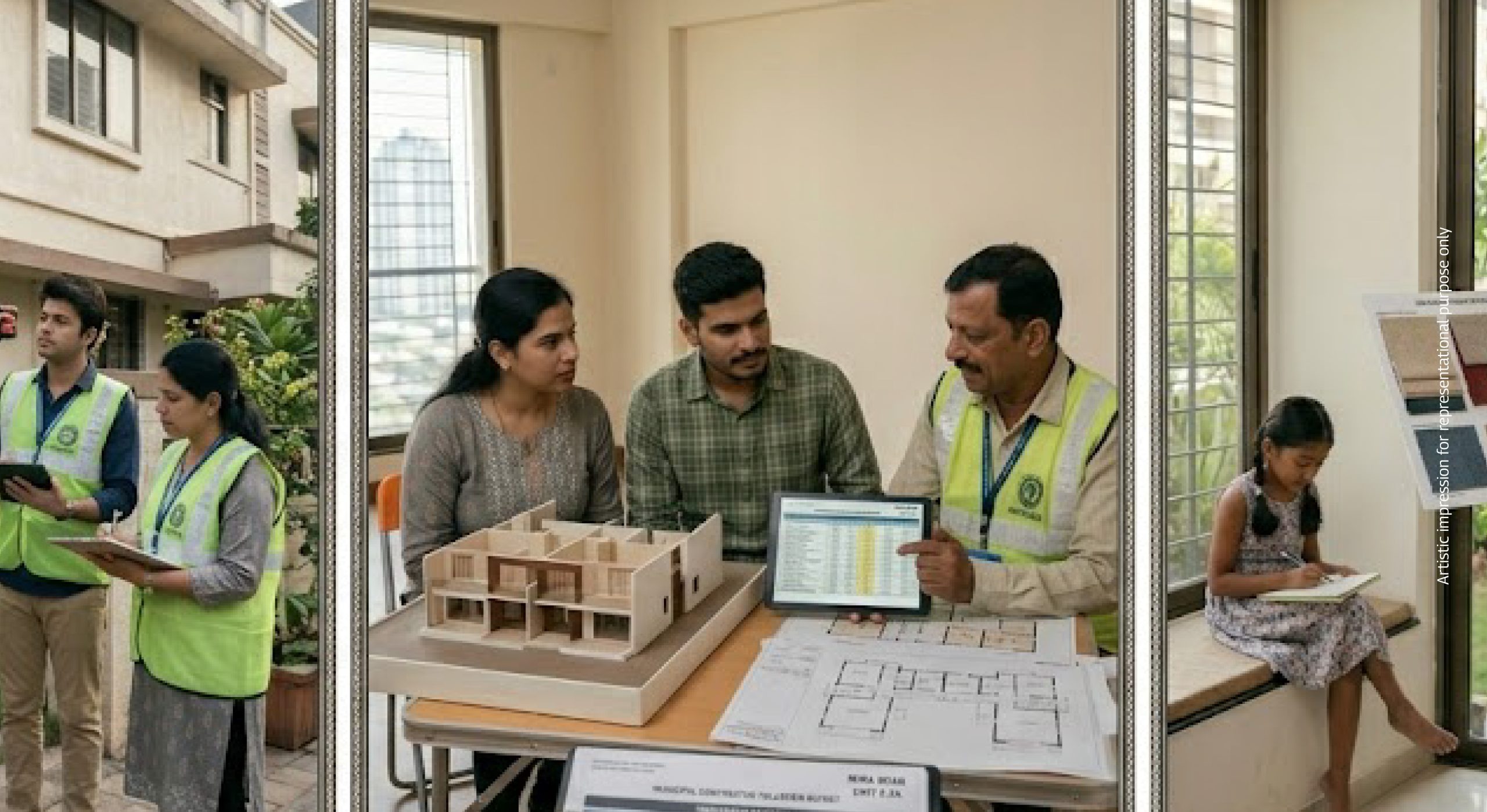
How Municipal Valuation Affects Your Property Tax: A Step-by-Step Calculation Guide
For most homebuyers, the excitement of purchasing a property often comes with a steep learning curve regarding annual maintenance costs. At the center of these costs is the property tax—a mandatory levy that funds your city’s infrastructure, from the roads you drive on to the streetlights that keep your neighborhood safe.
However, the amount you pay isn’t a random figure. It is rooted in the municipal valuation of house property, a technical assessment that can significantly differ from what you actually paid for the home. Understanding this valuation is the key to ensuring your tax outgo is fair and accurate.
What is municipal valuation of house property?
Municipal valuation of house property is the value assigned to a property by the local municipal corporation (like the BMC in Mumbai or PMC in Pune) for the purpose of levying property tax.
It is vital to distinguish this from market value:
- Market value: The price a homebuyer is willing to pay, and a seller is willing to accept in an open market.
- Circle rate / Ready reckoner rate: The minimum price set by the government for property registration and stamp duty.
- Municipal valuation: A value calculated using specific local formulas (often updated every 3–5 years) to determine the "rateable value" of a property.
How do Municipalities Calculate Your Property Value?
Depending on which city you live in, your local body will use one of three primary methods to determine your tax base:
1. Annual Rental Value (ARV) / Annual Letting Value (ALV)
In this system, the tax is based on the annual letting value (ALV)— the gross annual rent the property is expected to fetch in the open market. Even if you live in the house yourself (self-occupied), the municipality estimates what the rent would be. Cities like Chennai often use variations of this system.
2. Unit Area Value (UAV)
The unit area value (UAV) system is a more objective method used in cities like Delhi, Bengaluru, and Hyderabad. It calculates tax based on the expected returns of the property per unit of its area (per square foot or square meter). The city is divided into zones, and a fixed price is assigned to each zone.
3. Capital value system
The capital value system that Mumbai follows is perhaps the most modern approach. Here, the tax is tied directly to the market value of the property as per the state’s ready reckoner rates. The rateable value of property is derived by multiplying the base value with several "weights" or factors like age and usage.
5 factors affecting your municipal valuation
Municipalities don't just look at the size of your home; they look at its "DNA." Key factors include:
- Location: Properties in prime business districts or upscale residential zones have a higher base value than those on the outskirts.
- Occupancy type: Self-occupied residential properties typically enjoy lower tax rates or valuations compared to those that are let out or used for commercial purposes.
- Structure type: The "Class of Construction" matters. A multi-story RCC (Reinforced Concrete) building will have a higher valuation unit than a semi-permanent structure or a chawl.
- Age of property: Newer buildings are valued higher. As a building gets older, municipalities often apply a "depreciation factor" or an "age factor" to lower the valuation.
- Amenities: Features like dedicated parking, balconies, or luxury fit-outs can sometimes push the assessment higher, as they increase the "utility" of the space.
Step-by-step guide: Calculating your property tax
While the property tax calculation formula varies by city, a common framework used by most major corporations is:
Property Tax = Base Value × Built-Up Area × Age Factor × Usage Factor × Structure Factor × Floor Factor
Step 1: Determine the base value
Find the per-square-foot rate assigned to your locality by visiting your municipal portal. In Mumbai, this is tied to the ready reckoner rate.
Step 2: Calculate capital/rateable value
Multiply your carpet area by the base value. Apply the "weights" (e.g., if your building is 20 years old; the age factor might be 0.90 instead of 1.0).
Step 3: Apply the tax rate
Once you have the final valuation, multiply it by the percentage tax rate set by the city (for residential, this is often between 0.3% and 1%).
Step 4: Check for exemptions
For example, in Mumbai, residential units under 500 sq. ft. are currently exempt from property tax, while those between 500–700 sq. ft. may receive concessions.
How to challenge your property valuation?
If you feel your municipal valuation for income tax purposes or property tax is unfairly high, you have the legal right to appeal.
- Audit the characteristics: Check if the municipality has recorded your area correctly. An error in square footage is the most common reason for over-taxation.
- Gather Evidence: Collect data on similar properties in your wing or street. If their valuation is lower despite having the same age and amenities, you have a case.
- File an Objection: Most bodies, like the BMC, give you a 30-to-60-day window after a new assessment notice to file an objection with the Municipal Valuation Committee.
The "Fair Price" of city living
Ultimately, municipal valuation is the "fair price" your city sets for the services it provides—from waste management to local parks. By knowing how to calculate municipal value of a house and monitoring your annual bills, you ensure you aren't overpaying your share of civic amenities. Staying informed is the first step toward being a responsible and cost-effective homeowner.
Investing in a home should be transparent from day one. At Mahindra Lifespaces, our RERA-compliant residential projects ensure clear documentation, making your municipal assessments and tax filings a breeze. Explore our projects today.
FAQs
-
How does municipal valuation differ from the market value of my home?
The market value is the price a buyer pays based on supply and demand, which fluctuates constantly. In contrast, municipal valuation of house property is a fixed value assigned by your local authority for tax purposes. While an estate agent can help with market value, municipal value can only be found in your local body's database and is typically revised every 3–5 years.
-
Is my property tax based on the actual rent I receive (ALV)?
It depends on your city's system. In the Annual Letting Value (ALV) system, tax is based on the gross annual rent the property is expected to fetch, even if it is self-occupied. However, many modern cities like Mumbai use the Capital Value System, which calculates tax based on the property’s market value as per the government’s ready reckoner rates, rather than rental potential.
-
What specific factors can lower my property's rateable value?
Several "weights" or factors can reduce the rateable value of property. The most common is the Age Factor—older buildings receive a depreciation benefit that lowers their valuation. Other factors include Usage (residential is usually taxed lower than commercial) and Structure Type (semi-permanent structures have lower valuations than high-rise RCC buildings).
-
Can I challenge a valuation if I believe it is too high?
Yes. If you find an error in your property’s recorded area, age, or usage type, you can file a formal objection. Local municipal bodies typically provide a 30-to-60-day window after a new assessment notice is issued to register objections. In Pune or Mumbai, this can often be initiated through the "Online Services" section of their respective municipal websites.
-
Where can I find the official municipal portals to check or pay my property tax online for major metros?
For homeowners and investors, using the official government portals is the most secure way to calculate your municipal valuation of house property and complete your tax payments. Below are the verified links for metropolitan cities in India:
City Municipal Authority Official Portal Link Mumbai Brihanmumbai Municipal Corporation (BMC) https://www.mcgm.gov.in Pune Pune Municipal Corporation (PMC) https://propertytax.punecorporation.org Chennai Greater Chennai Corporation (GCC) https://chennaicorporation.gov.in Alibaug Alibag Municipal Council https://mahaulb.in Bangalore Bruhat Bengaluru Mahanagara Palike (BBMP) https://bbmptax.karnataka.gov.in Pro Tip: Always keep your Property ID or Application Number handy. Most of these portals offer a 5% rebate if you pay your full annual property tax before the early-bird deadline (usually 31st May in Maharashtra and 30th April in Bangalore).