

Popular searches





Why Sustainable Development Matters in Real Estate – Mahindra Lifespaces
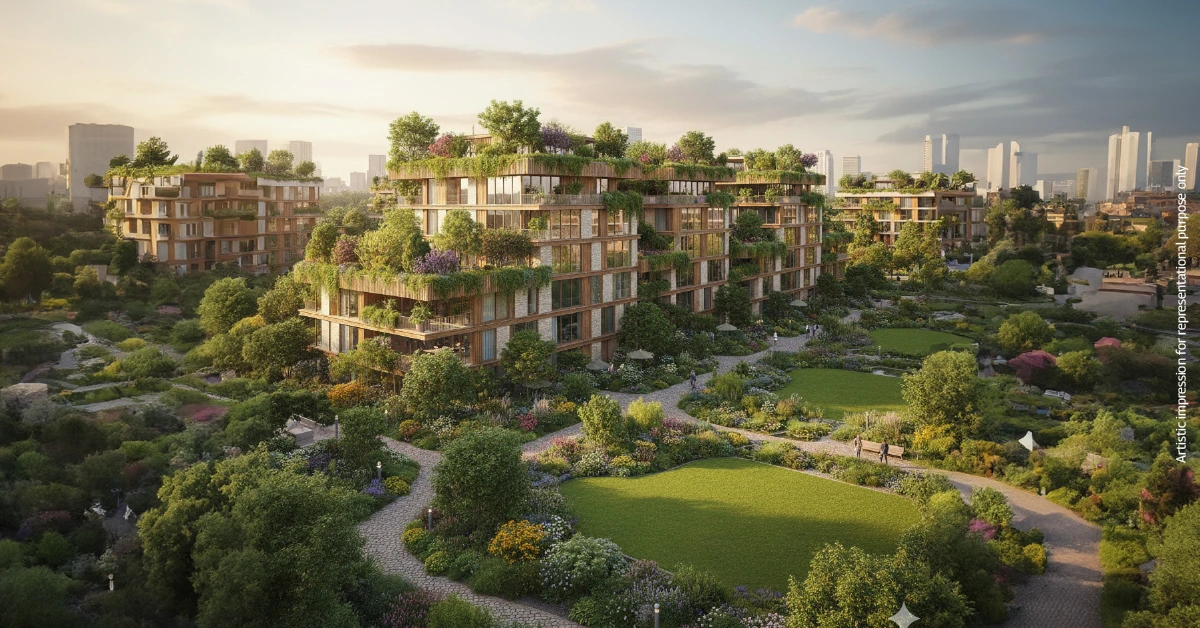
Imagine living in a home that not only adapts to the local climate but also protects the planet. That is the real impact of sustainable development in modern real estate. As cities expand and environmental challenges increase, homebuyers are choosing spaces that are healthier, efficient, and future-ready.
Before exploring why this matters for real estate, we must understand the meaning of sustainability and sustainable development. Around the world, countries are adopting green building practices, and India is quickly moving in the same direction. With rising demand for better air quality, lower energy use, and long-term value, developers are rethinking how communities are designed and built.
Let us start by understanding what “sustainable development” really means.
Defining Sustainable Development in Real Estate
The Brundtland Commission defines sustainable development as “development that meets the needs of the present without limiting the ability of future generations to meet their own needs.” In simple words, it means creating progress today without harming tomorrow.
It brings together three essential pillars: economic growth, social well-being, and environmental protection. When these elements work in balance, cities can grow responsibly while improving the quality of life.
In real estate, this idea becomes especially important because buildings use land, water, materials, and energy. By applying principles of sustainability and sustainable development, developers can design homes and communities that conserve resources, support healthier living, and remain valuable in the long term.
Why Sustainable Development Matters for Real Estate
Real estate is one of the most resource-intensive sectors, using significant amounts of energy, water, and raw materials during construction and everyday living. Globally, buildings account for around 36% of CO₂ emissions. In India alone, the building sector consumes nearly 40% of the country’s total energy.
As cities grow, these pressures make sustainable development essential for building homes that are efficient, healthier, and better prepared for climate challenges. Water-stressed cities like Bengaluru, Chennai, and Hyderabad already face a 20–50% annual water shortfall, increasing the importance of responsible planning and design.
Why It Matters — Key Reasons
-
Reduces long-term operational costs
Green buildings use energy and water more efficiently. As per IGBC, certified projects can cut energy use by 20–30%, directly lowering monthly bills for residents and improving long-term savings.
-
Improves health and everyday well-being
Better air quality, more natural light, cross-ventilation, and green spaces create healthier living environments — one of the strongest benefits of sustainability and sustainable development in homes.
-
Protects property value in a changing climate
With rising heat, unpredictable rainfall, and extreme weather, climate-ready homes retain value better. Buyers increasingly prefer resilient, efficient properties, strengthening long-term investment returns.
-
Responds to regulations and market shifts
Governments and regulatory bodies are encouraging resource-efficient construction. India’s green real estate market is projected to grow to $35–50 billion by 2030, showing how sustainability is becoming a mainstream expectation.
Alignment With the Three Pillars of Sustainable Development
- Economic: Lower utility bills, better long-term asset value
- Social: Healthier, more comfortable living environments
- Environmental: Reduced carbon footprint and more efficient resource use
Together, these reasons show why sustainable development is becoming central to India’s real estate future.
Global Context vs Indian Context in Sustainable Development
Sustainable development is now a driving force in shaping how countries plan their cities and how developers plan new communities. But its impact is not the same everywhere. Different regions face different challenges, follow different regulations, and adopt sustainable design at different speeds.
Understanding how the world approaches sustainable development, and how India is adapting it to its own needs, helps explain why this shift matters even more for the Indian real estate market.
Global Context
Across the world, real estate has rapidly shifted towards sustainable development as a standard practice. Many countries now expect buildings to be energy-efficient, climate-ready, and designed with responsible materials.
Key global trends include:
-
Green building certifications are becoming the norm
Markets like the US, UK, Europe, and Australia widely follow frameworks such as LEED (U.S. Green Building Council) and BREEAM. These certifications encourage better energy use, waste management, and healthier spaces.
-
Rise of net-zero buildings
Developers are moving towards homes and offices that produce as much energy as they use. Solar power, efficient insulation, and smart systems are helping reduce long-term environmental impact.
-
Circular economy in construction
Reuse of materials, reduced demolition waste, and smarter construction processes are gaining momentum.
-
Growing climate commitments
Real estate plays a key role in helping countries meet climate targets, especially because buildings account for a significant share of global emissions.
For developing countries, the challenge is even bigger — they must support fast growth while protecting resources for the future. This makes the role of sustainability and development more critical than ever.
Indian Context
India’s growth presents a unique opportunity and responsibility. Rapid urbanisation, rising population, and expanding infrastructure mean that the choices made today will shape the country for decades.
Key India-specific factors:
-
Water stress in cities
Many Indian cities already face water shortages in summer and depend heavily on tankers or borewells. In this situation, projects that use rainwater harvesting, recycled water, and efficient plumbing become much more important. Sustainable real estate planning can ease pressure on local water systems.
-
High energy consumption
Homes planned with proper shading, insulation, natural ventilation, and efficient appliances can reduce this load and practically support sustainability and development.
-
Dense urban environments
Thoughtful layouts, open courtyards, and shared green zones improve liveability and community well-being.
-
Rising homebuyer awareness
More buyers are seeking healthy homes with clean air, natural light, lower energy costs, and eco-friendly building practices. This is gradually moving the market towards greener homes and certified projects.
-
Government push for green buildings
Bodies like IGBC (Indian Green Building Council) and GRIHA are promoting resource-efficient design across housing, offices, and townships. Energy-saving guidelines, waste management rules, and construction norms are becoming part of real estate standards.
In India, sustainable development is no longer an optional feature – it is becoming essential for compliance, customer demand, and long-term value.
Global vs Indian Real Estate: Key Differences & Similarities
Sustainable development is a global priority, but the way it is adopted differs across global markets and India. Here is a clear comparison:
Similarities
-
Growing demand for healthier, efficient buildings
Homebuyers everywhere now look for better air quality, natural light, lower bills, and responsible construction. This creates universal interest in projects that follow sustainable development principles.
-
Increasing adoption of green certifications
Whether it is LEED, BREEAM, IGBC, or GRIHA, certification systems are becoming standard tools to measure sustainability performance.
-
Focus on long-term value
Both global and Indian developers understand that sustainable buildings remain relevant longer, use resources more efficiently, and offer greater resale value.
Differences
| Aspect | Global Context | Indian Context |
|---|---|---|
| Urgency of sustainability | Driven by global climate commitments | Driven by immediate challenges like heatwaves, water scarcity, dense urbanisation |
| Regulatory maturity | Strong, established sustainability laws | Regulations evolving but speeding up |
| Cost perception | Buyers accept premiums for green homes | Buyers more price-sensitive, awareness still rising |
| Infrastructure support | Reliable public utilities and efficient systems | Developers often build in-house solutions (waste, water, energy) |
| Design approach | Advanced tech (net-zero, smart materials) widely used | Rapidly adapting tech but customised to local climates and affordability |
| Cultural and climate diversity | More uniform climate zones | Requires highly localised sustainable development solutions because of the five different climatic zones in India |
Introducing Mahindra Lifespaces’ Approach to Sustainable Cities
At Mahindra Lifespaces, sustainability guides every decision we make, from master planning to construction and long-term operations.
We have maintained a 100% green-certified portfolio since 2014 and are working towards developing only Net-Zero Energy, Waste, and Water developments by 2030.
Alongside this, we aim to achieve carbon-neutral operations by 2040, strengthening our commitment to responsible growth and climate-focused development.
Examples of Our Sustainable Communities
-
An integrated township designed on green principles, IGBC Stage 2 Platinum certified Green Township built with systems that move towards zero waste to landfill. It has been certified Zero Waste to Landfill (ZWL) for the sixth year in a row.
Within MWC Chennai, two of our key residential communities demonstrate this green approach:
-
Mahindra Aqualily
Mahindra Aqualily (pre-certified IGBC Gold certified green development) is designed for healthier, energy-efficient living with features like cross-ventilated homes, ample natural light, and large landscaped open spaces that improve everyday comfort. The community also benefits from treated water supply for landscaping and well-planned internal roads that support a walkable lifestyle.
-
Mahindra Lakewoods
Mahindra Lakewoods (certified IGBC Platinum green development) offers thoughtfully designed residences surrounded by greenery, with a focus on efficient use of space, natural ventilation, and resource-conscious features. The project incorporates landscaped gardens, rainwater harvesting systems, and a layout that encourages healthier community living.
-
-
Mahindra Vista, Mumbai (Kandivali)
Mahindra Vista represents our commitment to building modern, sustainable communities that blend comfort with thoughtful design. Located in Kandivali East, Mumbai, this development focuses on green living with landscaped open spaces, natural ventilation, and eco-friendly features that support healthier everyday life.
It is India’s first Net Zero Energy + Waste certified high rise residential development. Designed for long-term comfort and well-being, Mahindra Vista offers efficient layouts, ample daylight, and mindful planning that aligns with our broader goal of creating nature-positive, future-ready neighbourhoods.
-
Mahindra Zen, Bengaluru
Mahindra Zen is a new-age residential community featuring Net-Zero Waste solutions and energy-efficient design for healthier everyday living. it is India’s 2nd and Bengaluru’s 1st Net Zero Energy + Waste certified high rise residential development.
-
Mahindra NewHaven, Bengaluru
Mahindra NewHaven is one of our most thoughtfully planned green communities in Bengaluru.
It is Net Zero Energy and Waste certified and incorporates sustainable design principles such as optimised building orientation, water-saving systems, and landscaped open areas that enhance microclimate and resident well-being.
With excellent connectivity and nature-friendly planning, NewHaven is designed for comfort, long-term value, and environmentally conscious living.
Our approach brings together economic value, healthier community living, and reduced environmental impact — creating developments that are truly future-ready.
Benefits for Stakeholders (Homebuyers, Investors, Society)
Sustainable development creates value at every level of the real estate ecosystem. Its impact is practical, long-term, and directly felt by homebuyers, investors, and the wider community.
Benefits for Homebuyers
- Healthier living through better air quality, natural light, ventilation, and non-toxic materials.
- Lower monthly costs due to reduced electricity and water consumption.
- Future-ready homes that stay comfortable and resilient as climate conditions change.
- Better overall lifestyle, supported by walkable layouts and green community spaces.
Benefits for Investors and Property Owners
- Higher long-term value, as homes built with sustainable practices retain relevance and demand.
- Lower operational risks from efficient systems that reduce maintenance and utility costs.
- Stronger compliance with evolving building norms and sustainability standards.
- Improved market positioning, especially as buyers increasingly prefer responsible, efficient homes.
Benefits for Society and the Environment
- Reduced carbon footprint through efficient energy and water use.
- Less pressure on city infrastructure, thanks to on-site waste, water, and energy systems.
- More resilient urban development that adapts better to heat, rainfall, and population growth.
- Improved urban liveability with cleaner surroundings, greener spaces, and balanced communities.
How Sustainable Development Shapes Real Estate in India
Sustainable development is influencing every stage of real estate development in India, from planning and construction to daily operations. The goal is simple: create homes and communities that use fewer resources, offer better comfort, and remain valuable for the long term.
Key practices seen in Indian Real Estate:
-
Use of greener building materials
Developers are choosing to construct houses with recyclable materials that reduce heat, last longer, and are safe for residents. This includes fly ash bricks, low-VOC paints, reflective roofs, and responsibly sourced materials.
-
Smarter water management
Rainwater harvesting and use, use of treated wastewater for gardening and flushing, and low-flow water saving fixtures help manage water scarcity – a major challenge in many Indian cities.
-
Waste reduction and on-site treatment
Waste segregation, composting of organic waste, and recycling of dry waste reduces landfill burden and supports cleaner, healthier communities.
-
Walkable, well-planned communities
Mixed-use layouts, green zones, and pedestrian-friendly paths help reduce daily travel and enhance liveability.
-
Energy-efficient design
Homes are now planned with natural and cross-ventilated spaces, use of solar panels, LED lights, shading elements, and building orientation that reduces heat. These steps support sustainability and sustainable development by reducing the use of energy.
Key Drivers Behind These Changes
- Changing buyer expectations
- Long-term value and lower running costs
- Rising climate pressures
- Growing brand differentiation
Why This Matters for India
These practices and drivers show how sustainable development is becoming central to India’s real estate future. It improves everyday living, reduces environmental pressure, and ensures that new communities are built responsibly, keeping long-term value and comfort in mind.
Outlook: Sustainable Real Estate in India
Sustainable real estate will play a significant role in shaping how India’s cities grow in the future. Trends like Net-Zero buildings, smart homes, energy-efficient systems, and circular construction will become more common as buyers look for healthier, future-ready spaces. Integrated townships and climate-responsive design will also continue to grow as India works to create safer, more resilient urban environments.
Real estate will directly support the country’s broader sustainability goals by promoting efficient land use, reducing emissions, and improving overall liveability. The sector’s choices today will influence how India builds the cities of tomorrow.
As part of this shift, we at Mahindra Lifespaces are moving towards developing only Net-Zero buildings by 2030 and achieving carbon-neutral operations by 2040. These milestones reflect our long-term commitment to responsible, resource-efficient development.
Sustainable development is no longer just a trend; it is the foundation for India’s next phase of growth.
Explore homes that prioritise comfort, efficiency, and long-term value, Mahindra Lifespaces is building the sustainable communities that will shape India’s future.
FAQs
1. What is sustainable development, and why does it matter for real estate?
Sustainable development means meeting today’s needs without harming future resources. It matters in real estate because buildings use energy, water, and materials, and sustainable practices help reduce waste, lower costs, and create healthier living spaces.
2. Why is sustainability important in the real estate industry?
It helps in efficient use of resources, lower utility bills, improve indoor comfort, and ensure buildings remain valuable and resilient over time.
3. What is the role of real estate in sustainable development?
Real estate shapes how cities grow. By using materials efficiently and through thoughtful design , it supports healthier communities and reduces environmental impact.
4. What are the 3 pillars of sustainability?
Environmental, Social, and Economic — often referred to as planet, people, and profit.
5. What are the 4 pillars or dimensions of sustainable development?
Environmental sustainability, social sustainability, economic sustainability, and institutional or governance sustainability are the four pillars of sustainable development.
6. What are the 5 Cs of sustainable development?
The 5 Cs of sustainable development are: Conservation, Community, Culture, Collaboration, and Consistency.
7. What are the seventeen goals of sustainable development?
They are the United Nations’ Sustainable Development Goals (SDGs), covering areas like clean energy, climate action, sustainable cities, clean water, responsible consumption, health, education, and more.
8. What are the 5 Ps of real estate?
The 5 Ps include: Property, Price, Place, Promotion, and People.
9. What is true about sustainability in real estate?
It creates long-term value by reducing resource use, improving comfort, and making buildings more resilient to climate risks.
10. How does Mahindra Lifespaces promote sustainable development in India?
Mahindra Lifespaces follows climate responsive design that adheres to green certification requirements to develop Net-Zero buildings, improves energy and water efficiency, and creates communities focused on healthier, low-impact living.