

Popular searches




Pune Metro Guide 2026: Routes, Timings & PCMC Property Impact
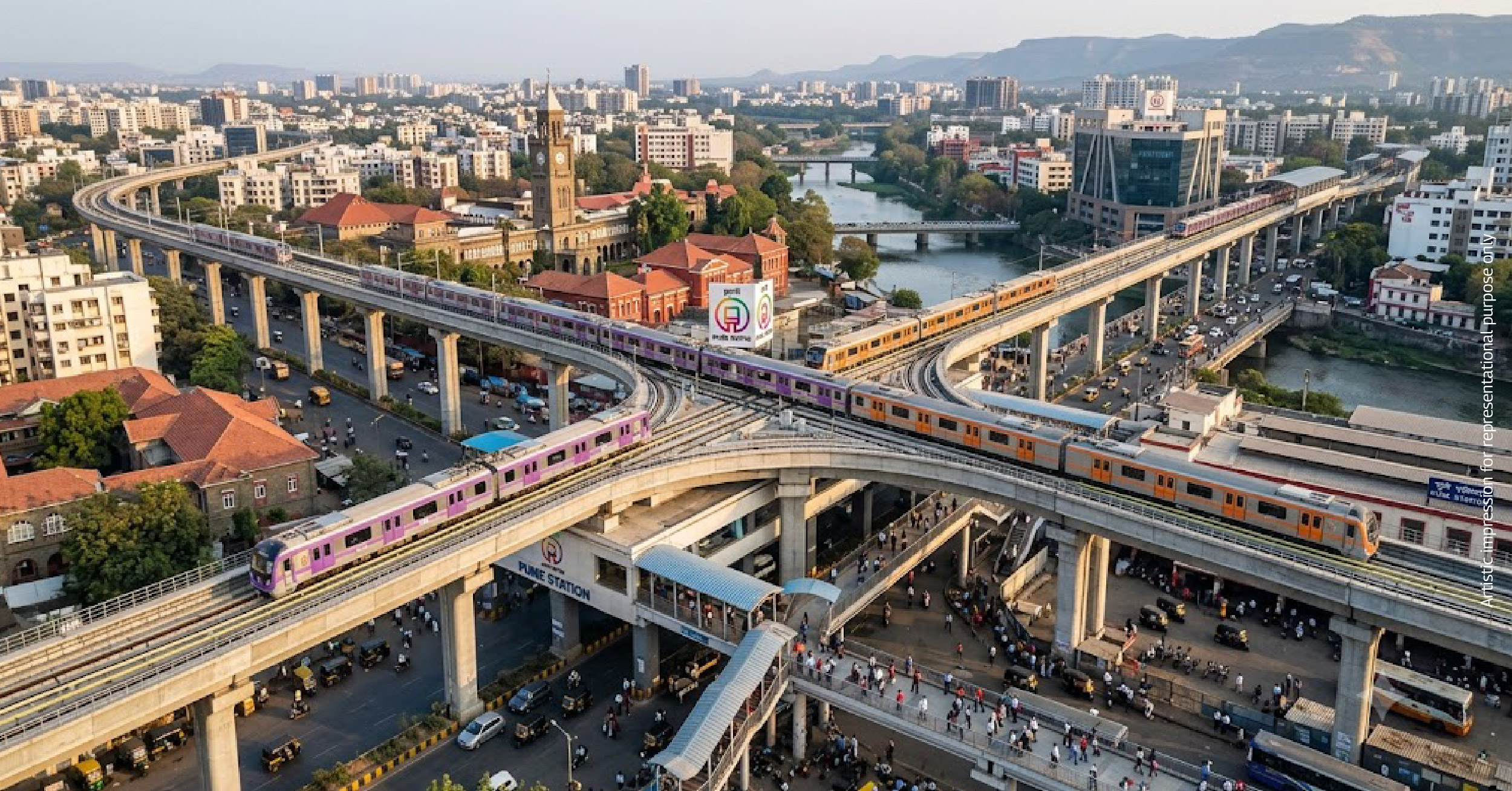
Whether you are a daily commuter looking to bypass traffic or a smart investor eyeing the next growth corridor, navigating the “New Pune” requires a clear understanding of its rapidly expanding transit network. As of May 2026, the Pune Metro has transitioned from a construction project into the city’s functional spine, fundamentally altering how residents live, work, and invest.
Navigating the current Pune metro route & map
The current pune metro map consists of two operational corridors and one highly anticipated line that is set to redefine the city’s IT corridor.
- Purple Line (Line 1): PCMC to Swargate – This line connects the industrial hub of PCMC to the historic heart of Swargate, passing through key nodes like Shivajinagar and Civil Court.
- Aqua Line (Line 2): Vanaz to Ramwadi – Running East-to-West, this route links the residential clusters of Kothrud and Vanaz to the bustling commercial zones of Yerwada and Ramwadi.
- Pink Line (Line 3 – Upcoming): Hinjewadi to Civil Court – The Pune Metro Line 3 status has reached a major milestone: Phase 1, covering 12 stations from Megapolis Circle to Balewadi Stadium, which is officially opening in May 2026. This will provide much-needed relief to the thousands of professionals commuting to the IT park.
Pune metro timings, frequency, and connectivity
For those planning their daily commute, efficiency is key. Below are the operational details –
A) Purple Line (Line 1): PCMC to Swargate metro timings
| Feature | Details |
|---|---|
| First and Last Train from PCMC to Swargate (2026) | 6:00 AM to 10:00 PM |
| Peak Hour Frequency | Every 7–10 minutes |
| Non-Peak Hour Frequency | Every 15 minutes |
| Ticketing Convenience | Use the “One Pune Card” for seamless travel. |
| Special Discounts | 30% discount for students and weekend travelers. |
B) Aqua Line (Line 2): Vanaz to Ramwadi metro timings
| Feature | Service Details |
|---|---|
| First Train (Vanaz & Ramwadi) | 6:00 AM |
| Last Train (Vanaz & Ramwadi) | 10:00 PM |
| Peak Hour Frequency | Every 7–10 minutes |
| Non-Peak Hour Frequency | Every 15 minutes |
| Student & Weekend Discount | 30% Off |
| Ticketing Options | One Pune Card / Digital QR Ticket |
Commuters heading to residential hubs in Pimpri will find the connectivity particularly useful; for instance, it is just a short walking distance from Sant Tukaram Nagar metro to Mahindra Citadel, making it an ideal location for those who value “walk-to-transit” living.
C) The strategic impact of the upcoming Pink Line (Line 3): Hinjewadi to Civil Court
The upcoming Pink Line (Pune Metro Line 3) is set to be a major catalyst for real estate transformation, particularly along the Hinjewadi-Shivajinagar corridor.
Connecting the city’s primary IT hub to the central business district is addressing the long-standing “last-mile” connectivity issue that has historically bottlenecked growth in these areas.
Pune Metro Line 3: Capital Appreciation, Rental Surges & Market Impact
The 23-km elevated corridor will feature 23 stations, with a significant milestone approaching in May 2026 as Phase 1 (covering 12 stations up to Balewadi Stadium) is scheduled to open. This phased rollout is expected to have a direct and measurable impact on property dynamics:
1. Capital appreciation in emerging hubs
Proximity to the Pink Line is driving a notable “Metro Premium.” Historically, residential projects within a 1-km radius of a functional metro station in Pune command a price premium of 15% to 20% compared to non-connected properties.
- Hinjewadi & Baner: These areas are seeing sustained appreciation as the “commute struggle” for IT professionals eases.
- Pimpri-Chinchwad (PCMC): While primarily served by the Purple Line, the integration of the Pink Line at the Civil Court Interchange will enhance overall connectivity, further boosting values in residential clusters like Pimpri.
2. Surge in rental demand
The Pink Line is specifically designed to serve the workforce of the Hinjewadi IT Park.
- Professional preference: High-demand areas are seeing increased interest from working professionals who prioritize a shorter commute over staying in larger, isolated suburbs.
- Rental yields: In regions like Pimpri-Chinchwad, rental yields have already reached a robust 5%, fueled by demand from manufacturing and IT professionals alike.
3. Commercial and Retail Expansion
The introduction of the Pink Line is not just affecting housing; it is also stimulating commercial development.
- Transit-oriented development (TOD): New commercial and retail hubs are emerging around key stations like Balewadi Stadium and Civil Court, as businesses look to capitalize on the high daily footfall of commuters.
- Investor sentiment: Smart investors are increasingly viewing proximity to a metro station as a “necessity for growth” rather than an optional luxury.
The completion of the Pune Metro network is fundamentally redrawing the map of the city. As these transit lines integrate, the traditional North-South and East-West divides are blurring, giving way to a cohesive, hyper-connected urban landscape.
For projects like Mahindra Citadel, strategic location is no longer just about the immediate vicinity. While the project is situated near the existing Purple Line, the launch of the Pink Line represents a broader ecosystem advantage.
This interconnection transforms standalone routes into a "New Spine," elevating the intrinsic value of all metro-connected residential assets by providing seamless access to the Hinjewadi IT hub and Central Pune alike.
Investment outlook: Locking in the 2026 value
Investing in these transit corridors now allows buyers to secure property values before the full operational integration of the network. As Phase 2 expansions and the Pink Line reach full capacity, the market is expected to witness another wave of price corrections, making “proximity to metro” the most significant driver of capital appreciation.
The Pune Metro is the city’s lifeblood. In 2026, living near a metro station transitioned from a luxury to a necessity for both lifestyle convenience and long-term financial growth.
Experience the perfect balance of premium living and accessibility. With seamless connectivity to the evolving Pune Metro, our residential projects in PCMC and Pimpri place you at the heart of the city’s transformation.
Visit the Mahindra Citadel sales gallery today to experience the future of urban living.
FAQs
-
What are the operational timings and frequency of Pune Metro?
Pune Metro typically operates from 6:00 AM to 11:00 PM daily. During peak hours (9:00 AM – 11:00 AM and 4:00 PM – 8:00 PM), trains run every 6 minutes to accommodate the heavy commuter flow. During non-peak hours, the frequency is usually maintained at 10 minutes.
-
How can I reach the Pune Airport (Lohegaon) using the Metro?
Currently, the nearest operational station to the airport is Ramwadi on the Aqua Line, located about 2–3 km away; from there, you can take a feeder bus, auto, or cab. However, a direct link to the airport via the Kalyani Nagar station is currently under development to eliminate the need for road transfers.
-
When will the Hinjewadi-Shivajinagar (Line 3) become operational?
Line 3, also known as the Pink Line, is in its final stages. Approximately 12 to 13 stations on this 23 km route are expected to be ready for a phased opening by May 2026. This line is crucial for IT professionals commuting to the Rajiv Gandhi IT Park in Hinjewadi.
-
What are the ticket prices and how can I get a discount?
Fares range from ₹10 to ₹35 depending on the distance traveled. To save money, it is highly recommended to use the One Pune NCMC RuPay Card, which offers a 10% discount on weekdays and a 30% discount on weekends. Students can also apply for the Vidyarthi Pass for additional benefits.
-
Can I book Pune Metro tickets online?
Yes, you can book QR-based tickets through the official Pune Metro mobile app. Once booked, you simply scan the QR code at the AFC gates to enter. For frequent travelers, the “One Pune” card can be topped up online or at station counters to skip the daily ticketing queues.