

Popular searches





Understanding IFMS in modern Real Estate
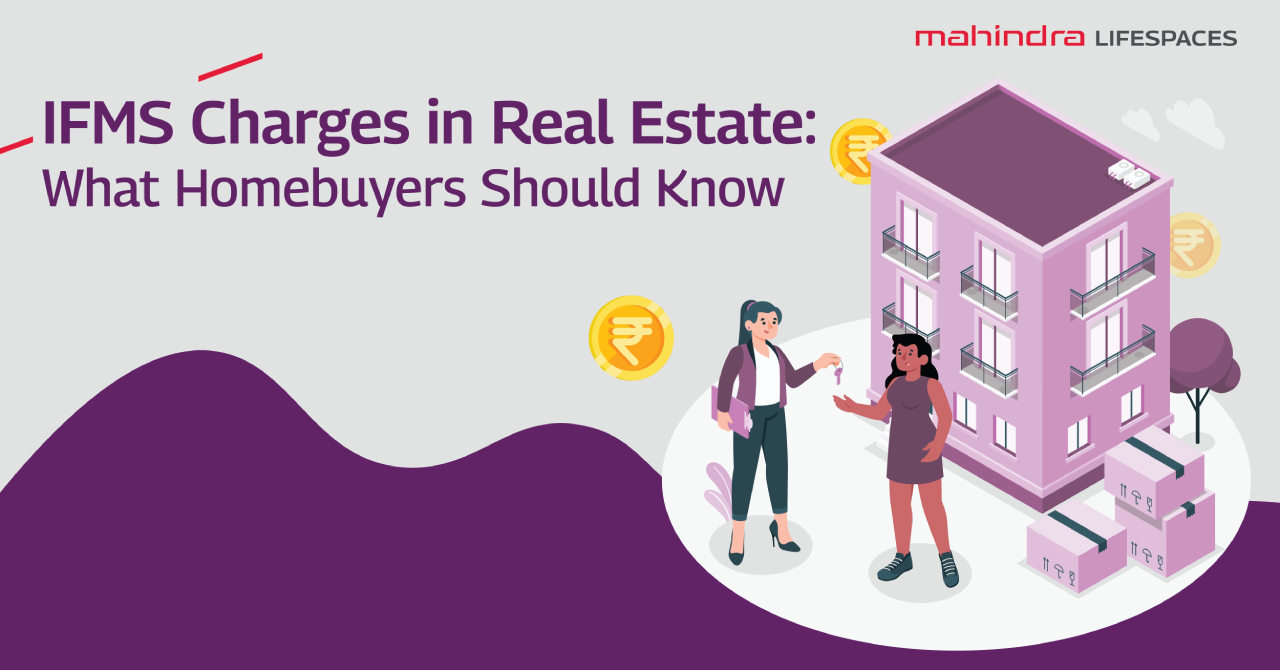
When buying a home or a commercial space, there’s more to the cost than just the price per square foot. One of the lesser-known yet critical components in real estate transactions is the IFMS – Interest-Free Maintenance Security. Despite being a standard charge, it is often misunderstood or overlooked by buyers.
This blog demystifies IFMS by explaining its full form, meaning, benefits, calculation methods, and common misconceptions, especially in the context of modern residential and commercial developments.
What is IFMS?
IFMS (Interest-Free Maintenance Security) is a one-time, non-refundable corpus collected by the developer from the buyer at the time of possession. It is specifically meant to fund the maintenance and management of common areas and shared services in a housing or commercial project.
Until the Residents’ Welfare Association (RWA) or Commercial Owners’ Association is formed and takes over, the Developer uses the IFMS to ensure the community runs smoothly and essential services are maintained without disruption.
What does IFMS Cover?
The Interest-Free Maintenance Security (IFMS) collected from residents or owners is used exclusively for the upkeep and management of shared services and infrastructure. Here’s a breakdown of what IFMS typically covers:
-
Security
Deployment and management of security personnel, CCTV surveillance systems, Intercoms, Access control and round-the-clock monitoring for resident safety.
-
Housekeeping & Waste Management
Daily cleaning of common areas such as lobbies, staircases, basements, corridors, and clubhouses. Includes collection, segregation, and disposal of solid waste as per local municipal norms. -
Landscaping & Irrigation System
Maintenance of gardens, lawns, trees, and green belts. Upkeep of the irrigation system including sprinklers, drip lines, and scheduled watering routines to preserve greenery. -
Maintenance & Management of Common Amenities and recreational spaces such as:
Swimming pool, Clubhouse, Gym, Indoor/outdoor play areas, Ampitheater, walking tracks, and other recreational zones. -
Maintenance of Electro-Mechanical Assets
Including AMC cost, Planned preventive maintenance and Breakdown maintenance, servicing, Insurance of Building & common assets, and operational management of essential equipments like:- Lifts/elevators
- DG sets (Diesel Generators)
- Air-conditioning systems (for common areas)
- Fire alarm & firefighting systems
- STP (Sewage Treatment Plant), WTP (Water Treatment Plant), OWC (Organic Waste Converter)
- Pumps, motors, and electrical panels
-
Utility Expenses
Common area electricity (lighting, lifts, pumps, etc.), Water supply, Diesel for DG operations It ensures that essential facilities remain functional, even during the critical transition period before the RWA is fully operational
Benefits of IFMS
- Operational Continuity: Ensures all common services are running smoothly from Day 1.
- Preservation of Assets: Timely and Planned maintenance of high-cost assets extends their life.
- Financial Stability: Avoids frequent or ad hoc financial demands from residents.
- Transparent Handover: Enables a clear and clean transfer of responsibilities to the RWA/Association.
- Better Resident Experience: Supports a seamless living or working experience from the start
How is IFMS Calculated?
IFMS isn’t a fixed amount across projects. It varies based on:
- Project type (residential vs. commercial)
- Size of the unit
- Amenities offered
- Location and maintenance requirements
Typical calculation methods include Per sq. ft. of saleable area basis or Flat rate per unit.
It is generally differentiated by usage
e.g., higher rates for retail units in commercial projects
Common Misconceptions about IFMS
Despite its importance, IFMS is often misunderstood. Here are a few myths and the truth behind them:
| Myth | Reality |
|---|---|
| “IFMS is refundable.” | It is non-refundable and remains with the Developer for maintenance purposes and balance is transferred to RWA on formation |
| “Developers can use IFMS freely.” | IFMS must be used strictly for upkeep of shared facilities and handed over to the RWA. |
| “IFMS and Sinking Fund are the same.” | They serve different purposes — IFMS = operating fund, Sinking Fund = reserve fund. |
IFMS vs. Sinking Fund
| Aspect | IFMS | Sinking Fund |
|---|---|---|
| Purpose | Day-to-day upkeep of common areas | Long-term repairs, replacements, or emergencies (Also called Capital Repairs & Replacement fund) |
| Collection | One-time at possession | Regular intervals (monthly/annually) |
| Refundability | Non-refundable | Grows with interest and used only when necessary |
| Managed By | Developer → RWA | RWA/Association |
Conclusion
IFMS plays a silent yet vital role in the smooth functioning of modern gated communities and commercial complexes.
It ensures that critical services are funded, common areas are maintained, and residents enjoy a hassle-free lifestyle from the first day of moving in.
For buyers, understanding IFMS helps set realistic expectations and fosters financial transparency. For developers and associations, it is a critical tool in ensuring quality, safety, and service continuity in the early lifecycle of a project.
Disclaimer –
At Mahindra Lifespaces, we do not collect IFMS charges. We collect following charges at the time of possession as ‘Other/Miscellaneous charges’:
- Advance CAM charges for a defined period (12 months/24 months depending on timeline of development)
- Corpus fund fixed amount or equivalent to 6 months of advance CAM (akin to a Security deposit for Capital Repairs/replacement)
- Electricity, Water & Piped Gas charges along with Property tax amount
- Building Protection deposit in the form of an undated cheque of fixed amount depending on the type of project.
Discover thoughtfully designed, eco-friendly luxury homes tailored to your lifestyle, brought to you by Mahindra Lifespaces. Begin your journey to a greener, premium living experience across India. Fill out the form on our Contact Us page to explore your dream home today!
FAQs
-
What is IFMS in real estate, and why is it important?
IFMS (Interest-Free Maintenance Security) is a refundable deposit paid by homebuyers to developers for the future upkeep of common areas.
It ensures uninterrupted maintenance before the society is formed and acts as a financial buffer for emergency repairs, making it a crucial part of property investment. -
Is IFMS a one-time payment or a recurring charge?
IFMS is a one-time, non-interest-bearing deposit. It is different from monthly maintenance fees and is collected at the possession or final payment stage. This fund is later transferred to the Resident Welfare Association (RWA) for long-term upkeep and is not meant to be paid again.
-
How are IFMS charges calculated for a property?
IFMS charges are usually calculated on a per square foot basis, typically ranging from ₹100 to ₹200 per sq. ft. The total depends on project type, location, amenities, and developer policies. Always confirm the rate with the developer before finalising your budget.
-
Who is responsible for managing IFMS after possession?
Initially, the developer manages the IFMS fund until the Resident Welfare Association (RWA) is officially formed. Once the RWA takes charge, the fund is transferred to them and used strictly for community maintenance, large-scale repairs, or emergency facility management.
-
Can homebuyers claim a refund of IFMS charges?
Yes, IFMS is refundable, but only under specific conditions, such as project cancellation or agreed-upon handover terms. It is not automatically returned. Homebuyers should ensure the refund clauses are clearly outlined in the sale agreement and documented during possession.
Builders are allowed to collect advance maintenance charges, but usually not more than one year’s worth, and only until the RWA takes over.
Real Estate Regulatory Authority (RERA) plays a key role in defining fair housing practices. Under RERA rules for society maintenance charges, the following points are mandated:
-
Advance Maintenance Should Be Limited
Builders are allowed to collect advance maintenance charges, but usually not more than one year’s worth, and only until the RWA takes over.
-
Complete Transparency Required
As per RERA rules for maintenance charges, developers must provide buyers with a breakdown of the amount, frequency, and exact usage of these charges.
-
No Profit-Making from Maintenance
The law clearly states that maintenance charges must not be a source of profit for developers. They are strictly for operational and upkeep purposes.
-
Separate Maintenance Account
Funds collected must be deposited into a dedicated maintenance account, which can be audited and reviewed by the residents.
-
Advance Maintenance Should Be Limited